Tuesday, November 24, 2009

A Wiser Home on the Range for Wild Horses

HSUS

It’s never enough to pass a law. The agency assigned to enforce the law must work to implement it properly. And for a classic case example of how poor implementation can undermine the original intent of legislation, look no further than the Bureau of Land Management (BLM) and its efforts to protect wild horses and burros under the Wild Free-Roaming Horses and Burros Act.
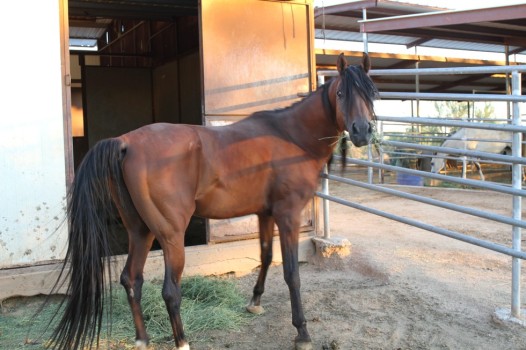
Bay horse in grass pasture
iStockphoto

Enacted by Congress in 1971, and then amended several times, the purpose of the Act has always been to protect free-roaming herds of wild horses and burros in the West, for their well-being and as living emblems of the western American experience. Yet, despite the intent of Congress, the BLM has shrunk the range of the horses by nearly 20 million acres, rounded up and removed tens of thousands of them, moved them into captive holding facilities, and used its federal appropriations to hold and feed the horses. Through the years, it has also stood by as many of the “adopters” of the horses sent them to slaughter plants for human consumption.
The Obama Administration has said it will resist any effort to allow slaughter—and that is a welcome development. The administration has also pledged to step up the use of contraception—an innovative vaccine and delivery system that The HSUS has long advocated and helped to develop years ago, but that prior Administrations treated as an experimental novelty, not as a practical management tool. And it’s tried to invigorate the adoption program, in order to shrink the captive population and the financial burdens that imposes, and talked about setting up horse sanctuaries in the East, with richer grass, that can sustain horses economically and provide a long-term, comfortable and safe setting for them.
All of that sounds great, and for those elements of the program, we at The HSUS are on board. But the massive roundups and removals of horses must be curtailed. This Administration does not appear prepared to do that—and we are seeing a pattern of behavior similar to prior Administrations. The BLM is on track to round up and remove 12,000 horses next year, and that will inflate the captive population to more than 40,000—well beyond the number of horses on the range. And it will add an incredible 25 percent to the number of horses cared for in holding, which the BLM itself has been warning is taking the program to its breaking point.
I wrote a detailed letter today to Secretary Salazar and told him that this pace of roundups, including a planned roundup of horses at the Calico Complex in Nevada, cannot continue. It is bad for horses and burros, and it is fiscally reckless, with 75 percent of the entire funding for the program going to the care of captive horses. The upward spiral of spending on captive horse management must be turned around, and the only way to do it is to severely restrict the roundups and removals.
The original Act never contemplated 40,000 captive wild horses and the use of funds to care for them. If you look at just spending priorities, it’s become the Captive Horses and Burros Act, yet the original intent of the Act was to keep wild horses on the range and humanely manage their populations. The BLM can do so with the widespread use of contraception, manipulating the sex ratios of herds, and, where possible, expanding the range lands back to their original size.
While in this crisis, roundups and removals should only occur when the welfare of the horses is in immediate jeopardy or when there is a severe ecological problem. And the removals should be carefully monitored to be limited to probable adoption opportunities, at least until the numbers in the long-term holding facilities are significantly reduced. If necessary, the BLM, and the taxpayer, would be better served by providing short-term “sanctuary on the range” programs that provide supplemental feed and water to herds in the wild, until the contraception program can stabilize or shrink the population. The on-the-range management tools should be used to keep their numbers in check, but most importantly to keep them on the range, and reverse the fiscal and animal care disaster that the current treadmill has created.

TrackBack

TrackBack URL for this entry:
http://www.typepad.com/services/trackback/6a00d83452e09d69e20120a6cfc76c970b

Wyoming Rep. “Slaughterhouse” Sue Wallis endorses gambling with Truck Raffle

Straight form the Horse's Heart

by R.T. Fitch, author of “Straight from the Horse’s Heart
Win a truck from Wyoming Rep. Sue Wallis so you can drive your horse to slaughter
Houston – (SFHH)  Wyoming Representative Sue Wallis has issued an official endorsement of gambling (see below) through her questionable nonprofit 501c (3) organization, United Organizations of the Horse.  Rep. Wallis also implicates another alleged 501c (3) nonprofit, the Horseman’s Front, in this plan to generate funds for organizations that are in possible violation of IRS 501c (3) nonprofit requirements.
A visit to either of the organization’s websites indicates that both groups are actively engaged in lobbying efforts, right down to authoring legislation, to further their personal agendas to bring back the predatory and inhumane industry of horse slaughter to the United States.  IRS law clearly states that only 15% of a nonprofit’s time and expenditures can be spent on lobbying purposes and the purpose must not be aimed at furthering the cause of any one individual or associated businesses, see below:
To be tax-exempt under section 501(c)(3) of the Internal Revenue Code, an organization must be organized and operated exclusively for exempt purposes set forth in section 501(c)(3), and none of its earnings may inure to any private shareholder or individual. In addition, it may not be an action organization, i.e., it may not attempt to influence legislation as a substantial part of its activities and it may not participate in any campaign activity for or against political candidates.
Organizations described in section 501(c)(3) are commonly referred to as charitable organizations. Organizations described in section 501(c)(3), other than testing for public safety organizations, are eligible to receive tax-deductible contributions in accordance with Code section 170.
The organization must not be organized or operated for the benefit of private interests, and no part of a section 501(c)(3) organization’s net earnings may inure to the benefit of any private shareholder or individual. If the organization engages in an excess benefit transaction with a person having substantial influence over the organization, an excise tax may be imposed on the person and any organization managers agreeing to the transaction.
Section 501(c)(3) organizations are restricted in how much political and legislative (lobbying) activities they may conduct. For a detailed discussion, see Political and Lobbying Activities. For more information about lobbying activities by charities, see the article Lobbying Issues; for more information about political activities of charities, see the FY-2002 CPE
http://www.irs.gov/charities/charitable/article/0,,id=96099,00.html
The intent of David Duquette’s “Horseman’s Front” is glaringly obvious as he and his associates own horse breeding operations and rather than be responsible and control horse breeding on the front end they prefer to manage it on the backside by throwing their “unwanted” horses onto the slaughter pile so as to maintain higher prices for their equine commodity.
Rep. Wallis’ motives and issues were clearly defined in the Editorial “What Sue Wallis’ proposed HORSE ACT of 2009 Really Means for Horses” written by equine welfare advocate Vicki Tobin.
What remains unclear is how Rep. Wallis’ actions and activities will reflect upon her political  credibility and long term viability within her home state of Wyoming.
Wallis email below:
From: The United Organizations of the Horse
Reply-To: sue.wallis@unitedorgsofthehorse.org
Sender: The United Organizations of the Horse

uoh logo2
Special Bulletin:
Win a Brand New Dodge Truck!

~~~~~~~~~~~~~~~~~~~~~~~~~~~~~~~~~~~~~~~~~~~~~~~~~~
Win a truck at the National Finals Rodeo and help the  horse problem!
~~~~~~~~~~~~~~~~~~~~~~~~~~~~~~~~~~~~~~~~~~~~~~~~~
The wheels have been turning folks! A couple weeks ago a fund raising idea transpired and it has become a reality. The United Horsemen’s Front, (our 501(c)(3) nonprofit), is raffling off a truck at the National Finals Rodeo in two weeks!
Thanks to Chapman Dodge Chrysler Jeep Las Vegas, a 2009 Dodge 4WD 2500SLT Short Bed pickup will be at the rodeo.
Pauline Adams
See it for yourself during the NFR!
The truck will be on display at Michael Gaughan’s South Point Casino…
southpoint
A group of us plan to be there to help promote the raffle and our mission. No more than 2,000 tickets will be sold. At $100 per raffle ticket, we should be able to raise some substantial funds. The United Horsemen’s Front has already seen a great response. In fact, people who will not be attending the NFR have been contacting us to purchase tickets.
Click here to view the pickup and ticket purchase form on their website.
Please help us promote the raffle or fill out a ticket purchase form to get your own chance to win the truck and help our cause.
~~~~~~~~~~~~~~~~~~~~~~~~~~~~~~~~~~~~~~~~~~
Sign Up Today!
Become a Founding Member and Actively Participate in Your Future!
The United Organizations of the Horse | PO Box 71 | Recluse | WY | 82725

Monday, November 23, 2009

Lawsuit filed to Challenge Calico Complex Gather

Animal Law

[See:  Lawsuit Filed to Halt Huge Wild Horse Roundup In Defense of Animals ]

wild horses
Update Nov. 23, 2009:  A lawsuit was filed today to challenge the BLM's plan to roundup 80-90% of the wild horses in the Calico Mountain Complex in Nevada.
The suit comes just one day after the close of the public comment period on the planned roundup.
As of November 17, BLM had received more than 7,000 public comments in reaction to its plan to remove and decimate the Calico Complex wild horse herds in Nevada. The plan includes drastically reducing the number of wild horses by rounding them up and placing most in holding facilities or selling them for slaughter. This is to begin December 1.
Nevada wildlife ecologist Craig Downer and In Defense of Animals, brought the lawsuit in the federal court in Washington, D.C. They have been  working with a number of other wild horse advocates including Animal Law Coalition. The Complaint seeks a declaratory judgment that the BLM's Preliminary Assessment or plan violates the Wild Free Roaming Horses and Burros Act of 1971, 16 U.S.C. Section 1331, et seq. The plaintiffs also say they will file a motion for a temporary restraining order to stop the roundup.
Plaintiffs' Allegations in the Complaint
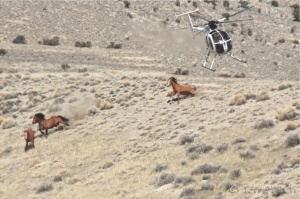
The plaintiffs say that the use of helicopters to run down the wild horses indiscriminately is inhumane, harassment and a capture in violation of the WFRHBA. The Complaint also says that BLM has no authority to corral wild horses into holding pens and its doing so is inhumane and thus illegal under the WFRHBA.
The Complaint alleges that BLM is required to remove only excess wild horses. Excess horses are defined as those (1) which have been removed from an area by the BLM pursuant to applicable law or, (2) which must be removed from an area in order to preserve and maintain a thriving natural ecological balance and multiple-use relationship in that area. 16 U.S.C. Sec. 1331.
Plaintiffs say BLM cannot round up all the wild horses and then decide while they are in corrals which are excess and instead must make a determination on the range whether each horse is excess. Otherwise, BLM will violate the prohibition under WFRHBA against rounding up non-excess horses.
The plaintiffs point out BLM has no scientific basis, or at least none that has been made public, for its determination the range is deteriorating and there is an overpopulation of wild horses. Nor is there any basis for the claim the horse population increases 20-30% annually.  The plaintiffs also say BLM has failed to consider the effects on the range of thousands of grazing cattle and development such as mining and other energy development. 
The plaintiffs charge that BLM has failed to take an accurate census of the wild horses, failed to determine appropriate management levels of horses for the range or herd areas, and whether there are alternatives such as reduction of grazing or humane management of the wild horses on the range.     
Read Animal Law Coalition's comments sent to the BLM and find links to the BLM's plan:
To: Mr. Jerome Fox, Winnemucca District Manager, Bureau of Land Management, 5100 E. Winnemucca Blvd., Winnemucca, NV 89445 Email: wfoweb@nv.blm.gov or Fax: 775.623.1503 Phone: 775.623.1500
Mr. Bob Abbey, Director, Bureau of Land Management, Email: Robert_Abbey@blm.gov
Ref.: DOI-BLM-NV-W30-2010-0001-EA
wild horse roundupOn behalf of members of Animal Law Coalition, I appreciate the opportunity to provide you with comments on the planned removal of 2,476-2,523 wild horses from the Nevada Calico Mountain Complex that is scheduled to begin December 1.  A number of ALC members enjoy the wild horses and burros and are very concerned that they are fast disappearing from the wild pursuant to what appears to be a concerted effort to eliminate them from their historic ranges and herd areas.
I ask you to halt this proposed roundup and removal of these animals. Animal Law Coalition members also urge DOI and BLM to place a moratorium on all scheduled roundups and removals pending a reassessment of the management of the wild horse and burros program.
The October 2009 Environmental Assessment (EA) is purportedly the basis for the decision to capture 2,476-2,787, release up to 264, and remove permanently 2,476-2,523 wild horses from the Nevada Calico Mountains Complex which includes the following Herd Management Area:
Black Rock Range East
Black Rock Range West
Calico Mountains
Granite Range
Warm Springs Canyon
By way of background, I point out that the Wild Free Roaming Horses and Burros Act, 16 U.S.C. §1331, et seq. requires that the BLM manage these animals "as components of the public lands" at the "minimal feasible level" to "maintain free-roaming behavior". The Wild Free Roaming Horses and Burros Act requires them to be protected in their herd areas where they were living in 1971.  These animals are to be protected from "capture, ...harassment and death". 16 U.S.C. §1333 And that is what the federal government should do.
Instead, BLM's management of the wild horses and burros appears focused on removing them from public lands. From 1971 through 2007, over 267,000 wild horses and burros were removed from their homes by BLM. In 2001, BLM stepped up removals. According to the Government Accountability Office, "[s]ince then, about 10,600 animals have been removed, on average, per year." Just since 2001 the BLM has removed over 74,000 wild horses and burros. "BLM has reduced the nationwide population in the wild by about 40 percent since 2000.
The BLM gather schedules for 2009-2010 are found here and here.  They reveal a clear intent to zero out or eliminate these animals from their herd areas and even the BLM-created "herd management areas".  (The BLM has authorized itself to divide herd areas into "herd management areas", something not authorized by WFRHBA. 43 CFR 4710.3-1. In this way, with no statutory authority at all, BLM has limited wild horses and burros' access to thousands of acres that were historically their herd areas. This is done without thought about the horses' seasonal migration patterns or available resources. The BLM then removes wild horses and burros from the artificially created "herd management areas" on the basis there is insufficient forage, water or habitat! BLM also targets them for removal if they cross the artificial boundaries into their original herd areas.)
I would ask BLM to take into account a federal court order issued this past August, 2009 in Colorado Wild Horse and Burro Coalition, Inc. v. Salazar, No. 06-1609 (D.D.C 2009), where the Court ruled, to wit:
"It would be anomalous to infer that by authorizing the custodian of the wild free roaming horses and burros to ‘manage' them, Congress intended to permit the animals' custodian to subvert the primary policy of the statute by capturing and removing from the wild the very animals that Congress sought to protect from being captured and removed from the wild.
Defendants argue that the horses will not be ‘eradicated' or ‘eliminated' inasmuch as BLM intends to continue to manage the horses not in the wild but through private adoption or long-term care. ...But BLM's directive is ‘to protect and manage wild free-roaming horses and burros as components of the public lands . . . .' 16 U.S.C. § 1333(a) (emphasis added). Congress did not authorize BLM to ‘manage' the wild horses by corralling them for private maintenance or long-term care as non-wild free-roaming animals off of the public lands.
Upon removal for private adoption and/or long-term care, the ... Herd would forever cease to be ‘wild free-roaming' horses ‘as components of the public lands' contrary to Congress's intent to protect the horses from capture.
Moreover, the statute expressly provides that BLM's ‘management activities shall be at the minimal feasible level . . . .' It is difficult to think of a ‘management activity' that is farther from a ‘minimal feasible level' than removal."
wild horseAt the least, there has to be a better way to manage these animals other than by hiring criminals to run them down with helicopters and penning some for life and sending others to slaughter.
The EA itself is proof of a policy of zeroing out and eliminating wild horse herds contrary to the WFRHBA.

In this case the EA claims the permanent removal of up to 2,523 wild horses is necessary "to prevent deterioration of animal health and reduce impacts to rangeland and wildlife resources from overgrazing by wild horses." No evidence is offered of poor animal health. There is also no evidence offered to prove the wild horses are causing "impacts", that are presumably negative, to the "rangeland and wildlife resources". Whatever that means. BLM offers dated studies and a few photos of small areas to claim there is "heavy utilization" and the range is deteriorated or lacks water. Anyone can take photos of small, isolated areas and claim it is proof of the condition of the whole. 
In the EA BLM says "[a]djustment of the current AMLs will ...not be analyzed in this EA."  BLM says these herd areas will support only 586-976 wild horses and burros. By its own admission as reflected in Table 1 and on pp. 3, 4-5, Table 6 and accompanying text and on p. 33, BLM relies on AMLs set years ago. Surely anyone can see the data is now outdated. It is not enough to say, as BLM does in the EA, that the outdated AMLs were confirmed by a recent check of the U.S. Drought Monitor forecast and an aerial flyover of the region with the few isolated photos. The AMLs have not been supported by any current independent study of rangeland health. Surely, that would be the minimum BLM should do before terrifying these horses, injuring or killing them, decimating their herds and condemning them to a life in a small BLM-managed pen or to slaughter?
The EA also nowhere mentions that there are thousands of cattle and sheep that graze in this area and drink water, up to 30 gallons a day each. Livestock are notorious for fouling and trampling rangeland and water sources. Does BLM believe no one will notice this incredible omission?
Why doesn't BLM follow the recommendation of the Government Accountability Office and reduce the numbers of livestock in these areas? Especially if there really is an issue with the condition of the range. If there really is or will be a drought.
Curiously, BLM accepts its outdated AMLs as accurate, but then says it has made errors in the population census and that the numbers of wild horses are actually higher than previously thought.  So more must be removed....If BLM says there are more wild horses than there actually are, then the agency can say, as it does in this EA, that it must remove even more wild horses.  And if it turns out the initial census was accurate, which it likely was, BLM will have removed more wild horses than they were supposed to....And, if BLM continues to exaggerate the census, soon they will all be gone.  Is that the idea? I note despite the incredible number of wild horses slated for removal, the BLM plans more roundups for the Calico Mountain Complex regardless of the range condition or availability of water. 
The BLM is required by National Environmental Policy Act ("NEPA"), 42 U.S.C. §§ 4321, et seq., to prepare Environmental Assessments or EAs or, if indicated, Environmental Impact Statements (EIS) or Finding of No Significant Impact (FONSI), for any proposed changes to public lands that may have a significant environmental impact.  The law directs the agency to identify environmental concerns, consider alternatives including no action at all and take a "hard look" at the problem and minimize significant environmental impact. A significant environmental impact includes actions that are likely to be highly controversial or have uncertain effects on the quality of our lives and that affect cultural and historical resources. 40 C.F.R. §1508.27(b).
In this case BLM offers a preliminary EA with outdated AMLs and no real assessment of the very significant environmental impact of removing thousands of wild horses from the Calico Mountain Complex.  Wild horses contribute significantly to the health of the ecosystem.
wild horsesAlso, surely, BLM cannot seriously suggest it has taken a "hard look" at different alternatives. The alternatives BLM proposed are simply (1) removing thousands of horses and sterilizing many of those remaining, (2) removing thousands of wild horses, or (3) doing nothing now, a "no action" alternative NEPA requires BLM to include.
What about other alternatives such as reducing the numbers of cattle or other livestock, bringing water to the wild horses if needed especially during peak grazing times, or adjusting herd management areas?
The EA also nowhere assesses the use of PZP, the contraceptive. BLM has not evaluated whether the genetic diversity can be sustained, whether the herds will remain self-sustaining with such low numbers, with many animals sterilized. There are also increasingly known health risks associated with PZP, none of which is even mentioned in the EA. And, nowhere does BLM mention, let alone assess, the devastating effect on herd behavior, the chaos and suffering that will occur with non-reproducing herds or where there are numbers of sterilized mares. This failure to consider these serious issues tells me BLM does not plan to manage these animals to "maintain a thriving natural ecological balance on the public lands" and "protect the natural ecological balance of all wildlife species which inhabit such lands, particularly endangered wildlife species" as required by WFRHBA.
Instead, the goal seems to be wholesale removal of the wild horses and burros. We know it's not because of rangeland health or else BLM would also remove or limit the numbers of cattle and sheep.  So why? More malls? More mining? More room for ORVs?  More casinos and golf courses? Surely we have enough without destroying these iconic wildlife, America's wild horses and burros?
Please reconsider this course of action. Place a moratorium on this proposed gather and all gather pending decisions by Congress as to the course of management of this wild horse and burro program. Thank you for any consideration.
Laura Allen
Executive Director
Animal Law Coalition
Attached to this article you will find comments submitted to BLM by wildlife ecologist and Nevada resident Craig Downer and Nevada resident Cindy MacDonald whose research reveals just 2 years ago BLM found these ranges in good condition and authorized substantial increases in livestock grazing.
Go here for more on Animal Law Coalition's call for a moratorium on the gathers and how you can help, and also go here for information about the Wild Free Roaming Horses and Burros Act and examples of other gathers that establish BLM's pattern and practice, its policy of zeroing out or eliminating America's wild horses. 
Attachment
Size
CalicocomplexgatherEAinput11102009.doc
48.5 KB
NV_Calico Complex_PC-1_11-09-09.pdf
167.31 KB

US horse advocates are called on by Canadian horse advocates to help stop slaughter in Canada

Saving America's Horses

One of our associates, resides in Canada and is working to end slaughter there. She has alerted us of a special slaughter situation that needs immediate press. 

Though we are fighting to save America's horses in the US, the reality is that this is an international issue. Collaboration amongst horse advocates from around the world is what this CAUSE needs.

The Horse Riding Stable in Squamish, BC is scheduled to sell three three of their recently "used up" horses at the market Saturday Nov 28th for slaughter. Concerned Canadians are rallying to get media attention to help prevent this.

This kind of thing happens all across the US as well so let's help keep the momentum going to expose this aspect of the slaughter trade  and honor the citizens of Canada who are speaking out to help end horse slaughter.

Cross post and forward to friends, press and colleagues.  Help expose the truth about horse slaughter.


(Thanks to Amanda Daniell in BC Canada)


For all the horses and burros~

Katia Louise
Saving America's Horses A Nation Betrayed


--

FOR IMMEDIATE RELEASE: MONDAY, NOVEMBER 23, 2009


CONTACT: Lucy Hulse, 604-815-8245 (cell); 604-815-0002; shine-lucy@hotmail.com


SQUAMISH RESIDENTS CLAIM SEA-TO-SKY STABLES IS NEGLECTING, STARVING ITS HORSES
Witnesses Say Abused Horses May be Sold for Meat Slaughter on Saturday, November 28


SQUAMISH, BC – This week, Squamish horse lovers came forward with shocking allegations that the Sea-to-Sky Stables, a horseback riding ranch just outside town in Paradise Valley, is routinely neglecting and starving its horses. The horse advocates, including area resident Lucy Hulse, have urged authorities to intervene immediately to save the animals. Two other witnesses, who want to remain anonymous, have provided additional details to Ms. Hulse confirming long-term abuse of the horses.

On Friday, a constable with the BC Society for the Prevention of Cruelty to Animals (SPCA) told Ms. Hulse she would work with local law enforcement to investigate the matter. Ms. Hulse told the SPCA she was especially concerned about the fate of the animals because the stables intends to sell off a few of the horses for meat slaughter on Saturday, November 28. Even if these horses are spared from slaughter, Ms. Hulse said the animals should be removed from Sea-to-Sky Stables because the horses – weakened from the neglect – are not likely to survive the winter. She urged officials to place the horses with a better home.

"These poor animals have been terribly neglected. And now that the Sea-to-Sky Stables has deemed the animals 'useless' they may be shipped off to slaughter," said Ms. Hulse, who was featured on Global TV in February about an unrelated neglected horse case in Squamish. "This is just so heartbreaking. These horses should be immediately removed from Sea-to-Sky Stables and be placed with homes that will properly care for them. Time is of the essence. I urge authorities to act quickly before it is too late for these horses."

Among the allegations, Ms. Hulse and the other witnesses said Sea-to-Sky Stables had:

·      Heavily overworked horses, giving the horses no days off in the summer


·      Provided little or no water to the horses even on very hot days

·      Provided little to no veterinary care for the horses. Witnesses said many of the horses are riddled with painful saddle sores from ill-fitting tack or have injuries that have gone untreated. They said the horses are plagued with worms, skin problems and other health concerns due to lack of adequate care and nutrition. Few have received vaccinations or regular check-ups.

·      Deprived the horses of food. Witnesses claim approximately 30 horses are provided significantly less food than they require to maintain healthy weight. Only the strongest few horses get what food is provided due to the herd dynamics. This creates very aggressive conditions when food is given. Often, the stable has simply forgotten to feed the horses. Some horses, especially older or weaker ones, have literally starved to death.

·      Provided little to no shelter for the horses. Older, weaker horses are not provided adequate shelter nor blankets and are exposed to the elements even in winter.

"Horses require a lot of attention, knowledgeable care, and love. These animals are living in third world conditions in a first world country and it is simply unacceptable.  They deserve better than to be neglected and then discarded like trash simply to make a couple of hundred dollars from the 'meat man'," said Ms. Hulse. "I will not stop sounding the alarm until these poor animals are placed in good homes that will provide them the specialized attention and care they so desperately need and deserve."

Lawsuit Filed to Halt Huge Wild Horse Roundup

In Defense of Animals

Mass roundup of Nevada Wild Horses Inhumane and Illegal, Suit Charges
Washington, DC – In Defense of Animals (IDA) and ecologist Craig Downer today filed suit, in the federal U.S. District Court for the District of Columbia, to stop the Bureau of Land Management’s proposed massive roundup and removal of more than 2,700 wild horses from public lands in Nevada. The roundup, slated to begin in early December, will take virtually every wild horse living in the Calico Complex Herd Management Area in northwestern Nevada. It is by far the largest of any wild horse roundup planned by the BLM for Fiscal Year 2010.
“This suit aims to halt the inherent cruelty of the BLM’s wild horse roundups, which traumatize, injure and kill horses, subvert the will of Congress and are entirely illegal,” said William Spriggs, Esq., a partner at Buchanan, Ingersoll & Rooney and lead counsel on the law suit. The firm is representing IDA and Mr. Downer on a pro bono basis.
The suit alleges that the BLM plan to utilize helicopters to indiscriminately chase as many as 2,738 of the estimated 3,095 Calico horses into holding pens violates the Wild Free Roaming Horse and Burro Act, passed unanimously in 1971. The Act designated America’s wild horses and burros as “living symbols of the historic and pioneer spirit of the West,” specifying they “shall be protected from capture, branding, harassment, or death … [and that] to accomplish this they are to be considered in the area where presently found, as an integral part of the natural system of public lands.”
“Americans strongly support protecting wild horses on their natural ranges in the West.” Mr. Spriggs continued. “We hope to stop the cruel roundups and mass stockpiling of wild horses and burros in government holding facilities while the Obama Administration crafts a new policy that protects these animals and upholds the will of Congress and the public’s desire to preserve this important part of our national heritage.”
Since 1971, the BLM has removed over 270,000 horses from their Western home ranges and taken away nearly 20 million acres of wild horse habitat on public lands that were protected by Congress as being “necessary to sustain an existing herd or herds of wild horses and burros … and … is devoted principally … to their welfare.” The policy is based on the unsupportable claim that Western ranges cannot sustain wild horses and burros. These animals comprise a tiny fraction of animals grazing the range. An estimated 8 million livestock, but only 37,000 horses and burros, graze on public lands.
Thirty-two thousand wild horses who have been removed from the range are already held in government holding facilities, and the BLM intends to round up 12,000 more horses in FY 2010.
Contacts: William Spriggs, Esq., (202) 452-6051;
Eric Kleiman, 717-939-3231

Sunday, November 22, 2009

Actor Paul Sorvino Speaks out to Save America's Horses

Saving America's Horses

Actor Paul Sorvino Speaks out to Save America's Horses


WFLF Humanion Films
Los Angeles, CA
FOR IMMEDIATE RELEASE
Nov
22, 2009

WFLF is pleased to announce actor, director, sculptor, opera singer, and horse advocate, Paul Sorvino has joined the Honorary Board and Cast of SAVING AMERICA’S HORSES A NATION BETRAYED.

Paul Sorvino is famous for his imposing role as mob boss "Paulie Cicero" in Goodfellas, his on the money portrayal of Henry Kissinger in Nixon, and his role as "Fulgencio Capulet" in Baz Luhrmann's Romeo and Juliet. Sorvino is also recognized for his role as "Sergeant Phil Cerreta" in the hit TV show Law and Order. Paul has committed himself to helping to spread awareness about the evils of horse slaughter. Sorvino's own horse, FedEx Man, is the grandson of the great Exceller, who tragically ended his historic racing career in a Swedish slaughterhouse. "FedEx Man is the reason I support horse rescue," explains Sorvino. "I look into his eyes and wonder how anyone could butcher these unforgettable, sentient beings.”

Production officials are extremely pleased to have the opportunity to capture the truth about this controversial issue through the voice of our Nation’s most out spoken experts on the topic of horse slaughter. Publicist Kate Dudley suggests looking out for more exciting press releases in the near future with news about additional cast members and special updates on production activities.

Donations are greatly needed to bring this film to completion. Please support this film and help us to save America's equines. “We are their voice and they need to be heard” – Katia Louise

The special edition Preview Trailer for SAVING AMERICA’S HORSES A NATION BETRAYED is available on the official film website. The Preview Trailer presents the inspirational tone of the film while also serving to raise awareness for the CAUSE. SAVING AMERICA’S HORSES A NATION BETRAYED depicts a country divided and inspires great hope for the protection of all horses and burros. It’s a tender yet honest look at the reality that our American horses are born into, the love, joy and respect they give us and in contrast, the complacent mindset of the pro slaughter proponents.

Equine enthusiasts, humanitarians and animal lovers are requested to tell their friends and family about SAVING AMERICA'S HORSES A NATION BETRAYED.

Saving America's Horses A Nation Betrayed
Director, Producer ~ Katia Louise
Associate Producer ~ Debra Lopez
Associate Producer ~ Nancy Stanley

Executive Advisory Board
Paula Bacon
Laura Allen
Dr Nena Winand
John Holland
Julie Caramante
Shelley Abrams

More great ways to support this CAUSE

Sign up for Action Alerts
Donations
Collaborate
Learn more

Contact:
Kate Dudley, Publicist
Email

Production
Email

Press


--
SAVING AMERICA'S HORSES A NATION BETRAYED
http://www.savingamericashorses.org
Protection for all Equines From Slaughter

Saturday, November 21, 2009

Title VII: More Proof FLPMA Does NOT Apply in WFH&B Country!

Wild Horse (and Burro) Warriors

Federal Land Policy & Management Act; TITLE VII -EFFECT ON EXISTING RIGHTS;

Sec. 701. [43 U.S.C. 1701 note] (a) Nothing in this Act, or in any amendment made by this Act, shall be construed as terminating any valid lease, permit, patent, right-of-way, or other land use right or authorization existing on the date of approval of this Act.(b) Notwithstanding any provision of this Act, in the event of conflict with or inconsistency between this Act and the Acts of August 28, 1937 (50 Stat. 874; 43 U.S.C. 1181a-1181j), and May 24, 1939 (53 Stat. 753), insofar as they relate to management of timber resources, and disposition of revenues from lands and resources, the latter Acts shall prevail.
(c) All withdrawals, reservations, classifications, and designations in effect as of the date of approval of this Act shall remain in full force and effect until modified under the provisions of this Act or other applicable law.(d) Nothing in this Act, or in any amendments made by this Act, shall be construed as permitting any person to place, or allow to be placed, spent oil shale, overburden, or byproducts from the recovery of other minerals found with oil shale, on any Federal land other than Federal land which has been leased for the recovery of shale oil under the Act of February 25, 1920 (41 Stat. 437, as amended; 30 U.S.C. 181 et seq.).
(e) Nothing in this Act shall be construed as modifying, revoking, or changing any provision of the Alaska Native Claims Settlement Act (85 Stat. 688, as amended; 43 U.S.C. 1601 et seq.).
(f) Nothing in this Act shall be deemed to repeal any existing law by implication.
(g) Nothing in this Act shall be construed as limiting or restricting the power and authority of the United States or–
(1) as affecting in any way any law governing appropriation or use of, or Federal right to, water on public lands;
(2) as expanding or diminishing Federal or State jurisdiction, responsibility, interests, or rights in water resources development or control;
(3) as displacing, superseding, limiting, or modifying any interstate compact or the jurisdiction or responsibility of any legally established joint or common agency of two or more States or of two or more States and the Federal Government;
(4) as superseding, modifying, or repealing, except as specifically set forth in this Act, existing laws applicable to the various Federal agencies which are authorized to develop or participate in the development of water resources or to exercise licensing or regulatory functions in relation thereto;
(5) as modifying the terms of any interstate compact; or
(6) as a limitation upon any State criminal statute or upon the police power of the respective States, or as derogating the authority of a local police officer in the performance of his duties, or as depriving any State or political subdivision thereof of any right it may have to exercise civil and criminal jurisdiction on the national resource lands; or as amending, limiting, or infringing the existing laws providing grants of lands to the States.
(h) All actions by the Secretary concerned under this Act shall be subject to valid existing rights.
(i) The adequacy of reports required by this Act to be submitted to the Congress or its committees shall not be subject to judicial review.
(j) Nothing in this Act shall be construed as affecting the distribution of livestock grazing revenues to local governments under the Granger-Thye Act (64 Stat. 85, 16 U.S.C. 580h), under the
50 ———— Federal Land Policy and Management Act of 1976
Act of May 23, 1908 (35 Stat. 260, as amended; 16 U.S.C. 500), under the Act of March 4, 1913 (37 Stat. 843, as amended; 16 U.S.C. 501), and under the Act of June 20, 1910 (36 Stat. 557).