Internal documents indicate BLM considered wild horse euthanasia program - My News 4 - KRNV, Reno, NV
Reno, NV - News 4 has discovered internal Bureau of Land Management documents that show the government agency was considering euthanizing large numbers of wild horses as recently as last year.
The documents include a number of pages detailing how a possible euthanization program could be implemented, even how the horses could be killed.
When News 4 went to the BLM to get answers about these documents, we were told they are staff reports, drafted at the request of the previous administration, when funding for the Wild Horse and Burro program was tight and the agency wanted to explore possible cost saving options.
BLM Deputy Division Chief for the Wild Horse and Burro program Dean Bostad says the current administration will not be implanting euthanization or sale without limitation. Sale without limitation would allow wild horses to be sold to anyone, including so-called "kill buyers" who resell the animals to slaughterhouses.
"Current management under the present administration has made it very clear, we will not consider and are not considering and won't implement euthanasia or sale without limitations," said Bolstad.
He says the latest annual appropriation for the program included a stipulation that no federal money would be used for euthanasia or sale without limitation.
Friday, September 3, 2010


Thursday, September 2, 2010
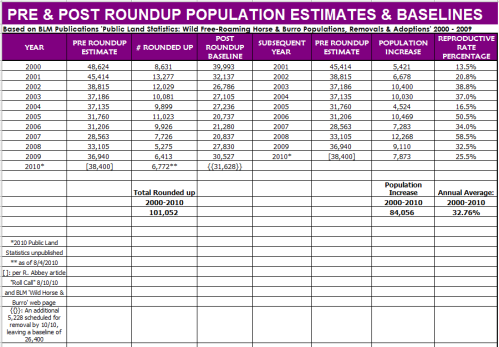
Arizona agency lobbies for wild horse euthanasia - Los Angeles equine policy | Examiner.com
From Catherine Ritlaw:
Main Office -
Phoenix Arizona Game and Fish Department
5000 W. Carefree Highway Phoenix, AZ 85086-5000
602-942-3000
___________________________________
Arizona agency lobbies for wild horse euthanasia - Los Angeles equine policy | Examiner.com

Main Office -
Phoenix Arizona Game and Fish Department
5000 W. Carefree Highway Phoenix, AZ 85086-5000
602-942-3000
___________________________________
Arizona agency lobbies for wild horse euthanasia - Los Angeles equine policy | Examiner.com
free-roaming wild horses
Photo: photo by carrol abel Arizona Game and Fish Department (AZGFD), is recommending the Bureau of Land Management euthanize healthy excess wild horses and burros as a management alternative.
In a letter addressed to BLM director Bob Abbey, AZGFD Director Larry Voyles states, “In order to have a truly open dialogue and consideration for all viable management alternatives, the BLM should reconsider the inclusion of two options, which have been identified as “off the table” for the development of the new draft strategy: 1) euthanasia of healthy excess animals, and 2) their sale without limitation.”
While the BLM did indeed request comment from all stake holders on the Bureaus Wild Horse and Burro Strategy Development document until september 3, press releases and the document itself clearly designated these two management alternatives as “off the table”.
BLM’s 2008 announcement that it was considering the euthanasia of more than 30,000 wild horses brought a tidal wave of public outrage. Pressure to mend a broken program followed shortly thereafter. Congress has repeatedly denied funding for euthanasia and all indications are that denial will continue.
The “sale without limitation” clause, already in limited use, came about in 2004 with the now infamous Burns’ Rider NO. 142. An undetected amendment, silently added to an appropriations bill during a Thanksgiving holiday by then Senator Conrad Burns, passed through Congress with no knowledge of its existence and no legislative debate. Sale without limitation allows BLM to sell qualifying equines with no protections for their welfare, usually at a next to nothing price. Within four months after George Bush signed the bill into law in 2005, documented cases of BLM horses sold for slaughter started to surface.
BLM’s current posting on Facebook states, “ Since 2005, the Bureau has sold more than 4,100 horses and burros. A Sept. 2009 BLM fact sheet refers to such results as achieving, " limited success as implemented."
The body of AZGFD’s letter reveals an agency, not unlike the BLM itself, basing decisions on obsolete information. Scientific references used to substantiate claims of detrimental effects of wild equids on other forms of wildlife are an average of over 17 years old ,with only 20% being less than 10 years old. One reference cited is a Vertebrae Pest conference from 1974, some 36 years ago. It is doubtful any of these documents would meet National Environmental Protection Agency requirements.
AZGFD expresses concern regarding the “accurate ecological or evolutionary understanding of wild horses and burros on the North American continent. “ The agency’s claim that ,“ wild horses and burros are not native to North America ” is in direct conflict with accepted scientific evidence of Equus Caballus evolution on the North American continent.
Director Larry Voyles offered his expert testimony to the House Natural Resources Subcommittee against passage of the ROAM Act ( HR 1018) in March of last year. It is presumed that at least a portion of his testimony was based on the aforementioned scientific evidence. The Committee voted to pass the act which has since stalled in the Senate.
Perhaps the AZGFD should take their own advice on two important points, “ It is imperative, though, that any public outreach, marketing, environmental education, and showcasing accurately and thoroughly tell the story of free-roaming wild horses and burros.” and , ‘ The Department fully supports attempts to research, develop, and incorporate the best scientific knowledge and applications available to aid in the management of wild horses and burros.”
BLM DIrector Bob Abbey’s Washington office has not responded to multiple requests for comment
Comments on the Wild Horse and Burro Strategy Development Document can be submitted either: (1) by e-mail to wildhorse@blm.gov ( “WHB Public Comment” is required in the subject line); (2) by mail to BLM Washington Office, 1849 C Street NW, Rm. 5665, Washington, DC 20240 (if mailing, comments need to be postmarked no later than September 3, 2010); or (3) using the ePlanning process accessible online at http://blm.gov/m14c. COMMENT PERIOD ENDS SEPT. 3.
Wednesday, September 1, 2010
Wild horses rounded up after devastating wildfire
KTVB.com
GLENNS FERRY, Idaho -- The fast moving Long Butte fire near Hagerman is now 100 percent contained and fire fighting operations are scaling down. But the trouble isn’t over for close to 200 wild horses.
The Bureau of Land Management did an emergency horse round up Tuesday.
About 307,000 acres of grass and brush were destroyed in the Long Butte Fire. There are about 200 wild horses that roam the area and BLM has decided to evacuate them. Not much is left of the grass that these horses rely on for food, that's why officials say this emergency round-up is so important.
“Their home range, or their preferred area as we like to call it, burned a hundred percent in the Long Butte Fire that started about 10 days ago on August 21st,” said Heather Tiel-Nelson, Twin Falls BLM.
The fire charred the land, leaving the herd of horses with very little to eat.
“There are patches of unburned islands, but for the most part there is just not enough forage to support 180 to 200 horses,” said Tiel-Nelson.
With the aid of a helicopter, Ken Crane with BLM says they were able to gently and safely push the horses into waiting corrals.
“The animals will go in naturally, they aren't going to get jammed up and get hurt and they've got big enough pins that they can go in and then settle in and be quiet,” said Crane.
“At this main point BLM's primary objective is to get these horses into food and water and to asses if there are respiratory issues, as far as you know they've been out here inhaling the dust, the smoke the ash, so we want to take a look at that and have a veterinarian take a look at that and reassess their condition of course,” said Tiel-Nelson.
After three different passes with the helicopter, the wild horses were corralled.
The horses will be transported to Boise where they'll either be adopted out or BLM will reassess the situation to see if they can be released back on to public land.
BLM says they've been sustaining the horses with hay since the fires began a week and a half ago.
This same herd of horses was involved in an emergency gather after a large wildfire in that area in 2005.
KTVB.COM
Posted on August 31, 2010 at 6:32 PM
Updated today at 10:04 AM
GLENNS FERRY, Idaho -- The fast moving Long Butte fire near Hagerman is now 100 percent contained and fire fighting operations are scaling down. But the trouble isn’t over for close to 200 wild horses.
The Bureau of Land Management did an emergency horse round up Tuesday.
About 307,000 acres of grass and brush were destroyed in the Long Butte Fire. There are about 200 wild horses that roam the area and BLM has decided to evacuate them. Not much is left of the grass that these horses rely on for food, that's why officials say this emergency round-up is so important.
“Their home range, or their preferred area as we like to call it, burned a hundred percent in the Long Butte Fire that started about 10 days ago on August 21st,” said Heather Tiel-Nelson, Twin Falls BLM.
The fire charred the land, leaving the herd of horses with very little to eat.
“There are patches of unburned islands, but for the most part there is just not enough forage to support 180 to 200 horses,” said Tiel-Nelson.
With the aid of a helicopter, Ken Crane with BLM says they were able to gently and safely push the horses into waiting corrals.
“The animals will go in naturally, they aren't going to get jammed up and get hurt and they've got big enough pins that they can go in and then settle in and be quiet,” said Crane.
“At this main point BLM's primary objective is to get these horses into food and water and to asses if there are respiratory issues, as far as you know they've been out here inhaling the dust, the smoke the ash, so we want to take a look at that and have a veterinarian take a look at that and reassess their condition of course,” said Tiel-Nelson.
After three different passes with the helicopter, the wild horses were corralled.
The horses will be transported to Boise where they'll either be adopted out or BLM will reassess the situation to see if they can be released back on to public land.
BLM says they've been sustaining the horses with hay since the fires began a week and a half ago.
This same herd of horses was involved in an emergency gather after a large wildfire in that area in 2005.
Evidence of Death Haunts BLM Wild Horse Concentration Camp
http://rtfitch.wordpress.com/2010/08/31/evidence-of-death-haunts-blm-wild-horse-concentration-camp/
(The News as We See It) by R.T. Fitch ~ author of “Straight from the Horse’s Heart”
 We wrote on Sunday regarding the impact that visiting a Bureau of Land Management (BLM) Wild Horse Concentration Camp can have upon one’s soul. The facility that we highlighted was Palomino Valley north of Sparks, NV where we were granted unfettered access and did not experience the feeling of being watched or guarded, unlike our experiences at the Litchfield facility outside of Susanville, NV…ground zero for the Twin Peaks Wild Horse extermination.
Litchfield is where the pain begins, it’s the location of the pre- dawn briefing where law abiding citizens hear a daily “safety” briefing where BLM authorities would threaten and intimidate, until we reported it, and then be escorted out to wherever the Cattoors have set up their most recent stampede traps. Litchfield would also be our last stop on the way back to Susanville so that we could check on all of the lame and crippled foals that Sue Cattoor claims do not exist so that we could document either their progress or their demise. But now that Litchfield is full of over 900 Twin Peaks wild souls, there is something more ominous about its past surfacing than of its future.
Weary and aging eyes, such as mine, might miss the subtle hints but the artful and intelligent perception of Horseback Magazine’s Chief Photographer, Terry Fitch, and fellow Correspondent Laura Leigh did not miss the fact that amongst the captive, living horses exists evidence of death.
 Not on one day but everyday Terry and Laura photographed images of a skull and then at another location, within Litchfield, a jawbone in and amongst the survivors of the Twin Peaks stampede. At first it might not appear to be much of a big deal but as you process the information you have to ask yourself how this could come to be. Did a horse die within those corrals and those that removed the body failed to notice that it had no head? If we, as lowly taxpaying citizens, could see the remains why could the attentive government employees not detect it? What is the quality of care being given?
Many unanswered questions but perhaps it explains the current paranoia that permeates the facility as the funding public is NOT allowed to observe the corrals without being under the watchful eye of a BLM employee/escort. Nor were we granted fair and equitable access on site which is a clear violation of the First Amendment.
It’s another day; more wild horses will lose all that is lawfully right and guaranteed by Congress as Ken Salazar and Bob Abbey subvert the law but one thing is for certain and will not be twisted. We are watching and we will prevail.
The eyes of the nation and the entire world are upon the misconduct of the BLM and will not be dissuaded by threat, rumor or innuendo.
It’s all about the horses.
More...

(The News as We See It) by R.T. Fitch ~ author of “Straight from the Horse’s Heart”
The Pain Continues
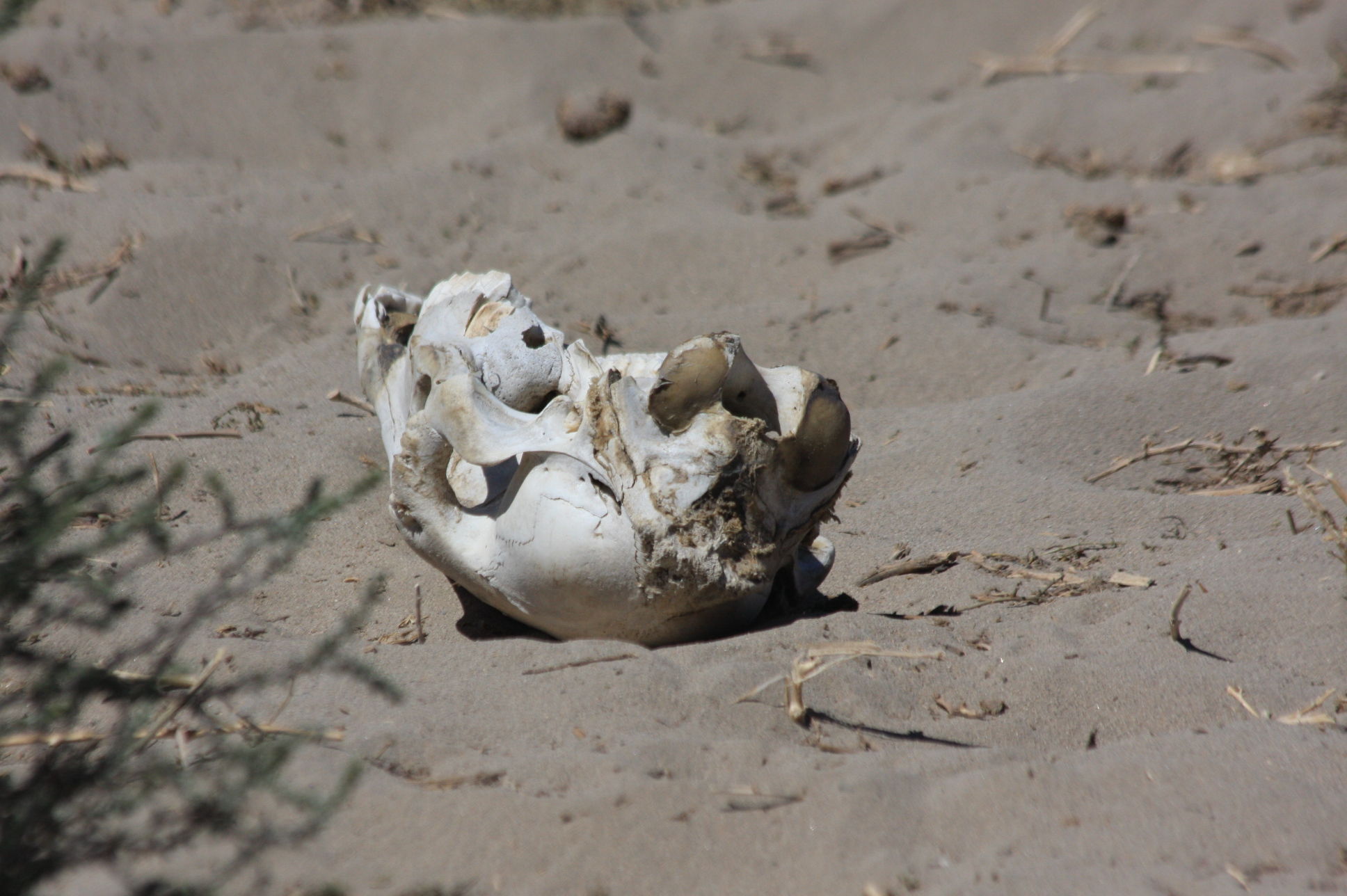
Skull in Corral at BLM's Litchfield Facility ~ Photo by Terry Fitch
Litchfield is where the pain begins, it’s the location of the pre- dawn briefing where law abiding citizens hear a daily “safety” briefing where BLM authorities would threaten and intimidate, until we reported it, and then be escorted out to wherever the Cattoors have set up their most recent stampede traps. Litchfield would also be our last stop on the way back to Susanville so that we could check on all of the lame and crippled foals that Sue Cattoor claims do not exist so that we could document either their progress or their demise. But now that Litchfield is full of over 900 Twin Peaks wild souls, there is something more ominous about its past surfacing than of its future.
Weary and aging eyes, such as mine, might miss the subtle hints but the artful and intelligent perception of Horseback Magazine’s Chief Photographer, Terry Fitch, and fellow Correspondent Laura Leigh did not miss the fact that amongst the captive, living horses exists evidence of death.
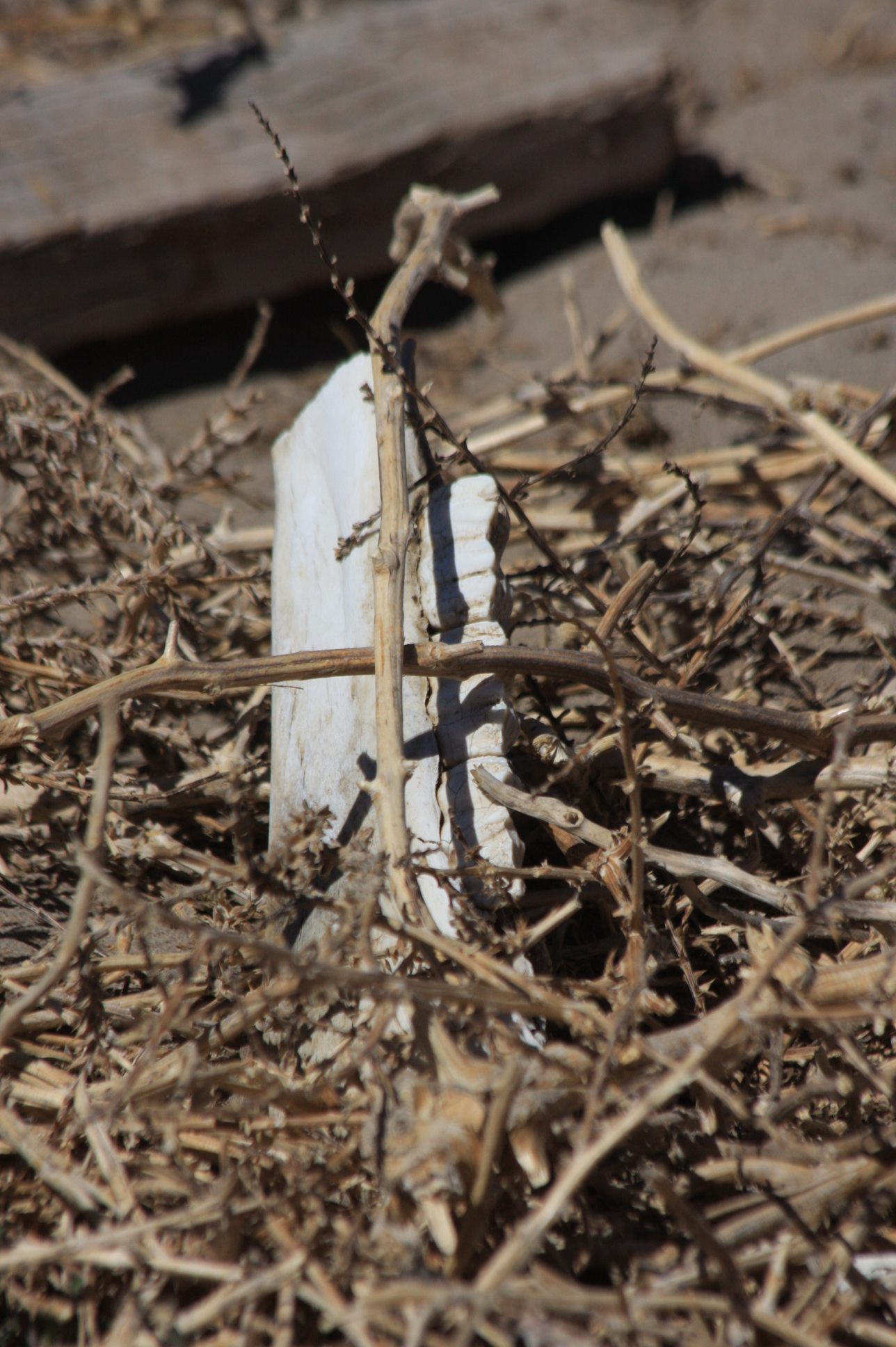
Jawbone in Corral at BLM's Litchfield Facility ~ Photo by Terry Fitch
Many unanswered questions but perhaps it explains the current paranoia that permeates the facility as the funding public is NOT allowed to observe the corrals without being under the watchful eye of a BLM employee/escort. Nor were we granted fair and equitable access on site which is a clear violation of the First Amendment.
It’s another day; more wild horses will lose all that is lawfully right and guaranteed by Congress as Ken Salazar and Bob Abbey subvert the law but one thing is for certain and will not be twisted. We are watching and we will prevail.
The eyes of the nation and the entire world are upon the misconduct of the BLM and will not be dissuaded by threat, rumor or innuendo.
It’s all about the horses.
More...
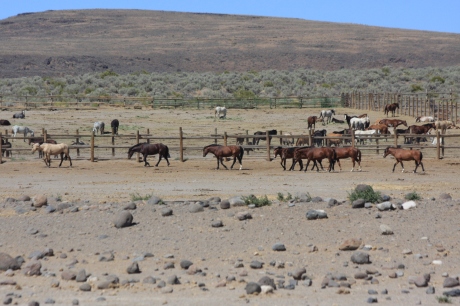
Another Power Grab in Arizona
Another Power Grab in Arizona
Arizona, like 23 other states, allows citizens to circulate petitions and pass statewide laws directly through ballot initiatives. It’s a check on the politicians when they fail to represent their constituents’ views, and on the well-heeled special interests when they block policy reforms. It’s through the initiative process that we’ve helped adopt the major animal welfare policy advances in the state—banning the use of steel-jawed leghold traps on public lands in 1994, outlawing cockfighting in 1998, and in 2006 phasing out the extreme confinement of breeding sows and veal calves on factory farms.
 Of course, the special interests in Arizona didn’t like these outcomes. They had everything wired in the state legislature, and they knew the only way for us to achieve these reforms was to take these questions to the people. Now, they’ve cooked up yet another scheme to cling fast to the levers of power.
In past years, the special interests and their allies in the legislature have tried numerous times in Arizona to chip away at voting rights, and they’ve been soundly rejected at every turn. In 2000, a constitutional amendment that would have required a two-thirds “supermajority” on wildlife-related ballot measures, rather than the simple majority needed for all other subjects, went down to defeat—with 62% of voters opposing the measure. And in 2008, an amendment that would have required any ballot measure to get a nearly impossible majority of all registered voters, including those who have died or moved but are still on the voter rolls, rather than a majority of those who actually vote, was soundly defeated, too—with 66% opposing.
Not taking “no” for an answer, Arizona lawmakers and special interests are at it again, by placing Proposition 109 on the November statewide ballot. It’s another power grab by politicians who want to take away the rights of Arizona voters. Prop 109 would take away Arizonans’ voting rights by giving the legislature exclusive authority over wildlife issues. The state wildlife agency would no longer be able to make management decisions without the legislature’s approval—opening up every big issue to the whimsy of lawmakers, who are often captive to the NRA and other extreme organizations that defend animal abuse.
The state constitution should not be used to score political points for extreme groups that use inhumane and unsportsmanlike trophy hunting practices. Prop 109 could even nullify wildlife measures that have been previously approved by Arizona voters—such as the 1994 law to prohibit steel-jawed and body-gripping traps on public lands. These traps are cruel and indiscriminate, and voters made the right call to outlaw these landmines for wildlife more than 15 years ago.
Prop 109 could even cost taxpayers millions of dollars and subject the state to frivolous and expensive lawsuits from individuals who want to argue that bag limits or season dates for a particular species are “unreasonable.” A poacher caught spotlighting animals from the road or shooting animals out of season could argue in court that such restrictions are “unreasonable.” It’s a bad law that solves nothing and only creates problems.
The Arizona Republic, the largest newspaper in the state, called the similar proposition in 2000 “dumb,” saying it was “an ill-founded fear that undercuts majority rule,” and “a bad tonic for a problem that doesn’t exist.” The same principles hold true a decade later, and a dumb idea hasn’t gotten any better with age. If we let the politicians take away our right to vote on wildlife issues, what other issues will be next?
Animal protection groups and others concerned about protecting voting rights are going to form a coalition to fight this power grab. You’ll be hearing more from us on the issue, as we urge Arizonans to say “no” to the special interests and vote “no” on Prop 109.
Paid for by Humane Society Legislative Fund, Michael Markarian, President, 519 C St. NE, Washington, DC 20002.


Arizona, like 23 other states, allows citizens to circulate petitions and pass statewide laws directly through ballot initiatives. It’s a check on the politicians when they fail to represent their constituents’ views, and on the well-heeled special interests when they block policy reforms. It’s through the initiative process that we’ve helped adopt the major animal welfare policy advances in the state—banning the use of steel-jawed leghold traps on public lands in 1994, outlawing cockfighting in 1998, and in 2006 phasing out the extreme confinement of breeding sows and veal calves on factory farms.
Of course, the special interests in Arizona didn’t like these outcomes. They had everything wired in the state legislature, and they knew the only way for us to achieve these reforms was to take these questions to the people. Now, they’ve cooked up yet another scheme to cling fast to the levers of power. In past years, the special interests and their allies in the legislature have tried numerous times in Arizona to chip away at voting rights, and they’ve been soundly rejected at every turn. In 2000, a constitutional amendment that would have required a two-thirds “supermajority” on wildlife-related ballot measures, rather than the simple majority needed for all other subjects, went down to defeat—with 62% of voters opposing the measure. And in 2008, an amendment that would have required any ballot measure to get a nearly impossible majority of all registered voters, including those who have died or moved but are still on the voter rolls, rather than a majority of those who actually vote, was soundly defeated, too—with 66% opposing.
Not taking “no” for an answer, Arizona lawmakers and special interests are at it again, by placing Proposition 109 on the November statewide ballot. It’s another power grab by politicians who want to take away the rights of Arizona voters. Prop 109 would take away Arizonans’ voting rights by giving the legislature exclusive authority over wildlife issues. The state wildlife agency would no longer be able to make management decisions without the legislature’s approval—opening up every big issue to the whimsy of lawmakers, who are often captive to the NRA and other extreme organizations that defend animal abuse.
The state constitution should not be used to score political points for extreme groups that use inhumane and unsportsmanlike trophy hunting practices. Prop 109 could even nullify wildlife measures that have been previously approved by Arizona voters—such as the 1994 law to prohibit steel-jawed and body-gripping traps on public lands. These traps are cruel and indiscriminate, and voters made the right call to outlaw these landmines for wildlife more than 15 years ago.
Prop 109 could even cost taxpayers millions of dollars and subject the state to frivolous and expensive lawsuits from individuals who want to argue that bag limits or season dates for a particular species are “unreasonable.” A poacher caught spotlighting animals from the road or shooting animals out of season could argue in court that such restrictions are “unreasonable.” It’s a bad law that solves nothing and only creates problems.
The Arizona Republic, the largest newspaper in the state, called the similar proposition in 2000 “dumb,” saying it was “an ill-founded fear that undercuts majority rule,” and “a bad tonic for a problem that doesn’t exist.” The same principles hold true a decade later, and a dumb idea hasn’t gotten any better with age. If we let the politicians take away our right to vote on wildlife issues, what other issues will be next?
Animal protection groups and others concerned about protecting voting rights are going to form a coalition to fight this power grab. You’ll be hearing more from us on the issue, as we urge Arizonans to say “no” to the special interests and vote “no” on Prop 109.
Paid for by Humane Society Legislative Fund, Michael Markarian, President, 519 C St. NE, Washington, DC 20002.
AWI Press Release: As Study Begins, the Animal Welfare Institute Calls on Bureau of Land Management to Halt Wild Horse Roundups

For Immediate Release
As Study Begins, the Animal Welfare Institute Calls on Bureau of Land Management to Halt Wild Horse Roundups
Washington, DC (September 1, 2010) – While the Animal Welfare Institute (AWI) welcomes the recent news that the Bureau of Land Management (BLM) has asked the National Academy of Sciences National Research Council (NAS/NRC) to review its National Wild Horse and Burro Program starting January 1, 2011, we are deeply disappointed with the agency’s blatant disregard for calls to halt wild horse roundups pending completion of the review. AWI first recommended this outside review along with a moratorium on roundups over a year ago given the widespread problems being reported in the BLM’s management of wild horses.
“While we are grateful that the BLM has finally realized the urgent need for advice from scientific experts, we continue to be disappointed at their stubborn refusal to halt the massive wild horse roundups they are conducting at an alarming rate,” said Chris Heyde, deputy director of government and legal affairs for AWI.
In testimony to the House and Senate Interior Appropriations Subcommittees, AWI laid out its reasoning and criteria for an independent study by the NAS, a moratorium on all non-emergency roundups, and the critical importance of maintaining language preventing the BLM from killing tens of thousands of healthy wild horses. In July, similar concerns were raised with the BLM in a bipartisan letter from House Natural Resources Committee Chairman Nick Rahall (D-WV), National Parks, Forests and Public Lands Subcommittee Chairman Raul Grijalva (D-AZ) and 52 of their colleagues.
Commissioning the NAS/NRC to review their three earlier reports and the current available information and research about wild horses and burros is a first step, according to the BLM. The second step will be for the NAS/NRC to make recommendations about future Wild Horse & Burro Program management and needed research. A third step is to take the NAS/NRC findings and recommendations and make them available to the public in a variety of ways, perhaps through focus groups or science forums.
“A moratorium on non-emergency roundups must be put in place for the duration of the NAS study,” noted Heyde. “By requesting this independent review, the BLM finally admits the need for obtaining scientific advice; but to continue roundups clearly designed to remove as many horses as possible before any results can be obtained from the two year study is completely irresponsible.”
With the beginning of a review by the NAS, AWI is renewing its call for a moratorium on non-emergency wild horse roundups by the BLM. The Agency should not be allowed to continue exacerbating a broken system by rounding up horses and warehousing them in expensive holding facilities while the NAS reviews the program. The responsible action to take is stopping round ups and waiting for recommendations to improve the program.
##30##
For More Information:
Chris Heyde, (202) 337-2332
____________________________
CHRIS HEYDE
Deputy Director
Government and Legal Affairs
ANIMAL WELFARE INSTITUTE
900 Pennsylvania Ave., SE
Washington, DC 20003
T: (202) 446-2142 ~ F: (202) 446-2131
The Animal Welfare Institute has been working to alleviate the suffering inflicted on animals by humans since 1951.
Please join us in our work to protect animals – visit our website to find out more and to sign up for AWI eAlerts: www.awionline.org.
Subscribe to:
Posts (Atom)


