Friday, May 13, 2016

BLM: Liars, Liars Pants on FIRE

Straight from the Horse's Heart

“We were about to post the BLM’s latest propoganda and lie-fest when Grandma Gregg sent an email that lit me up.  Instead of posting her comment after the article we are using it as a ‘forward’ to the idiot article, it’s just too much…so Grandma, tell us what you think and take it away…!” ~ R.T.


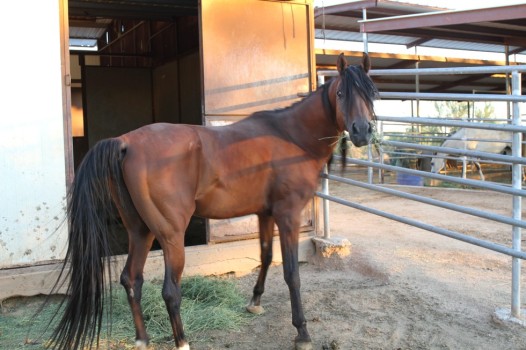
photo by Terry Fitch of Wild Horse Freedom Federation

photo by Terry Fitch of 
Wild Horse Freedom Federation


FYI although BLM has claimed that the 1971 population was about 25,345 they FAIL to include the over 70,229 wild horses and burros that were “claimed” by anyone who wanted to round them up from 1971 to 1979. These would be “mustangers” in the truest form of the word and these WH&B would have gone to slaughter – i.e. sold by the pound. And these over 70 thousand are ONLY the ones that were reported and I don’t think anyone familiar with the wild horse and burro issue would disagree that many many many others would have been captured by mustangers and NOT “reported”.
So although we will never know the exact population of WH&B on the day the 1971 Act was passed there is no way in ‘ell you can convince me that it was 25,345 and that those other over 70 thousand were already owned by the people who captured them. No way. I personally have no problem believing that the true wild horse and burro population in 1971 was well over 100,000 and they were not over grazing their lands. The domestic private/corporate livestock were over-grazing since there were many many many more of those on public lands (millions from what I can figure out (http://www.law.gonzaga.edu/law-review/files/2013/11/Coggins.pdf) but the wild horses and burros were not overgrazing their legal lands simply by comparing the numbers of WH&B versus the domestic private/corporate cattle and sheep.
And then we can ALSO talk about their unsupported and non-defensible annual population increases they puke all over us each year and on each and every EA.
Cindy Macdonald (American Herds) wrote a summary about this subject.
Time to get our 100,000 plus wild horses and burros back on their legal lands where they belong.
(Please excuse my rant … but just felt I had to speak up) ~ Grandma Gregg

THE LIE:
BLM seeks to expand initiatives to address problems with new legislative authority
  • 46,000 Horses Already Being Cared for Off-Range
  • Off-Range Care of Unadopted Horses Would Exceed $1 Billion
  • Necessary Horse Gathers Exceed Available Space and Funding
The Bureau of Land Management announced today that as of March 1, 2016, more than 67,000 wild horses and burros are roaming Western public rangelands – a 15 percent increase over the estimated 2015 population.
The updated numbers show more than twice the number of horses on the range than is recommended under BLM land use plans. It is also two and a half times the number of horses and burros that were estimated to be in existence when the Wild and Free Roaming Horses and Burros Act was passed in 1971.  To help address the problem, BLM is seeking legislative authority for additional initiatives.
“Over the past seven years we have doubled the amount of funding used for managing our nation’s wild horses and burros,” said BLM Director Neil Kornze. “Despite this, major shifts in the adoption market and the absence of a long-term fertility control drug have driven population levels higher. A number of program reforms are underway, but assistance is needed from our local, state, and federal partners.”
While herds of wild horses consistently double in size every four years, there has also been a dramatic decrease in adoptions in recent years. In the early 2000s, nearly 8,000 horses were being placed with private adopters each year.  Due to a number of economic factors, that number is now down to roughly 2,500 animals each year, compounding an already difficult management situation.
The total lifetime cost of caring for an unadopted animal that is removed from the range is substantial. Costs for lifetime care in a corral approaches $50,000 per horse. With 46,000 horses and burros already in off-range corrals and pastures, this means that without new opportunities for placing these animals with responsible owners, the BLM will spend more than a billion dollars to care for and feed these animals over the remainder of their lives. Given this vast financial commitment, the BLM is now severely limited in how many animals it can afford to remove from the range.
To address these issues the BLM is taking a number of steps, including sponsoring a significant research program focused on fertility control; transitioning horses from off-range corrals to more cost-effective pastures; working to increase adoptions with new programs and partnerships; and requesting two new pieces of legislative authority — one to allow for the immediate transfer of horses to other agencies that have a need for work animals and one that would create a congressionally-chartered foundation that could help fund and support adoption efforts. Additional tools and resources are needed to bring this program onto a sustainable path.
The table below shows the 2016 West-wide, on-range population on a state-by-state basis as of March 1, 2016.  This year’s 15 percent increase over the 2015 population compares to an 18 percent increase from 2014 to 2015.  The BLM plans to remove 3,500 wild horses and burros from Western public rangelands in 2016.
Wild Horse and Burro On-Range Population as of March 1, 2016
 State Horses Burros Total Maximum AML
 AZ 318 5,317 5,635 1,676
 CA 4,925 3,391 8,316 2,200
 CO 1,530 0 1,530 812
 ID 468 0 468 617
 MT 160 0 160 120
 NV 31,979 2,552 34,531 12,811
 NM 171 0 171 83
 OR 3,785 56 3,841 2,715
 UT 5,440 400 5,840 1,956
 WY 6,535 0 6,535 3,725
 TOTAL 55,311 11,716 67,027 26,715

Saturday, April 16, 2016

Arizona Horse Imprisoned In Stall For Years Learns To Trust Man Who Set Him Free

Straight from the Horse's Heart

Source:  the dodo
The first step he took out of his stall was the hardest.
Monty, a horse locked away in a filthy stall for years, did not seem to understand what was going on. He was hesitant and frightened about coming out of his makeshift prison, where the only attention he received was when his owner threw in some hay, food and water. His only friends were the flies that circled and landed on his gaunt frame.
980x
Monty locked in his stall  (Michelle Forster)
When his rescuer, Travis Underwood, first saw Monty, he didn’t know what to expect when he opened the gate.
980x
(Travis Underwood)
Monty was one among many horses and dogs found on a 10-acre property in Scottsdale, Arizona, in the summer of 2014. Trisha Houlihan, founder and executive director of Saving Paws Rescue, AZ of Phoenix, had been alerted about neglected dogs on the property, Michelle Forster, a volunteer with the organization, told The Dodo.
980x
(Photo: Michelle Forster)
The woman who owned the property, known only as Donna, had been left with animals after her husband died in the summer of 2014 after a long illness, and everything at the property went into disarray. “Her husband kept her isolated,” Forster said.
According to Forster, Donna’s husband had been breeding German shepherds and owned roughly 21 horses. The widow reached out because she needed homes for two of the dogs who had been severely neglected. When Forster did a courtesy call to check on the dogs and take photos, she had no idea she would find an animal hoarding situation in the process. However, the animals did have food, water and shelter, as required by Arizona law.
Due to the horrible conditions, Houlihan accompanied Forster on a subsequent visit to document the animals. She reached out to Underwood, a longtime volunteer with Saving Paws, for his assistance.
980x
Travis gains Monty’s trust (Lisa Cramton)
Initially, Donna wanted to sell the horses, mainly Arabians and quarter horses. “But the market was saturated at the time,” Forster said. “Everyone was trying to get her to understand that the horses didn’t have the value that she originally thought.”
The horses had been badly bitten by flies, and they had not received any general care. They were not let out of their stalls, had not been exercised, and were denied hoof care, vet care and basic grooming. Although some of the horses were worth money on paper, most were not marketable because they had not been trained and were in bad condition.
Read the rest of this article HERE.

Wednesday, April 13, 2016

The elephant in the room at BLM’s National Wild Horse & Burro Advisory Board meetings

Straight from the Horse's Heart


elephant-in-the-room
The elephant in the room (photo: bassamsalem)
This is a public comment letter that K.R. Gregg, Environmental Researcher, sent to the BLM’s National Wild Horse & Burro Advisory Board:
April 10, 2016
National Wild Horse and Wild Burro Program National Advisory Board Members
Attention: Ramona DeLorme, 1340 Financial Boulevard, Reno, Nevada, 89502-7147
I request that this letter be provided to all board members and also be included in the official minutes and the administrative record for the meeting.  Thank you.
Re:  National Wild Horse and Burro Advisory Board Public Comment
Dear Sirs/Madams:
I have heard people talk about the “elephant in the room” during BLM meetings and then ignore the REAL elephant in the room, which is that there are NO excess wild horses and burros on their congressionally designated legal lands.
Do not allow the BLM and USFS and Farm Bureau, the extractive and mining giants, hunting lobbyists and the domestic livestock grazing associations to pull the wool over your eyes. There are no excess wild horses and burros on their legally designated land.
Per the 1971 Congressional Wild Horse and Burro Act, the land is to be devoted PRINCIPALLY, although not exclusively, to the wild horses and wild burros’ welfare in keeping with the multiple-use management concept of public lands. 

Definition of “principally”: First, highest, foremost in importance, rank, worth or degree, chief, mainly, largely, chiefly, especially, particularly, mostly, primarily, above all, predominantly, in the main, for the most part, first and foremost.
There is NO reason for these wild horse and burro removals and destruction procedures … because there are NO excess wild horses and burros on their legally designated land.
In 1971, when Congress passed the Wild Free-Roaming Horses and Burros Act, these animals were found roaming across 53,800,000 million acres. That amount of acreage could support more than about 250,000 wild horses and burros, but even after 22,200,000 acres were stolen from the American people by government agencies, the remaining 31,600,000 acres could support more than 100,000 wild horses and burros today.
It is currently independently estimated that less than 20,000 wild horses and burros are living on their legal land today and yet the government continues its aggressive removal and destructive management toward total wild horse and burro extermination.

There is NO reason for these wild horse and burro removals and destruction procedures because there are NO excess wild horses and burros on their legally designated land.

Tuesday, April 12, 2016

Dr. Don Moore responds to spin of 2 National Wild Horse & Burro Advisory Board Members

Straight from the Horse's Heart


pielstick-1
(It doesn’t look like Dr. Leon Pielstick has put on the sterile sleeve yet in the photo above.)
Below we’ve posted:                                                                                                                                                                                                              1) the comment Don Moore, DVM to BLM on their barbaric plan to sterilize wild mares.   2) the response to this from two National Wild Horse & Burro Advisory Board members – Sue McDonnell (NOT a vet) and Julie Weikel, DVM.   3) Dr, Don Moore’s response to their response.
Here is a copy of Dr. Don Moore’s original comment to the BLM regarding wild mare sterilization experimentation:
Attention Project Lead:
BLM stated it was “investing in a diverse portfolio of research projects to develop new, modern technologies and methods for wild horse and burro management”.   BLM is looking to improve existing population growth suppression methods or develop new methods according to the environmental assessment.  However, BLM does not need to investigate the safety and efficacy of three separate methods of surgical sterilization of wild horse mares.  These three methods have been performed on domestic mares and discounted as a last and least preferred method to manage hormonal issues.
The three surgical procedures for permanent sterilization of mares described in the mare sterilization research project, ovariectomy via colopotomy, tubal ligation and hysteroscopically-guided laser ablation of the oviduct papilla all require certain pre-operative and post-operative considerations  for aseptic surgical protocol and pain management.  Pre-operative bloodwork and a thorough examination are always performed on the relatively few domestic mares which are spayed.  Other options other than surgery are always considered first due to the risk involved with any of these procedures.   Aseptic surgical protocol and pain management is the standard of care for each and every surgery or the performing veterinarian would undoubtedly be sued by the owner and reprimanded by the state veterinary board.
Wild mares will not have their surgeries performed in a sterile surgical suite.  Their surgery will be performed in a non-sterile chute or standing in stocks at the local BLM facility without benefit of routine standard of care.   Unlike domestic mares who are easily handled, the very handling of these wild mares presents additional pre-operative stressors, which cannot be mitigated.
BLM does not possess the statutory authority to treat America’s wild free roaming mares as research test subjects to perform  surgeries which are not the standard of care for domestic mares.
Case in point, is a photograph of Dr. Leon Pielstick as he was beginning to perform a surgery attired in bibs used predominately for working cattle and performing the surgery with a non-sterile plastic sleeve that is used to pregnancy check cattle.  This is not acceptable for a domestic mare, why wild mares?  To learn this procedures has been performed on some of the Sheldon wild mares, undoubtedly in a similar manner, is gross negligence and inhumane on the part of the Department of Interior and the veterinarians who performed the surgery in less than aseptic conditions.
This type of trial and error butchery is a violation of the least feasible management clause of the Wild Free Roaming Horses and Burros Act.
In private practice, colopotomy is considered an inferior procedure with likelihood of post-surgical infections and complications (i.e., colic) especially during these unsterile conditions.  Post-operative care usually lasts several days to often weeks and mares are monitored and in most cases are monitored in box stalls or cross ties, which cannot be accomplished with wild mares. Post- operative bleeding is a situation which cannot be easily remedied even in domestic mares.
Standard of care for tubal ligation and/or ovariectomy is performed under aseptic conditions with a laparoscope and pain mitigation along with private confinement and treatment which can last days to weeks.  Complications can also be colic, infection and pain mitigation is required.
Hysteroscopically guided laser ablation is not a preferred method by board certified equine surgeons because it is considered experimental even under the best of conditions.  Field veterinarians and veterinary students are woefully inadequate to perform any of these surgeries, which in my opinion should only be done by board certified equine surgeons in appropriate surgical suites and with post- operative care performed by educated and expert staff in an equine veterinary hospital setting.
In recent conversations with Littleton Equine Medical Center veterinarians Scott Toppin, DVM, DABVP and Kelly Tisher DVM the following comments were made to me.
Dr. Toppin stated he had serious concerns about the dangerous and inhumane conditions under which these surgeries would be performed. He also stated concerns about the sterility of the procedure and pre and post-operative pain control.
Dr. Tisher shared that their practice equine surgeon,  Dustin V. Devine DVM, MS DACVS, performs  approximately six to twelve of these surgeries with a laparoscope annually.  Littleton Equine is the leading equine veterinary private practice in Colorado.
Mass experimental surgeries performed under these conditions outlined in the proposal, amounts to negligence and abuse.   I believe experiments such as this proposal are unethical, inhumane and unwarranted.   Any veterinarian(s) who would perform these experiments is in violation of the oath taken as a graduating veterinarian, “above all else, do no harm”.  If a veterinarian in private practice performed these procedures in the manner described in this document they would most certainly be reported to and disciplined by the regulatory board of that state.  Discipline would likely mean suspension of that veterinarian’s license to practice in that state.
All horses should be judged the same when it concerns care.  Elective, unethical treatment should not be performed on  either domestic horses or wild horses.   BLM gives the impression that all wild horse areas are overpopulated, when in fact, most wild horse areas do not have a genetically sustainable population without intervention.  This is due to over manipulation of herds to promote adoption, decreasing original herd use areas and allowing livestock to over graze our public lands.  Once again, BLM is exceeding the statutory authority granted by Congress in the management of our wild horses.
Since the inception of the WHBA, BLM has practiced a management for extinction policy. It is ever so clear in the “experimental research policy” BLM is now proposing.
Sincerely,
Donald E. Moore, D.V.M
*******
Comments by Sue McDonnell (who is NOT a vet) and Julie Weikel of BLM’s National Wild Horse & Burro Advisory Board to an advocate who sent an email with link to an article by Debbie Coffey and Dr. Don Moore’s comment to the BLM:
Responses from Sue McDonnell and Dr. Weikel:
CC
Apr 1 at 7:05 PM
Thank you for the link.  That is very helpful. I trust that you want the information you circulate to be accurate, so I will share what I know.
I work with people who do this procedure in a world class equine vet hospital where I work, the University of Pennsylvania New Bolton Center. I have had ovariectomy via colpotomy done on my own research and clinical mares, and i find it a relatively non invasive procedure for ovariectomy.  I should explain a couple things that you may understandably misunderstand about the procedure.
You mention the rectal palpation sleeve and implicate it as unsatisfactory because it is used also with cattle.  The photo shows what to me looks like a sterile glove over the palpation sleeve. That is how it is done for ovariectomy via colpotomy on a farm or in a clinic or at a vet school hospital for horses. Using the clean (or sterile, Probably can’t tell for sure by photo alone) sleeve and sterile glove, all surfaces (typically only the sterile glove) that contact  internal abdomen of the patient that should be kept free of “germs” are sterile. The sleeve is used as additional coverage that is very clean if not sterile as added protection. The bibs are not relevant, really, and they could be very clean, but it doesn’t matter much since they don’t touch the internal abdomen of the patient.
I will copy the veterinarians on the board, Dr. Cope and Dr. Weikel, to comment if they have time and can add to my comments. Believe it or not, out in the open air can in many cases can be a “cleaner” environment in terms of infection for colpotomy than inside a hospital, where germs and resistant strains tend to accumulate.  If the outdoor area is dusty there would be concerns.  Veterinarians are usually doing their best to protect the animal patient.  I am not a vet, but have worked professionally with veterinarians in a vet school for over 35 years, and have found very few veterinarians who don’t try their best in this regard. I hear Dr. Moore’s concerns, and have not worked with Dr. Pielstick myself, but trust he is doing his best, which looks from your photos to be as good as here at a world class vet hospital or at other fine vet clinics.
I hope this is helpful. Please let me know what you think.
Sue McDonnell
Julie Weikel 
To
CC
Apr 1 at 8:30 PM
Thank you Dr. McDonnell for a very thorough coverage of (name redacted) concerns. I concur with all the points you make and add that dust management is routinely addressed during these procedures. I would also add that long term pain management and long term antibiotics are also routine for this procedure.
Certainly any handling of wild horses is stressful for them. However, the goal with these procedures is to achieve population stabilization so that further gathers are greatly reduced and bands can be left undisturbed, thus reducing total lifetime stressful events.
Julie Weikel DVM
*********
And Dr. Don Moore’s response to these comments by Sue McDonnell and Julie Weikel :
The University of Pennsylvania New Bolton Center is no doubt a fine surgery facility.  I am also certain that surgeons at the New Bolton Center operate in surgical suites that are properly vented and sterilized, and for Dr. McDonnell to suggest anything less is to insult the very facility she is works for.
It has been my experience at Colorado State University that surgeons as well as veterinary student observers in the suite, were routinely in sterile, long sleeved surgical gowns and gloves. They also wear surgical masks and caps.  This is the same protocol used by the excellent private practice facility I spoke with when researching these procedures. Standard of care dictates this diligent surgical preparation of the patient and surgical suite.
To suggest a “clean” sleeve is acceptable for abdominal surgery is ridiculous.   Aseptic conditions are the required standard of care for any abdominal surgery and the equine patient is more susceptible to peritonitis than any other species that veterinarians deal with.  To suggest an outdoor “facility” used by BLM could be a better choice than any properly equipped surgical suite is ludicrous.  Academia and research facilities are no longer exempt from good standard of care.
Again, for BLM and the Advisory Board to propose this type of mass experimental surgery under the conditions outlined in the proposal, amounts to negligence and abuse. 
To accept this mass butchery by BLM under the guise of research is inconceivable in a civilized society and to apologize for it suggests a complete misunderstanding of the ethics we as veterinarians pledge to adhere to.
 For BLM to promote that there is over population of wild horses on public lands is without merit.  Most wild horse areas are managed at levels below what is needed for self-sustaining, genetically viable numbers.  Many wild horse areas, such as the Little Bookcliffs (which has long utilized PZP), still need to have additional animals introduced to avoid inbreeding.  The Advisory Board would best focus research efforts to change the current BLM management practice of managing wild horses in significantly smaller subsets of original herd use areas that cannot physically allow for genetically viable, self-sustaining herds.   The next focus should be proper management of the domestic species that are causing range degradation.
Donald E. Moore, D.V.M.
Tuesday, March 15, 2016

BLM Offers $10K Reward in Nevada Wild Horse Killing

Straight from the Horse's Heart

Source: Multiple
“Although pleased that the BLM is taking the lead in investigating why a wild horse was murdered while in their care, it begs the question; why are we hearing this five months after the fact?  Something does not add up.” ~ R.T.

Former wild horses imprisoned by the BLM photo by Terry Fitch of Wild Horse Freedom Federation
RENO, Nev. — The Bureau of Land Managementis offering a $10,000 reward in the investigation of the killing of a federally protected wild horse at a state prison camp near Carson City in early October.
BLM spokeswoman Jenny Lesieutre said Monday they need the public’s help to find the person or persons responsible for the shooting at Northern Nevada Correctional Center’s Stewart Camp Conservation Center.
The camp is home to about 1,500 BLM horses are kept as part of a training program used to gentle and train the animals before adoption.
The crime is punishable by up to a year in prison and a $2,000 fine.
Lesieutre she says few details are being released because it is an ongoing investigation in connection with state corrections officials.
Anyone with information should call BLM’s crime hotline at 1-800-521-6501.

Wednesday, March 9, 2016

Bouvry Exports' Prime Feedlot, Alberta, Canada


Animals' Angels


Date:
Wednesday, March 9, 2016 - 09:15
Investigation Category:
Horses


Investigators returned to Bouvry’s largest feedlot, which holds approximately 10,000 horses at any given time, to check if conditions had improved since their 2014 visit. Investigators noticed right away that the work force was very active as feed trucks were continuously keeping the troughs filled. Other workers were constantly driving around the lot, an activity that could only be described as patrols checking the feedlot for potential intruders. All activities were conducted via vehicle; at no time were workers observed checking the condition of the animals in the pen area on foot.

The horses were kept in pens segregated by mares with foals and geldings. There were approximately 100-200 horses in each pen, all soaking wet from the rain. Most of the horses had a BCS of 7-8 and had been fattened for quite some time. Many had overgrown hooves and were coughing continuously.

The horses had 1-2 numbers branded onto their right shoulder; some horses also had a U-shaped brand on their right hindquarter. Some of the more recent brands, especially on the younger horses, appeared infected. In some cases the burn was quite severe and large, red wounds were clearly visible.


Regarding the pen area, no improvement was noted since our investigators’ last visit. There was still no shelter of any kind for any of the animals and several of the pens appeared very crowded and covered in manure.

Only limited quantities of water was visible, which appeared to be insufficient for the number of horses kept in the pens. The horses were observed licking rain water off of each other and off of the fencing.


One of the large pens held three mares and their foals. Some straw was visible, but it was soaked from the heavy rain. One of the foals was repeatedly coughing. A draft horse with an overgrown left front hoof was limping badly. Another lame horse was seen in the same pen.

Several of the younger draft horses had strong nasal discharge. Investigators observed a young foal, lying down by itself outside of the pen area. It had eye discharge and was very weak on its legs. When the foal moved, it did so only very slowly as if the action was quite painful.


Investigators noted that there were five horses that had escaped the pen area and were wandering along the fence line. One of them, a bay, was limping.

Shortly after spotting this group of horses, investigators saw another horse that was severely limping and moving his head up and down when walking. A Paint horse was also struggling due to a club foot and was barely able to put weight on his left hind leg.


Investigators found two rib sections outside the pen area, which appeared to be from a horse. Several coyotes were also spotted roaming the area by investigators.

This recent investigation shows that Bouvry has made no improvements to their feedlot -- the horses still have no access to shelter and multiple horses with health concerns were found. It appears that the only thing Bouvry has invested in is an increased work force, hired to patrol the premises.


Animals’ Angels will continue to monitor Bouvry’s operations and report all findings to the EU Commission.