Friday, July 27, 2012

Do you think the slaughter of horses for meat should end in Alberta?

Here is another site that needs some votes for Canada.

(Scroll down. at site.) Vote HERE.

MP comes to Calgary to protest horse slaughter Read it on Global News: Global Calgary | MP comes to Calgary to protest horse slaughter

Global Calgary


CALGARY - A New Democrat MP from B.C. was in Calgary on Monday to launch a billboard protesting the slaughter of horses for meat.

Alex Atamanenko is the MP behind Bill C-322, which would prohibit horse slaughter for human consumption.

The billboard near Memorial Drive and Barlow Trail SE, reads "Stop Slaughtering Us."

He says thousands of Canadians have signed petitions urging the Harper government to support his bill. Atamanenko says the industry is inhumane and needs to be shut down.

But Global News spoke with a horse dealer who takes unwanted and unhealthy horses to a slaughterhouse in Lacombe, Alberta who has a much different take on it.

“Everything in this world has to have an end place, it might as well be in a humane way. What else are you going to do with all the horses?”

Slaughterhouses pay almost $400 per horse, while euthanizing a horse costs about $250 plus the cost of disposing the carcass.

Alberta is the number one exporter of horse meat in the country.
Do you think the slaughter of horses for meat should be banned in Canada?


Senate Introduces Bill to Protect and Support Wild Horses in North Carolina


Animal Welfare Institute


Friday, July 27, 2012
Washington, D.C. -- The Animal Welfare Institute (AWI) commends Senator Kay Hagen (D-NC) and Senator Richard Burr (R-NC) for introducing S. 3448, the Corolla Wild Horses Protection Act.  A companion to the bill introduced by Representative Walter B. Jones (R-NC) and approved by the House of Representatives earlier this year, this bill will provide for a new management plan for the free-roaming Corolla wild horses in and around the Currituck National Wildlife Refuge on the Outer Banks of North Carolina.
The Corolla horses’ presence on the island is thought to coincide with the arrival of the Spanish explorers on the American coast in the early 16th century. Today, these beautiful horses roam over 7,500 acres of public and private land in coastal Currituck County, North Carolina.
"The bipartisan Corolla Wild Horses Protection Act is a step in the right direction toward ensuring the long-term prosperity of the Corolla herd. These horses are a state treasure and should be protected for future generations of North Carolinians to enjoy," said Senator Kay Hagen, sponsor of the Corolla Wild Horses Protection Act.
"This critical piece of legislation with strong bipartisan support from the North Carolina delegation and many of their colleagues in Congress will enable the protection and responsible management of a prized herd of Colonial Spanish Mustangs," noted Chris Heyde, deputy director of government and legal affairs for AWI. "Wild horses have held a significant role in North Carolina and our nation’s history and this bill will ensure their preservation."
The current Currituck Outer Banks Wild Horse Management Plan of the U.S. Fish and Wildlife Service provides for a maximum of 60 horses, with the population controlled through adoption, relocation, or contraceptive fertility methods. According to Gus Cothran - a leading equine geneticist at Texas A&M University who has conducted extensive research on American wild horses - the genetic variability of the Corolla horses is among the lowest seen in any wild horse population in the country.
S. 3448 incorporates Dr. Cothran's recommendation to increase the herd to a minimum of 110 animals, with a target population of between 120 and 130. In addition, the legislation provides for cost-effective management of the horses while ensuring that natural resources within the refuge are not adversely impacted. The Corolla Wild Horses Protection Act mandates a viable population control plan for the horses - including contraceptive fertility methods.
AWI supports the bill's goal of increasing the population in and around the Currituck National Wildlife Refuge while addressing concerns over conflicts with endangered species on refuge lands, and commends the sponsors for their commitment to the protection of both wild and domestic horses.  We hope the Senate will move swiftly to approve the measure when it comes up for consideration.
##30##
Media Contact:
Chris Heyde, (202) 446-2142, chris@awionline.org

Thursday, July 26, 2012

Oppose Removal of 580 Wild Horses and Testing of Dangerous Drug in Wyoming's North Lander Complex

American Wild Horse Preservation Campaign


Comments must be received by August 7, 2012.
The Bureau of Land Management (BLM) Lander Field Office in Wyoming is seeking public inputfor a proposed removal of 580 wild horses in and around the North Lander Complex and the testing of a drug, SpayVac, that may result in permanent sterlization of mares. Earlier this year, theNational Academy of Sciences (NAS) committee received information from experts which revealed that SpayVac appears to cause perpetual (possibly permanently) sterilization and serious health problems in horses.
The 586-square-mile Complex includes four Herd Management Areas (HMAs): Muskrat Basin, Rock Creek Mountain, Conant Creek and Dishpan Butte. 
The agency allows just 536 wild horses to live in this vast public lands area, while authorizing the annual equivalent of more than over 3,400 privately-owned cows and thousands of sheep to graze there at rock bottom, taxpayer-subsidized rates. AWHPC opposes the removal of any horses from this large Complex - especially given that the BLM permits more than seven times more livestock than wild horses in the same area. 
Please take easy action below to demand that the BLM forgo the removal of horses from and the testing of the SpayVac drug in the North Lander Complex.

Click HERE to TAKE ACTION!

Book tells story of horse who survived slaughter and fire on way to Olympics

Tuesday's Horse


Neville Bardos. USEA image.
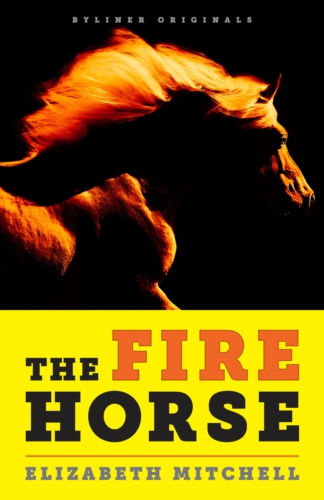
SAN FRANCISCO, July 26, 2012 — /PRNewswire/ — On the eve of the London Games, Elizabeth Mitchell’s new Byliner Original The Fire Horse tells the highly unlikely—and incredibly life-affirming—story of Neville Bardos, a horse that barely survived a terrible barn fire last year, his relationship with his devoted rider, Boyd Martin, and their journey together to the 2012 Olympics.
A decade ago, Neville appeared a likely candidate for the glue factory when Australian Boyd Martin saw his potential and bought him for $850, naming him, fittingly, after a notorious local gangster. The two of them worked their way up to the top rankings in the competitive international circuit of three-day eventing, which includes dressage, show jumping, and cross-country. The future was bright.
Then, on May 30, 2011, the barn Neville shared with ten other horses caught fire. Knocking out a fireman who was trying to stop him, Martin, wearing flip-flops, ran into the burning barn to find Neville. The horse’s lungs were scorched black, and he faced the fight of his life just to survive. Vets doubted that Neville would make it, and they were sure he’d never compete again. But Martin never gave up on his horse.
The Fire Horse book cover. (PRNewsFoto/Byliner)
The Fire Horse book cover. (PRNewsFoto/Byliner) Click to enlarge.
The Fire Horse chronicles the true story of a friendship between horse and rider, one that is so strong, it has carried them through their respective hard times to the brink of legend. When he began riding Neville, Martin was something of a long shot himself, having once pretended to be an expert on breaking horses on the basis of a single book he read on the way to taking his first job as a trainer.
But over the next ten years, he and Neville developed a hard-won appreciation for each other, and after Martin’s father died and the barn fire killed half of his prize horses, it was his relationship with Neville that brought him through those dark days. Boyd Martin would say Neville saved his life. Now they’re in London as members of the U.S. Olympic team.
The Equestrian Competition takes place July 28–31. Boyd Martin is a favorite to medal. Neville is his alternate horse and will turn 13 on August 1.
Source: News Release
RELATED READING

Horse found nailed into stall in two feet of manure and urine (Connecticut)

Tuesday's Horse


Bridget Albert, writing for the New Haven Register (Connecticut) reports:
Rescued mare Cheyenne with seriously deformed hooves.  Mara Lavitt/New Haven Register.
Cheyenne, a Paint horse that had been confined to a muddy stall for two years, shows some of the physical effects of the confinement: thoroughly overgrown hooves. Kathleen Schurman, farm animal rescuer in Bethany is fostering Cheyenne. Mara Lavitt/New Haven Register.
BETHANY — A Paint horse was taken to a safe haven Thursday afternoon after officials learned the animal was allegedly left in isolation and found to be in two feet of manure and urine, officials said.
Cheyenne, a 7 to 8 year-old mare was found nailed into a stall with caked in manure and urine. Animal control officials said the horse appeared to have been cooped up in the barn for the past two years.
“She is significantly underweight and her hooves are extraordinarily overgrown,” said Woodbridge Animal Control Officer Karen Lombardi, who examined Cheyenne late Thursday.
Local animal rescuer Kathleen Schurman who took in the mare said it was one of the worst cases she had ever seen.
“It was almost all she could do to make it from the stall to the trailer,” Schurman said. “When she saw other horses she was so thrilled to see them, it was a special moment.”
Schurman estimates it will take Cheyenne six months to a year before she is able to walk on her own because she has been confined to a pen for so long. Read full story >>

New Complaints Filed Against Horse Slaughter Kill Buyer

Straight from the Horse's Heart


Posted: July 26, 2012 by R.T. Fitch in Horse NewsHorse Slaughter
Tags: 
Investigative report by Terry Torreance
Again?! New Complaints Filed Against Three Angels Farms: Chameleon Carrier
Houston, TX – Four new complaints were filed against Three Angels Farm of Lebanon, TN (Dorian Ayache) with the USDA office of the Inspector General (USDA OIG), totally 5 in less than two months. Three Angels Farms is best known for two high profile accidents on I-40 that occurred in January and June while hauling horses to slaughter.
The latest rounds of offences are associated with documents revealing violations of the USDA 28 hour rule. According to the complaints, horses were trailered for up to 44 1⁄2 hours, exceeding by 15 1⁄2 hours the legal limits. Fines, up to $ 5,000 per horse according to USDA regulations, could total almost $200,000 per incident.

Obvious violations
Records revealed clear violations. Log books of the Ayache operation for March and April were obtained from the Federal Motor Carrier Safety Administration (FMCSA) via a Freedom of Information Act request. Once the records were reviewed, a formal complaint was filed with the USDA OIG, including specific details which provided the basis for the 4 additional complaints.
Log entries for Three Angels Farms showed that on 4 separate dates horses were loaded on trailers for over 28 hours.

  • 03/26/2012 – 35 1⁄2 hours
  • 03/28/2012 – 44 1⁄2 hours
  • 04/11/2012 – 31 1⁄2 hours
  •  04/13/2012 -29 1⁄2 hours
Many horse owners question the 28 hour law, saying 28 hours is excessive while citing laws in countries where maximum limits are less than half what is allowed in the U.S. In addition, the already liberal legal maximum appears to have never been enforced. Many are exasperated by claims of shorter, more humane transport as reason to bring slaughter back to the U.S. since there is no record of the USDA ever enforcing the 28 hour rule.
“There’s no question transport conditions are bad,” said John Holland with Equine Welfare Alliance (EWA). “They were horrendous when horse slaughter was operating in the U.S. and just like now, the 28 hour rule was violated all the time with absolutely zero enforcement.” According to EWA, Veterinarians for Equine Welfare (VEW) and many other organizations, the issue is best addressed by banning horse slaughter and related transport all together, not by bringing it back.
Chameleon Carrier
In other documents, Department of Transportation Investigator James Reid described being directed to ‘divert from his destination’ and go to Ayache’s Three Angels Farms after Ayache’s wreck on January 12. Reid quickly finds that Ayache was operating as a “reincarnate (chameleon) carrier” under his brother’s name. Investigator Reid asked Ayache why he had two DOT numbers, who stated that he had a bad record with his old DOT number and just stopped using it, starting another business under his brother’s name.
However, Investigator Reid noted that Ayache’s earlier carrier company had been ordered to cease all operations after failing a safety audit in Sept 2011 and his “unwillingness to submit a corrective action plan.”
Severe Defects and Malfunctions
During another inspection visit on Feb 3rd, Investigator Reid found “numerous out of service violations” on Ayache’s tractors and trailers. Defects and malfunctions were severe: “These violations placed Three Angels Farm’s trucks and trailers out of service for a 100% out of service rate.”
Ayache’s second wreck in 5 months, on June 12 resulted from the trailer breaking in half as it traveled west on I-40 outside of Nashville, less than 30 miles from Three Angles Farms. In both this and the January wreck several horses died.
Six days later on June 18, Tennessee Department of Public Service stopped 4 Three Angels Farms semis and quickly put 3 of the 4 tractors out of service for defective brakes, tire tread separation, cab body improperly secured to frame and several other violations. Two of the four trailers were similarly put out of service.
Yet on June 23rd one of the trailers was seen and trailed for 3 hours as it traveled west on I-40. Loaded with horses and traveling away from the Ayache operation in Lebanon, the trailer had been removed from service less than a week before for a cracked frame, loose, sagging, broken, inadequate floor condition, inadequate brakes, tire tread and other violations.
Independent of having the out of service trailer on the road, on June 29th, 2012 the U.S. Department of Transportation ordered Three Angels Farms to immediately cease all transportation operations.http://www.kaufmanzoning.net/usdepartmentoftransportationordersthreeangelsfarmsshutdown062912.htm
Due to the completed Feb 23, 2012 compliance review, Three Angels Farms was fined a civil penalty of $2,000. The summary of violations found were Three Angels Farms using a driver before the motor carrier as received a negative pre-employment controlled substance test, and failure to require driver to prepare vehicle inspection report.http://www.kaufmanzoning.net/NOC%202012_Redacted.pdf
On June 29th, 2012 the U.S. Department of Transportation ordered Three Angels Farms to cease all transportation operations.http://www.kaufmanzoning.net/usdepartmentoftransportationordersthreeangelsfarmsshutdown062912.htm
The 4 new complaints filed regarding Ayache’s violations to the 28 hour laws, strongly indicate the extremes to which Three Angels Farms is willing to put horses in his care. Up to almost 45 hours on a trailer with severe defects and malfunctions, add the issue of inhumane transport to the already well-founded concerns over threats to the public’s safety posed by Ayache. The formal complaints filed with the USDA also raise questions as to why the 28 hour laws appear to have never been prosecuted when a simple examination of one company’s documents covering a limited time period revealed substantial violations.
Link to report with Investigator Reid’s comments: http://www.kaufmanzoning.net/2.23.12%20CR.pdf
9CFR 88, Commercial Transportation of Equines to Slaughter Act: http://law.justia.com/cfr/title09/9- 1.0.1.3.29.html and USC 80502, the 28hr law of 1877:http://www.nationalaglawcenter.org/assets/crs/RS21978

Speak Up For Wyoming Mustangs!

American Wild Horse Preservation Campaign


Please Submit Comments on Plan to Remove Wild Horses from McCullough Peaks HMA


Comments due by August 3, 2012
The Interior Department’s Bureau of Land Management (BLM) is seeking public input on which issues to consider and analyze when preparing an Environmental Assessment (EA) on the proposed bait trap removal of an unspecified number of wild horses from the McCullough Peaks Herd Management Area (HMA), which is located in northern Wyoming, east of Cody. This colorful herd of horses is a popular ecotourism destination, especially given its proximity to Yellowstone National Park, which lies just 70 miles to the west of the HMA.
The BLM proposal includes: 
► Managing this herd using PZP fertility control to "reduce the need for larger helicopter gather and removal operations." In fact, if used properly, PZP will eliminate the need for removals entirely. AWHPC supports this aspect of the plan.
► Utilizing bait trapping over a three year period to capture and remove "excess" horses. AWHPC supports bait trapping and gradual removals as an alternative to traumatic helicopter roundups if,and only if, removals are necessary. 
► Maintaining the population at 100 horses (excluding present year foals). This is just below the mid-range of the allowable management level (AML) of 70-140 established for this HMA. Science indicates that a population of 100 horses is too low to ensure a healthy and genetically-viable population. AWHPC believes that this herd should be managed, at minimum, at high AML (i.e. 140 horses). Ideally,  the AML should be increased. 
► Continuing to permit livestock grazing within this federally-designated wild horse area. AWHPC believes that livestock grazing should be drastically reduced or eliminated from this area before wild horses are removed.
In addition, the BLM has reduced the size of the McCullough Peaks HMA by almost 35,000 acres of the original 138,576 acres. AWHPC recommends that the original acreage should be restored to allow for a larger, more sustainable wild horse population in this area.  
Now is the time to submit comments urging the BLM to include alternatives for avoiding removals in this HMA and to ensure that any removals that do take place occur under the most humane and transparent standards.
Please take easy action to personalize and send the letter below. When you click send, your suggestions will be individually emailed to the BLM!
Click HERE to TAKE ACTON!

Canadian MP Atamanenko joins protesters calling for an end to horse slaughter

Tuesday's Horse


Alex Atamanenko MP Alberta Protest. Image by Gavin Young.
B.C. New Democrat MP Alex Atamanenko speaks beneath a Stop Slaughtering Us billboard in Calgary on Monday. Atamanenko is the author of Bill C-322 which would prohibit horse slaughter for human consumption. Image by Gavin Young.
Canadian Flag
THANDI FLETCHER, reporting for the Calgary Herald writes:
CALGARY — With the backdrop of a billboard reading “Stop Slaughtering Us,” a crowd of demonstrators led by a New Democrat MP gathered Monday in Calgary calling for an end to the slaughtering of horses for human consumption.
But horse meat industry experts are calling the campaign an unfair attack that appeals to emotion while ignoring the “science” that deems horse meat safe to be eaten by humans.
On Monday, more than a dozen horse advocates crowded a grass patch beside Memorial Drive and Barlow Trail S.E. for the unveiling of a billboard that shows a picture of two horses beside the heading, “Stop Slaughtering Us.”
The protesters were supporting Bill C-322, a private member’s bill introduced by B.C. MP Alex Atamanenko in October.
The bill seeks to end the import and export of horses for slaughter for human consumption.