Editor of AllHorses Post Tracks Down the BLM “Animal Abuser”
BLM employee harassing taxpayers
Yesterday at 10:12 am, November 9, 2010, our good friend, wild horse advocate and blogger R.T. Fitch received the following comment on his blog. It was caught in Fitch’s spam filter, but he found it and reported it yesterday in his blog. Here is the text of the message:
“A new comment on the post “BLM Takes Wild Horse Killing to Oregon” is waiting for your approval http://rtfitch.wordpress.com/2010/11/08/blm-takes-wild-horse-killing-to-oregon/ Author : Animal Abuser (IP: 204.124.92.254 , BLM-92-254.blm.gov) E-mail : AAafterYOU@*****.com URL : Whois : http://ws.arin.net/cgi-bin/whois.pl?queryinput=204.124.92.254 Comment: You ALL have WAY TOO MUCH TIME on your hands to sit around bitching. And *****, could you really be so stupid to think that the BLM has hired animal abusers?? Honestly- you all need to get a life. If you really cared, you would search out the truth, and stop spending so much time with narrow blinders on. No one is perfect, not the BLM, not YOU. If you really want to see something done differently, you would pick a different approach.”
This IP (computer) address can be easily traced to the Bureau of Land Management office in Brighton, CO.
Why someone from the BLM would chose a name of Animal Abuser, is of course, extremely puzzling. And what does the email address AAafterYOU mean? This could be construed as a threat to Mr. Fitch.
And, I will have to point out the obvious that this individual who is apparently a FEDERAL EMPLOYEE is harassing AMERICAN TAXPAYERS online during business hours.
So it is beyond ironic for he or she to accuse the Wild Horse Advocates of having too much time on their hands.
They aren’t the ones using taxpayer dollars to support their online surfing at work.
This just shows you can run but you can’t hide.
For more information: http://rtfitch.wordpress.com/2010/11/09/blm-employee-%e2%80%9canimal-abuser%e2%80%9d-issues-email-from-blm-gov/
FYI – to report incidents like this:
Dept. of Homeland Security Computer Emergency Response Team: https://forms.us-cert.gov/report/
Dept. of Interior Office of the Inspector General: http://www.doioig.gov/hotline
This morning the helicopters are descending on the wild horses of Adobe Town, driving these beautiful mustangs out of their homes in Wyoming’s pristine Red Desert. Soon they will be slammed into trap pens, torn from their family members and shipped off to holding facilities far from the lands of their birth. MORE...
Removal of 100 % of Moriah Mustangs Adds to 20 Million-Acre Habitat Loss for Wild Horses and Burros Ely, Nevada (August 26, 2010). . . Beginning tomorrow, the Interior Department’s Bureau of Land Management (BLM) is scheduled to roundup and remove every wild horse living in the Moriah Herd Area 48 miles north of Ely, Nevada. It will take the agency four days to capture, via helicopter stampede, the estimated 72 horses living in this 55,300 acre public lands area.
The action is part of the most aggressive government roundup effort in recent years, with 12,000 mustangs and burros targeted for removal from the Western range this year. The majority of captured mustangs will join the 38,000+ wild horses already warehoused in government holding facilities, a number that exceeds the population (<33,000) left free in the wild.
“The Moriah Herd Area is just the latest federally protected wild horse habitat to be ‘zeroed out’ by the Interior Department,” said Suzanne Roy, Campaign Director for the American Wild Horse Preservation Campaign, which is supported by a coalition of 40 public interest, conservation, historic preservation, horse advocacy and animal welfare organizations.
“Over the past four decades, BLM has eliminated more than 20 million acres of federally-designated habitat for wild horses and burros, shrinking the lands available to these Congressionally-protected animals to just 26 million acres,” she continued. “By contrast, livestock grazing is authorized on 160 million acres of BLM lands.”
In Moriah, BLM is claiming that removal of all of the 72 wild horses is necessary to improve rangeland health, yet the agency continues to authorize more than four times as many cattle – over 300 — to graze those same lands.
“In area after area, BLM sets arbitrarily low management levels for wild horses and allocates the majority of resources to livestock,” Roy concluded. “It’s clear that private commercial interests drive BLM policy, but the public is increasingly demanding change in the way our public lands are managed.”
Last month, 54 members of Congress sent a letter to Interior Secretary Ken Salazar urging a halt to BLM roundups, citing concern about the trauma, injuries and deaths caused in the helicopter stampedes and raising questions about BLM’s “flawed” and “unsustainable” wild horse management policy.
Ranchers graze cattle on public land for a fraction of the cost of grazing on private land ($1.35 per Animal Unit Month (AUM) on public lands vs. an average of over $15 per AUM on private lands, according to the Congressional Research Service, 2009). Publicly-subsidized livestock grazing — dubbed “welfare ranching” — costs taxpayers in excess of $122 million annually, yet cattle grazed on public lands provide just 3% of the nation’s beef supply.
The American Wild Horse Preservation Campaign is dedicated to preserving the American wild horse in viable free-roaming herds for generations to come, as part of our national heritage.
_______________________________
Self-proclaimed wild horse “advocates” are fully to blame for the unnecessary and preventable deaths of horses during the Tuscarora wild horse gather.
By Sue Wallis, United Orginazations of the Horse Wild horse litigation mills that continually bring obstructive and spurious court action to block the legally required management efforts of the Bureau of Land Management (BLM) to control the over-population of free roaming horses on public lands caused the death and unnecessary suffering of the very horses they are purporting to protect.
First, court action delayed the planned start of the Tuscarora gather to the heat of the summer when water was already scarce on the range where there were more than 1,200 more horses in the Horse Management Areas (HMA) than the available forage and water could support. The horses were already suffering and severely stressed from the lack of water. Then the advocate groups filed yet another temporary injunction, after the gather was already in progress. At that point, horses were dying on the range from lack of water, and so weakened they could not survive the transfer to feed and water.
Even though these excess horses had been severely impacting adjourning ranch lands, compassionate ranchers worked with the BLM and voluntarily opened their fences to allow the horses to come to what water was still available. But the ranchers and the BLM were legally prevented from moving the horses because of the injunction, so they could not get them from where they were dying, to where they could drink. When finally the judge ruled on the side of common sense and compassion, sadly for far too many of the horses, it was already too late.
It is time to stop the unmitigated damage caused by groups who make their living off of litigation. It is time for those who truly care about the well-being and sustainability of free-roaming horses, and every other living creature that depends on our public lands, to work together with the BLM to manage all animals and the land responsibly. We cannot allow well funded radical animal rights and environmental fringe groups to cause a multi-generational ecological disaster that will take hundreds of years and billions of dollars to repair, not to mention destroying the communities and the social fabric of the people who live and depend on the health of the land.
It is time to stop the abuse being inflicted on the land, the animals, and the people through the courts. We have learned that many environmental groups are being fully funded by Equal Access to Justice Act Funds (EAJA) that use our tax dollars to litigate over everything, creating horrific financial and emotional costs on private individuals and communities who are defenseless. One has to wonder if this same travesty is not being used as by so-called horse advocates and animal rights organizations. With no accountability of EAJA funds there is no way to tell.
The United Organizations of the Horse and our tens of thousands of like-minded supporters across the West and the Nation join with a plethora of conservation organizations, wildlife organizations, true animal welfare (as opposed to animal rights) groups, groups advocating for the responsible management of public lands, local and state governments, tribes, communities and federal agencies charged with management of lands, concerned citizens and horse lovers to stand with and assist the BLM in their charge to provide for a thriving ecological balance on Western public lands.
-END-
—————————————————————-
Below is a sample letter to editors which we modified for Wyoming from a template prepared by the Colorado Conservation District Association. Concerned citizens are strongly encouraged to write letters to your local papers. Use this as a template if you like, or better yet, put the problems you see in your own words. If your Congressional delegation is not already on board, make sure you call on them to do the right thing. Look for opportunities to educate them and the public based on sound science and fact.
Dear Editor:
As a rancher, Wyoming state legislator, and a leader of a nationwide organization dedicated to the well-being of all horses and the equine industry, I would like to call attention to a serious natural resource problem in Wyoming and the West. In many areas the Bureau of Land Management (BLM) is not in compliance with their own management plan for wild horses. As a result, wildlife habitat, rangeland conditions, and the overall health of the horses are being jeopardized.
Communities including agriculture, conservation, sportsmen, environmentalists, wildlife enthusiasts, and others are working together to educate people on the disastrous effects of not managing wild horse herds properly. Bad management based on politics instead of sound science results in devastating consequences to our western economies when it comes to endangered species and the multiple uses our public lands were intended for. Wild horses play an important role in our heritage and we want to insure they are properly cared for and managed, but the current situation and the overabundance of horses will only lead to severe natural resource depletion and ultimately, unhealthy and unsustainable wild horse herds, which is a lose- lose situation.
We appreciate our Wyoming congressional delegation and Rep. Lummis’, Sen. Barrasso’s, and Sen. Enzi’s support on this issue. We hope that they are able to convince their colleagues in Congress to allow the BLM to gather the herds, to adequately count the horses, to deal with the excess in a way that does not exacerbate the problems in our domestic horse industry, or pile on unsustainable taxpayer burdens for the support of excess horses-in short, to develop a plan that makes sense.
The conservation of our natural resources is crucial to our way of life in the West and we look forward to working with BLM and other stakeholders to find a solution that works for everyone.
Sincerely,
Sue Wallis, Executive Director
United Organizations of the Horse
PO Box 71
Recluse, WY 82725
307 685 8248 ranch
307 680 8515 cell
HOUSTON, (Horseback) – A federal helicopter chase contractor has acknowledged there was plenty of water in an Elko County, Nevada wild horse area, contradicting what government lawyers told a U.S. District Judge last month.
More to this Story ~ Photo by Katie Fite
She said that many of the horses in a large herd management area just didn’t know it was there and were kept in pastures far away.
In an exclusive interview with Horseback Magazine, Sue Cattoor of Cattoor Livestock Roundups, Inc. said the Owyhee River, the border of their most recent wild horse stampede dubbed the “Tuscarora Gather,” has enough water for vacationers to camp and fish, plus multiple trails leading down to water’s edge giving access to thirsty animals including horses.
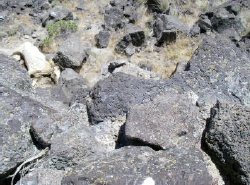
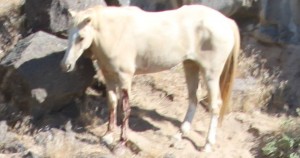
A disturbing photo of a dead Palomino Wild Horse surfaced on the Internet and in news reports last week. The picture, taken by Western Watershed Project Biodiversity Director Katie Fite shows the horse laying in rocks below a cliff. Wild horse activists say the photo demonstrates the cruelty of a government program wasting millions of dollars that is out of control. Many of them believe that a Cattoor helicopter drove the horse over a cliff.
That is not true.
But a firestorm of outrage has swept across the desert sands of Nevada and the nation at what many believe is a government agency that has turned rogue. U.S. Senator Mary Landrieu, (D) La has proposed that her colleagues consider removing the Wild Horse and Burro Program from federal Bureau of Land Management control.
And fifty-four members of Congress have petitioned Interior Secretary Ken Salazar to end the capture of wild horses on land controlled by the BLM. They have asked the National Academy of Science to investigate the agency’s Wild Horse and Burro Program. More than 150 horses and foals died in the wake of a mid-winter roundup in Nevada’s Calico Mountains. The congressmen say that 21 horses have died at BLM’s hand thus far during and after the Tuscarora stampedes.
Reno federal Judge Larry Hicks imposed a temporary injunction that had stopped the agency from capturing horses after one day in which 12 horses died after being run eight miles in more than 100 degree July Nevada desert heat. He lifted the temporary restraining order after being told by government lawyers an emergency existed because horses needed to be captured since they faced the prospect of dying of thirst because there was no water in the desert.
In fact, the BLM trucked water into the area rather than driving them, as they are clearly capable of doing, to a freely flowing river with abundant water. But she says the bulk of the horses involved in the roundup were in three pastures away from the river.
Cattoor acknowledged that the Owyhee River has running water, and during the roundup an Idaho group was camping on its banks – and even fishing.
“They were just a little ways up from where the horses trail down to the river. It‘s almost like a miniature Grand Canyon. This particular spot of where the trail goes down in the canyon is where the horses go to water,” Cattoor said.
Cattoor also said that there are other trails leading to the river that would have been available to the horses, but “the horses aren’t using those trails. They are only using this one. A lot of those horses didn’t know that trail was there because a lot of the horses we captured in this HMA were young horses.”
Typically, foals follow their mothers to water, so in all likelihood, the young horses whose habitat is near the river had been exposed to the abundant water in the waterway and the riparian area on either side, despite Cattoors comments to the contrary.
But some horses came to the river fir the first time, she acknowledges. How did these lost horses get there? Were they driven there by a Cattoor helicopter, activist are certain to ask.
“After they were down in there, they did not know how to come out,” Cattoor said.
A wide trail leads down a gently sloping river bank to the river shown in a photograph on the Cattoor website http://www.wildhorseroundups.com . Sue Cattoor says the photo is deceptive and the trail is very steep.
Cattoor says that there has been ample water in recent years to sustain horses in the area.
“I find it odd that with all the months of planning by the BLM that occurs before a round-up there was no mention of lack of water for the horses in any of their documentation and then after the lawsuit was filed, it suddenly became an emergency,” said Vicki Tobin, co-founder of the Chicago based Equine Welfare Alliance.
“The BLM has authority to round-up horses in an emergency situation so if the horses were in such dire straits, they should have dealt with the situation long before the lawsuit was filed.”
Like many in the West steeped in a ranching tradition, Sue Cattoor believes the wild horse are livestock, not wild animals. That tradition views livestock as a commodity, nothing more. Something to be bought and sold. Ranchers have a very pronounced vision of how animals should be viewed, and Cattoor is no different.
“If they are wildlife, then why don’t they issue a license for them to be hunted?” she asks.
Cattoor said campers along the river mentioned that the wild horses were in the area when they first got there, however, there were no campers around during recent visits by others to confirm what the federal contractor says.
Visitors say they found evidence that there were traps set up along the river bottom. Cattoors counters that what they believe were the remnants of BLM pens were actually the abandoned campsites of the Idaho campers who had traveled to fish the river.
There are no witnesses to refute the allegation that horses could have been driven by a roaring helicopter into the area whose rugged features include jagged rocks and towering river banks. The horses also could have injured themselves on the sharp outcrops trying to escape something they feared and had never seen before.
“They climbed up on that ledge looking for a way out and didn‘t know how to get back out of it,” Cattoor said.
In a lengthy note on the company website Sue Cattoor explains her firm’s position in minute detail. The note is also accompanied by a photo of a broad well traveled trail leading to a flowing river filled with plenty of water. Another photo of the river shows steep cliffs. Cattoor denied Horseback Magazine permission to use the photos.
Sue Cattoor acknowledges the horses were injured trying to negotiate the rough terrain.
“They were moving around in those rocks, trying to go up and down to survive and would have gotten the injury in the rocks. Those horses were trying to find a way down”
She said the pocket of possible stragglers from the helicopter chase were discovered after the helicopter pilot and her husband flew over to speak with the campers they had seen along the river.
“When they flew over to talk to these campers, they discovered these horses on the opposite side of the river from where the trail was. They herded those horses that were up there back down to the river because those horses had ledged up there and they did not know how to get back down.”
But after the herd was driven down river, the two severely injured horses remained, Cattoor said. One was the Palomino horse later photographed dead by Fite.
Wild Horse on ledge before shot by David Cattoor from Chopper
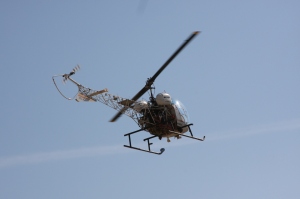
The photo of the still living but injured Palomino horse was taken from the Cattoor helicopter and the wound appears to be to the bone. The photo was supplied to Horseback Magazine by Sue Cattoor.
Cattoor says the horse had vision problems and was old.
“There were two horses. One, the horses that she (Fite) took the picture of, and a foal that was caught in the crevasse of the rocks with broken legs that they had to go back and euthanize,” Cattoor said.
Former Horseback Magazine veterinary columnist Dr. Angela Chenault viewed the blown up photo and said the injury was possibly survivable, but “its not likely to have a good outcome on a feral horse. Aftercare is critical and even stalling this horse will be a problem mentally.”
The horse found by Fite was not driven over the cliff to its death by Dave Cattoor, it was shot by him from the helicopter with a high powered rifle.
Injury was NOT fresh but Cattoor still shot and killed Wild Horse from Chopper
“It happens on occasion because when we are out gathering horses, if we see something that has a pre-existing injury or if something is extremely old and needs to be put down, they will euthanize it in the field,” Cattoor said.
Dr. Chenault said the injury was not fresh.
“It’s difficult to say how old by the picture but I would say it is over 24 hours by the way the muscles look,” she said.
Activists will likely continue to believe the worst of the Cattoors and their company. And Sue Cattoor will continue to attempt to spin the image of a company that is compassionately capturing horses, even if some die in the process.
The helicopter contractor said that despite the judge’s ruling that observers be allowed to view the roundups, her company will not allow observers on horseback despite a long standing Horseback Magazine request to the BLM to do so.
“If they are on horseback they are going to interfere with the operation,” she said. “We never allow our wranglers to be on horseback when the helicopter is driving horses to the trap. We can’t have somebody there that might turn the horses back and cause problems.”
Cattoor said she would have no objection to observers who hiked in to the roundup area if they were accompanied by a BLM public relations person. In past “gathers” armed guards have prevented observers and the press from freely walking into the roundup area.
Despite encouragement from Cattoor for Horseback to observe a roundup, BLM has barred press and public in the trap area because recent ones have been located on private property. The agency claims landowners object to media and other observers on their land. However, when the BLM leases property for a site, it falls under federal control much like a post office building does when it is leased by the federal General Services Administration for public use. The landowner relinquishes control of his property to the control of the federal government.
Cattoor Livestock Roundups will not allow the media to fly as passengers in their helicopter citing prohibitions from their insurance company.
“I have no problem with the press coming out and watching if they want to, as long as they are absolutely not interfering with the gather and causing stress for the horses,” she said.
Cattoor also was critical during the interview of media reports of the numbers of horses which died “because of helicopter gathers.”
On the Calico roundup seven horses died in the field out of a total of more than 150 horses and unborn foals who met their deaths in captivity, including two foals who shed their hooves after being stampeded over rocky terrain in the dead of winter by a roaring helicopter.
“In this roundup we didn’t lose any on the actual HMA (herd management area). Others died for lack of water or too much water, or were destroyed for humane reasons,” Cattoor said.
“They are trying to stop roundups saying the helicopter gathers are cruel and inhumane and that’s not a fact,” she said. “The losses from Calico was because those horses were in very bad shape when they were captured because there wasn’t enough food out there.”
Photographs of the captured Calico horses by naturalist Craig Downer and wild horse litigant Laura Leigh show fat healthy horses even in the BLM hospital area.
And 54 members of Congress clearly want to knock Sue Cattoor and her company out of a job, temporarily at least.
And litigation continues in the courts to stop what the BLM benignly calls “gathers.”
_______________________________
_______________________________
Take THAT Debbie Collins -wildhorse@blm.gov ~ R.T.
Press Release from The Animal Welfare Institute Washington, D.C. - The Animal Welfare Institute (AWI), along with leading Members of Congress, numerous wild horse advocacy organizations and the majority of Americans, is exceedingly frustrated with the Bureau of Land Management’s (BLM) gross mismanagement of America’s wild horses and burros. In a recent ad in the Washington, D.C., newspaper, The Hill, AWI called on Congress to take swift and decisive action to prevent the BLM from “managing” our nation’s wild horses into extinction.
“AWI has long been critical of the BLM’s inability to responsibly manage wild horses on the range, and the agency’s recent actions have amplified concern for the future of America’s wild horses,” said Chris Heyde, deputy director of government and legal affairs for AWI. “BLM’s more aggressive campaign of rounding up and warehousing wild horses began under the Obama administration and Secretary of the Interior Ken Salazar. Recent reports of horses dying during roundups due to broken necks and legs, sloughed hooves, and most recently water intoxication (allowing the horses to drink a toxic amount of water following a strenuous run), are unconscionable.”
Thankfully, several members of Congress are stepping up to defend these national treasures. House Natural Resources Committee Chairman Nick Rahall (D-WV) and Subcommittee on National Parks, Forests and Public Lands Chairman Raul Grijalva (D-AZ) have led the way in holding the BLM accountable for its actions. They sponsored the Restore our American Mustangs Act (ROAM Act), which passed the House of Representatives by an overwhelming margin last year and have just sent a bipartisan letter signed by 52 of their colleagues to Secretary Salazar. The letter raises serious questions about the recent tragic deaths of several wild horses and addresses the dire need for an independent analysis of the wild horse and burro program by the National Academy of Sciences. As stated in the bipartisan letter, “We are concerned by the inability of your agency to acknowledge these disturbing outcomes, change what seems to be deeply flawed policy, and better manage the gathers so as to prevent the unnecessary suffering and death of these federally protected animals.” AWI shares these concerns.
Yet despite all of this public and Congressional attention, the BLM continues to recklessly round up and remove thousands of wild horses from their legally mandated rangeland. In fact, Secretary Salazar has proposed spending millions of taxpayer dollars to build additional long term holding facilities in the Midwest and East to facilitate even more wild horse removals, which will add to the staggering 38,000 animals already in confinement.
Ever defiant, just last week, BLM Director Bob Abby sent a letter to all Members of Congress decrying increased public scrutiny of the wild horse and burro program. In this letter Director Abby wrote, “Some wild horse activists are waging a campaign in the court of public opinion, aimed at stopping the Bureau of Land Management (BLM) from gathering wild horses and burros from overpopulated herds on Western public rangelands.”
“The Obama administration came into office promising greater transparency and accountability, which is entirely contrary to the BLM’s preference to keep its abuse of wild horses and burros behind closed doors,” contends D.J. Schubert, AWI’s wildlife biologist. “If the BLM is convinced that its wild horse management program is essential for the good of the horses and the land, it should provide the public with reasonable opportunities to observe its roundups – the good, bad, and ugly – instead of complaining when advocates expose the program’s inherent cruelties and deficiencies,” adds Schubert.
AWI asserts that, like its sister Department of Interior agency, the former Minerals Management Service (MMS), the integrity of the BLM’s wild horse and burro program has been compromised by its relationships with special interests that occupy or use wild horse and burro range. A few thousand wild horses are being blamed for every natural and unnatural problem facing the Western ranges, while ranchers, oil and gas companies, and other commercial entities abuse the public’s lands with inadequate oversight. The BLM’s obvious favoritism toward these more politically connected and financially lucrative industries continues to jeopardize the survival of America’s last wild horses and burros.
“Based upon its record, it is no wonder the BLM balks whenever the demand for genuine accountability is discussed,” states Heyde. “While the BLM has repeatedly ignored the public’s demands, we hope that the requests of Members of Congress will not be so easily dismissed.”
(The News as We See It) by R.T. Fitch
Today, a Federal judge will become fully aware and engaged in the fact that the Bureau of Land Management and their contractor Cattoor Livestock totally ignored the conditions of his order regarding the deadly Owyhee wild horse roundup. Plaintiff Laura Leigh was denied access to the trap site but did manage to gather valuable information and evidence to prove that the BLM lied in their defense, last week, on many different levels and, as usual, the agency is acting above and outside of the law.
This entire mess begs the question, is any higher authority paying attention? Here, again, we have a corrupt and dysfunctional government agency that considers congress, the senate, federal judges and the American people to be nothing more than small irritants that can be brushed aside while it breaks the law on a very grand scale. Who is protecting this group, is it their big boss, cattleman Ken Salazar who everyone wants a piece of these days? And who is looking out for Salazar and why is he still in office now that he has proven he cannot manage his own business and control his own agencies? Would that be the President? Why is Salazar so highly protected? Why does the Obama administration hold onto such an obvious loser? Why has the alleged “animal friendly” administration never, ever responded to the destruction of our wild herds? Why?
The questions are many, the answers are few but one thing is for certain; Ms. Laura Leigh, American Citizen, will be in front of a Federal Judge today and it won’t be a good Monday for the BLM. Some positive action in the way of controlling this rogue organization may help to bring back some confidence in our country’s future.
Otherwise, we and the horses are doomed.
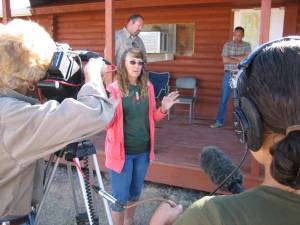
Sue Cattoor speaking to her "hurt feelings" on camera 9/9/09 - Photo by R.T. Fitch
Just like a bad dream the wife of Obama’s Bureau of Land Management’s (BLM) helicopter, wild horse stampede specialist is back complete with all of her trumped up “look at me” and “I know wild horses” bull crap, or in this case, welfare rancher manure. Sue Cattoor is now a multimillionaire due to the BLM’s blood lust for wild horses and it is not enough for her just to rake in the millions of tax payer’s wasted money she wants to be an internet sensation, also. She attempted to grab the spotlight, and was allowed that effort by the BLM, during the needless Pryor Mt. roundup and then attacked the media when the BLM admitted that her company had run the hooves off from foals during the bloody Calico disaster. 17 horses dead, and counting, in the first days of the Owyhee debacle and she is back on the internet highway showing her backside and raising the ire of anyone who has ever made it past the third grade.
Inserted, below, is a comment that the Queen of Dead Horses made to the Elko Free Press listed in its entirety. The entire mess is there but we have reserved the right to edit/comment in red during her rant. From the roar of helicopter blades to the flapping of Sue Cattor’s lips, the poor horses just don’t get a break.
~~~~~~~~~~~~~~~~~~~~~~~~~~~~~~~~~~~~~~~~~~~~~~~~~~~~~~~~~~~~~~~~~~~~~~~~
I am co-owner of Cattoor Livestock Roundup, the contractor doing the Tuscarora roundup. ( Sue, honey, the word is out and even Judge Hicks knows that it is NOT just one roundup as you and the BLM would like us to believe. It’s really three different areas that you are raining terror down upon but it’s just more fun to lump it all together so as to confuse the public, ain’t it?)
While Laura Leigh, Ginger Kathrens, Stephanie Boyles and others are sitting in their air-conditioned offices drinking bottled water and filing appeals, contacting news media and calling for a moratorium to stop all roundups, these wild horses that they are so worried about are getting very thirsty. (Here’s the deal, sweetheart, Laura is out in the desert trying to get to your trap site as ordered by a federal judge. She is going to document your nonsense if the BLM ever follows the law so she is not in any AC wonderland. Ginger has been camping out doing what you allege she never has done for the past 16 years, observing and documenting wild horse behavior {you ever done that?} Can’t answer for Ms. Boyles but even the likes of myself just spent a day repairing a fence line for the safety of our…what would we call them, er, hmmm,…Horses, you big bag of air and I did enjoy a sip of water from a garden hose. You really think that you are special, don’t you?)
They say we should not be gathering — foals are too young — it is too hot — lots of acreage for the horses, and so on. They would, I guess, rather just let the horses die of thirst out here on the Nevada desert. (Maybe we should remove the private cattle that are ruining our public lands, you numbskull. Overall the average is about 50 cattle to 1 blinking wild horse and in the instance debated here the horses water is fenced off by the welfare ranchers and YOU know it. So your harebrained idea of rescuing the horses is to stampede the thirsty creatures with one of your idiot helicopters across the desert in one of the hottest months of the year. What sort of upside down form of thinking is that? Your ignorance is stunning.)
First of all, let me say on Saturday we gathered 228 head of wild horses, so we saved over 200 head. (Head? Oh yeah, I would have said horses but you always use the term “head” as horses are considered to be livestock, just like cattle, to you. So “head” is your primeval term. Gosh, just think, if you weren’t around there would have been 228 horses that could have seen the sunset last Saturday. But you sleep well knowing that you ended the lives of more horses in one day than most reputable equine rescues save in a month. You are just so very sweet, aren’t you?)
Second, the foals are not just newborn, most are early spring foals. (Oh, that’s good to know, thanks. You aren’t just terrifying newborns but also foals who are only a few months old. Didn’t 3 of them die last Saturday, Sweet!)
Third, the helicopter pilot did not stampede the wild horses for miles over rough terrain. The pilot slowly herded the horses to the trap. It was early in the morning and cool. (Give me a break, I have seen you in action as has the rest of the free world. That’s why you are frantically trying to complete this mess before Laura gets there and can document the truth. Seems that you herded the horses very slowly, right at the end, at the Pryor Mountain’s Press Day but once the press left and you were stuck with just we AC loving, bottled water engorged equine advocates you ran the living crap out of the horses. Didn’t run their hooves off like you did at Calico but you sure rendered the bulk of the babies lame. All of that was so very kind of you.)
Fourth, this roundup was originally scheduled to start on July 1. It was delayed mostly because of the actions of the anti-gather people. (Always have to blame someone else, don’t you. Not an ounce of accountability resides in your soul, just that craggy, withered index finger pointing somewhere other than at the mirror. You are a mess.)
So, for 10 days the ponds were quickly drying up and the horses were running out of water. Now the reservoirs and seeps in the Star Ridge and Dry Lake Pastures are all dry. The horses on Star Ridge have access to the Owhyee River but only in one place down a very steep trail. The Owhyee River runs thru kind of a miniature grand canyon. Some of the older bands probably are going to the river but most do not know where it is and are afraid to go down in the canyon. (Gosh, the horses have been there hundreds and hundreds of years but now they have suddenly contracted a serious case of stupid and can’t even find where water is. It must be wonderful thinking that you are bringing so much joy to the lives of the wild souls who have been around for centuries without your wisdom. You sure are smart, Sue…gotta hand it to ya.)
The BLM is hauling water to the reservoir, and we are hopeful that the wild horses will find this water while we wait for the judge to decide if we can gather these wild horses and get them on water. The Dry Lake horses can access the Desert Reservoir. But when wild horses are short of water they tend to band up in large bands. Then they all go to water at once. The lead horses sneak down to the river or reservoir and get a drink. They then come back through the waiting horses and often everyone follows the lead horses and some do not get a drink. I have seen this happen trying to capture wild horses by water trapping. Water trapping is a very cruel way to capture wild horses. (Why don’t you simply go back home to Utah and then we would have the BLM remove the cattle fencing from around our publicly owned water holes so that the horses can have access just like they have since the beginning of time? Would that be so difficult? It would mean that you would not be paid hundreds of thousands of dollars of honest people’s money but then again, don’t you have enough of our money already? Just go away.)
The special interest groups are putting the blame on the BLM and the ranchers and us as the contractor. They got the Calico Roundup delayed last winter for a month and when we gathered we captured some very poor horses that later had trouble adjusting to feed. Now because of this delay we have lost horses from dehydration and water intoxication and the remaining horses are getting very thirsty. (The whining and finger pointing is getting old. You are really, really digging when you publicly act like you really care about the horses. How ironic, the very instrument of the wild horses suffering is proporting to be their savior. I think I am going to barf.)
If only the BLM Wild Horse and Burro Specialist could just do their job, which is to manage the wild horses, there would always be lots of healthy wild horses out on the range. (Give me a break, the BLM could not manage their way out of a wet, paper bag let alone treat wild horses in a humane manner. Not only can’t they count they are so sold out to big time special interests that they have fully lost sight of their mission and the law. And you, the contractor, are right there in the middle of the mix violating our constitutional rights while you stuff your pockets full of our money. That’s what it is all about isn’t it? Money! Both with the BLM and with you, neither of you give a gnats ass about the horses and you will concoct lies and untruths just to justify your skewed position and opinion. All of you lost your way a long time ago and between yourself and the BLM the truth now means what you want it to be on an hourly basis.) The time for the truth and accountability is now, the public wants to know and you can no longer hide. We are there because we care about the horses, we are concerned about the future of our public lands and we surely want to have a say over how our money is being spent and one thing is for certain, we do not want our money to be spent on you. Go home.
By Lisa Kemp
News media around the country reported the story of the horse stranded on a sandbar in Arizona and his dramatic rescue by helicopter. However, what they didn’t report on was the behind-the-scenes preparation that went into the mission.
The smallish bay gelding named Colorado wasn’t tall enough to get through the swiftly-moving waters of the Gila River, and found himself washed up on a sandbar in the midst of rapids, about 35 miles southwest of Phoenix.
Since the horse had access to forage and fresh water and was just cooling his heels on his little ‘island,’ his rescuers felt they had time to plan things out. According to Soleil Dolce, vice president at Arizona Equine Rescue Organization, Inc. (A.E.R.O.) and an experienced large animal first responder, that planning made all the difference.
“People don’t realize that when you do things quickly in a rescue situation, things get missed,” said Dolce. “You’ve got multiple agencies involved, and you might not have the right equipment to do the job safely.” Dolce reported that because the initial assessment showed a stable situation for the horse, they felt it was better to wait and do things the right way.
Colorado had been part of a four-person trail ride, with several dogs tagging along. Although the riders had been through that part of the river recently, a combination of heavier than normal winter rains, early spring melt and run-off from the mountains, and a release of water from upstream dams formed a deadly combination.
The Salt River Project (SRP) power company controls the flow of water in that area of the Gila River; the day before, they’d released water from the dams. “The riders didn’t realize that the water had risen dramatically since the last time they rode across it,” said Dolce.
Once the riders realized the danger, it was too late; they were swept several miles downstream. Dolce indicated that one horse and rider were able to escape and call 911. The other riders were then safely rescued, as were the dogs and another of the horses. One horse came up onto the bank downriver, but had a broken leg and had to be euthanized. And then there was Colorado.
Dolce pointed out that once he reached the sandbar in the river, he calmly settled in. “He’s got Bar N breeding, from the Navajo reservation here. These horses are a Mustang/Quarter Horse cross, and they’re renowned for their sensibility,” said Dolce.
The rescue team’s first action was a call to SRP, to be sure there were no further water releases planned for the week. “They weren’t planning any more, but the next few days were going to be really warm, so there was going to be more melt run-off,” said Dolce. That meant they couldn’t wait for the river wash to empty, a frequent tactic in Arizona where flash floods are common this time of year, but water levels just as quickly diminish.
The next step was organizing an airlift, a complicated matter for a horse rescue. “When you lift a horse with a helicopter, they pick up a static charge, which is a concern because it discharges when you touch them,” said Dolce. She indicated the team tried to locate an ‘Anderson sling’ for the rescue, since it eliminates the static concern and is anti-spin, making it more stable for equine rescues. But, it wasn’t happening quickly enough, so they moved on to Plan B.
“A local equine hospital, Southwest Equine Medical and Surgical, brought over their sling. Since it wasn’t rated for a helicopter and we wanted to be sure he didn’t slip out during the flight, we also used what’s called a vertical lift tie,” reported Dolce.
With a firehose wrapped around Colorado much like a bow on a Christmas package, the dual-sling approach allowed the rescuers to feel they’d done all they could to make the process both safe and comfortable for the horse. “We used the sling as the primary harness, since it was more comfortable as a primary lift point, and we used the vertical lift tie as a secondary lift point. We knew if one failed, the other would be there as a back-up,” said Dolce.
Colorado was mildly sedated prior to the lift, but his good survival skills and common sense helped the entire operation. “He walked right up to the helicopter, and he was calm during the process. He was emotionally drained after the ordeal, but we had his owner right there to reassure him when he touched down,” said Dolce, whose specialty is the type of vertical lift rescue that carried Colorado to safety.
A.E.R.O is renowned for being able to ‘rehab the impossible,’ according to Dolce; they have a specialized equine medical rehabilitation facility to help in that area. However, since 2007 they’ve conducted large animal first response training classes, led by trainers John and Deb Fox from Large Animal Rescue Company in California; the pair also consulted on Colorado’s rescue.
“This rescue shows it’s important to get technical training for large animal rescues. Most of the time when horses are lost in an emergency situation, it’s due to lack of training. We’ve now trained over 80 first responders across the state,” she says.
Following a medical evaluation and instructions to Colorado’s owner to help improve his overall gut sounds and motility, the gelding was able to go home. In terms of rescues, it was picture-perfect.
“I kept telling my crew, we couldn’t have asked for a more perfect scenario and outcome,” says Dolce. Colorado and his owner would probably agree. You can watch the airlift video here, thanks to KPHO-TV in Phoenix.
For more information about A.E.R.O. and large animal first responder training, visit their Web site at www.azequinerescue.org.
The Calico Wild Horse Roundup death toll exceeds 60 as public alarm grows
Fallon, NV (February 25, 2010)— At least 62 federally-protected American wild horses have died due to the controversial Bureau of Land Management (BLM) Calico roundup in Nevada as of today. An additional 35 late term abortions have been recorded in the Fallon feedlot-style holding facility where 1869 captured mustangs are corralled at enormous taxpayer expense. Advocates are being denied access to observe horses as the death toll rises. At least one horse died during BLM "processing" operations. The public and humane observers want access to view how their tax money is being spent and to verify the horses are being treated humanely. Standard processing procedures are generally open to the public to observe without issue. Advocates question if there is something to hide.
"Moving forward with this winter roundup was a huge mistake on the part of BLM. Two years ago a February roundup in Nevada resulted in the death of 85 horses. I would hope BLM never rounds up wild horses again in the dead of winter," says Ginger Kathrens, Director of the Cloud Foundation.
American taxpayers are paying over $10,000 a day to hold the captured Calico horses at the privately owned Broken Arrow holding facility. Processing (freeze-branding, inoculating, tagging) adds thousands more to the cost. BLM has denied repeated requests for even two humane advocate observers to be present during processing and allows public visits by reservation only for two hours each Sunday. The Cloud Foundation and the public are seriously alarmed by the rising death toll and BLM’s complete lack of transparency and accountability. Promised vet reports have not been posted since February 1st as horses perish daily.
“The public deserves to have people who can watch and document how our tax dollars are being spent. Allowing humane advocate observers into the facility would be a good first step in restoring trust in an agency that has thumbed their nose at the American public while rounding up and destroying America’s mustang heritage,” states Ginger Kathrens.
Humane observers would not inhibit the processing or frighten horses during processing and would allow the concerned public a view of what is going on during processing of these publicly-owned horses. The BLM removed the mustangs from public lands despite a federal judge’s suggestion that the roundup be delayed and over 10,000 public comments asking the BLM to stop their winter roundup plans.
BLM has given indications that they will select “impartial” observers to watch the proceedings. “I think that the public and wild horse advocates should be able to send their own humane observers, not hand picked and selected people that will not criticize the BLM. That would be much like the skewed public Advisory Board that also fails to represent the welfare of our wild herds,” stated Julianne French, an Arizona wild horse advocate.
Wild horse and burro advocates will protest in Washington DC on March 25th. The rally “March for Mustangs” will start in Lafayette Park at 1:00pm with a press conference at 1:30pm, concluding with a march to BLM offices.
# # #
Links of interest:
News Story on Calico, rising death toll & skewed numbers from George Knapp (KLAS- Las Vegas): http://bit.ly/9f1DYb
1,326 horses have been gathered from the Calico Complex. Thirteen deaths have occurred - three at the gather site and 10 at the Indian Lakes facility at Fallon, NV. Total mortality (gather sites and short-term holding (STH)) is less than 1 percent. Gather statistics for Nevada (over 26,000 animals were gathered between July 2004 and January 2009) document a mortality rate at gather sites (not including STH facility deaths) of 1.367%. This compares to mortality for the Calico Complex of 0.226% as of January 25, 2010 (gather site only). See Attachment 1.
The following is a summary of horse condition upon their arrival at Indian Lakes, the circumstances for each death, horses in hospital pens on January 23, a statement about horses not adapting to hay, and the treatment protocol for lame horses.
By Steven Long HOUSTON, (Horseback) – The federal Bureau of Land Management has released a veterinary report to Horseback Magazine that was requested by several individuals and advocacy groups. The report provides sketchy details on the final days of a foal filmed by photo journalist and videographer Laura Leigh during a Nevada “gather” of wild horses. In the report, BLM veterinarian Richard Sanford wrote that “The gather most likely caused the hoof trauma in this case…” He went on to state that “poor body condition and weakness was most likely present before the gather.” February 6, 2010
History and Report on Sloughed Hoof Colt
An eight month old colt arrived at the Indian Lakes Facility on about 1/20/2010 and was in very poor body condition and had sore feet. It was placed in the sick pen area where treatment could be administered. Over the next ten days, the colt was treated with phenylbutazone (a non-steroidal anti-inflammatory drug), penicillin (an antibiotic) and foot bandages (one front foot and both hind feet) on three occasions before it was euthanized on 1/30/2010.
The colt alternately improved and regressed. The colt would be standing while eating and drinking one day and not on the next day. The colt never was able to actually gain weight, improve body condition or show increased energy. Lameness improved with treatment but eventually the colt became too weak to stand. Hoof wall separation occurred on the front foot and one hind foot. The colt was euthanized for humane reasons.
The gather most likely caused the hoof trauma in this case. However, the poor body condition and weakness was most likely present before the gather.
Richard Sanford, DVM
NV # 565 The roundup was held in the Calico Mountains. Wild horse advocates claim that horses were stampeded as much as 15 miles before being driven into pens. One horse, dubbed “Freedom” by advocates escaped and was photographed in dramatic still shots
The treatment of horses by BLM has sparked protests from coast to coast. On Sunday, another planned roundup was abruptly postponed by the agency.
HOUSTON (SFTHH) – Friday, the 5th of February, seemed more like Groundhog’s Day than did February 2nd. There was an unpleasant odor of déjà vu in the air all thanks to the bumbling and mumbling of the Bureau of Land Management (BLM).
On September 9th, 2009 wild horse advocates were both surprised, yet pleased, to hear the BLM announce that they had concluded their highly contested and unnecessary wild horse round-up, early, in Montana’s Pryor Mountains. Along with the announcement came a mathematical breakdown of how many horses had been stripped from their lawful homes and how many were allowed to remain. The numbers did not add up.
On February 5th, 2010 wild horse advocates were both surprised, yet pleased, to hear the BLM announce that they had concluded their highly contested and deadly wild horse round-up, early, in Nevada’s Calico Mountain complex. Along with the announcement came a mathematical breakdown of how many horses had been stripped from their lawful homes and how many were allowed to remain. The numbers did not add up.
Do we detect a pattern, here?
Let’s take a look at the math that surrounds the Calico round-up as it depicts the destruction of the largest wild horse herd that had managed to survive in our western United States.
The BLM’s 2/5/2010 press release states that they stripped the 550,000 acre complex of 1,922 native wild horses. They now estimate that 600 remain alive and free. The math indicates that there must have been a total of approximately 2,400 wild horses on the complex prior to the round-up.
Yet the BLM’s original plan stated that they had intended to gather approximately 3,000 wild horses, releasing 380 back to a remaining population of 220 which would leave 600 free in the complex. But that equation would mean that the total population, pre round-up, would have been around 3,200. That leaves a difference of 800 horses from what actually occurred and what the BLM had proposed to do. Where are the missing 800 horses?
The BLM used the later numbers to justify their attack yet their actual numbers are considerably lower, if you believe them. Why such an enormous discrepancy? Is this sort of incorrect, grade school math utilized across the board when mismanaging one of our rarest and most unique national treasures?
Keeping this gross lack of accuracy in mind, the BLM announced that they, along with the Cattoor contractors, killed 39 wild horses during the Calico round-up. 7 were murdered at the ground-up site while 32 were destroyed at the feed-lot style holding facility. Do we trust those numbers? Why did they leave out the deaths of 25-30 miscarried foals from mares that were run into the ground and traumatized to the point of spontaneous miscarriage. They also failed to mention that the Cattoor helicopters ran 2 small foals until their little feet fell off. With incidents like that how could BLM District Manager Gene Seidlitz make the statement that the “gather went well”?
It appears that such questions will remain unanswered as only a limited number of tax paying American citizens were allowed to view the process, on limited days, during limited hours, at an extended distance and were finally banned from observing over the past several weeks. No hope of verification, no chance to validate the actions of a federal, government agency that obviously can’t add 1 to 1 and come up with 2.
In 2008 the benevolent BLM wanted to send 33,000 unnecessarily penned and captured native wild horses to slaughter because they couldn’t feed them. Then they captured thousands more during 2009, almost 2,000 to date in 2010 and have announced a goal of 12,000 to be condemned to captivity in 2010, total. Are we missing something here?
If all of those numbers are not confusing enough, the next announced assault will be on the herd that lives on a stretch of land the size of the state of Rhode Island (Eagle Complex) claiming that only 100 native horses can live there while they continue to allow 2,700 privately owned cattle to forage and damage our public wild lands. Again, what gives? Where’s the math? What kind of science justifies this sort of behavior?
In reality, if our children went to grade school and consistently came home with math scores that were as far off-base as what the BLM has been spouting we would either forever enroll our children in a remedial math program or question the organization that was teaching them such biased science.
In the case of the BLM, it is high time that we opt for Congressional hearings on the total mismanagement of one of our rarest national icons and the completely inept interpretation of Federal law.
The time has come for the BLM to go back to school, learn how to count, get their facts straight and sit in the corner while repeating “I will not kill wild horses. I will not kill wild horses. I will not kill wild horses. I will not kill wild horses.”
IN THE HANDS OF KILL BUYERS! When horses are purchased at auction by buyers intending to kill them, they're hauled away in double- decker tractor trailers where they are beaten and often blinded with baseball bats to mollify them. After crossing the border into Mexico, the animals are stabbed on each side-an act to tenderize their meat-and immobilized. Workers, then saw the horses legs off, at the knee and hang them to bleed out-all while the horses are ALIVE! (This is an excerpt, from an article written by Missy Diaz, crediting Victoria Mc Cullough and Sen. Joe Abruzzo for bringing awareness of horse slaughter, to Florida. In 2010 Florida Legislation unanimously passed the Horse Protection Bill, making it a felony to slaughter horses for personal or commercial use.)