Showing posts with label Wild Horses. Show all posts

Saturday, October 6, 2012

Judge Dismisses Wild Horse Suit

Straight from the Horse's Heart


Posted: October 6, 2012 by R.T. Fitch
By  on Sat, Oct 6, 2012
“BLM has  said the horses don’t fall under the protections of the Wild Horse and Burro Act…”
A federal judge has dismissed a case filed by a group of Placitas wild horse enthusiasts against Secretary of the Interior Ken Salazar, the Bureau of Land Management and an Algodones man the suit claimed was working with the BLM to round up the horses.
Members of the Wild Horse Observers Association filed the lawsuit last year, claiming Salazar and the BLM violated a 1971 federal law designed to protect wild horses because they have never recognized horses that roam around Placitas as wild.
The group later amended the lawsuit to seek an injunction preventing the BLM and Al Baca from capturing, transporting or allowing the sale of the horses except as permitted by the Wild Horse and Burro Act. It claimed Baca was working with the BLM and planning to capture and sell the roaming Placitas horses.
Late last month, U.S. District Court Judge Christina Armijo denied the association’s request to further amend its case and granted Baca’s request to dismiss the lawsuit with prejudice, meaning that it cannot be refiled.
In her order, Armijo granted Baca’s request because the Wild Horse Act does not provide for an action filed by a private group or individual. It also said the law the association sought relief under did not apply to a “non-governmental defendant.”
Wild Horse Observers Association is a nonprofit organization whose mission is to protect and preserve horses that roam freely in Placitas and their habitat.
The lawsuit claimed removal of the horses would harm association members who enjoy observing, photographing and writing about the horses.
BLM representatives have said the horses don’t fall under the protections of the Wild Horse and Burro Act because they belong to San Felipe Pueblo and were not therefore classified as wild.
The lawsuit disputed that position, saying the pueblo has never made efforts to claim the horses and the BLM is breaking the law by not recognizing them as wild and protecting them.
San Felipe Gov. Anthony Ortiz recently disagreed with the BLM position in a letter to Association members and its President Patience O’Dowd.
“Contrary to statements made by others, neither San Felipe nor any of its members claims the wild horses as private property or views them as livestock,” the Sept. 5 letter stated.

Tuesday, January 10, 2012

Feds Defend Press Limits to Wild Horse Roundup

Straight from the Horse's Heart

Story by DAVE TARTRE of the Courthouse News Service

BLM Argues for Covert Wild Horse Operations

Recent BLM attack upon the wild horses of the Calico Complex ~ photo by Laura Leigh
SAN FRANCISCO (CN) – A photographer appeared before the 9th Circuit on Monday to defend press freedoms against the federal agency that barred her from attending a roundup of wild horses in Nevada.
Laura Leigh sued in September 2010 for a temporary restraining order that would stop the Bureau of Land Management from conducting a wild horse roundup in the Silver King Herd Management Area, which is about 150 miles north of Las Vegas in Lincoln County.
Leigh wanted to get close enough to take pictures of what is also called a horse gather, which the bureau organized under the Wild and Free-Roaming Horses and Burros Act of 1971, which put the federal government in charge of the herds of wild horses that have roamed the west since they were brought centuries ago by Spanish conquistadors.
As the bureau refused to let Leigh access the roundup, citing public safety concerns, she claimed that the bar would prevent her from closely monitoring the bureau’s methods. She also sought to prevent the use of helicopters to chase down stray horses.
After the roundup occurred, U.S. District Judge Larry Hicks ruled that Leigh failed to show that she had been treated worse than other members of the media or “that the BLM has placed any specific barriers to her access to or observation of these specific gather activities.”
A three-judge panel of the 9th Circuit seemed reluctant Monday to consider Leigh’s First Amendment arguments.
“Why is this case not moot in light of the fact that the Silver King horse gathering is already complete?” Judge Milan Smith Jr. asked Leigh’s attorney, Gordon Cowan of Reno, Nev.
Cowan replied that restrictions on access to government activities, such as the roundup on public land, are capable of repetition.
“This same conduct, denying the press or public access, happened before Silver King, during Silver King, and it happened after Silver King,” Cowan said.
Leigh’s appellate brief states that the bureau had prevented Leigh from observing public resources in a public place in retaliation for stories and pictures Leigh had published on the Internet that showed the agency in a bad light.
“Because the published material is controversial and portrays the government in an unfavorable light, the government’s effective preclusion amounts to content-based censorship,” Cowan wrote.
Justice Department attorney Nicholas DiMascio defended the trial court’s finding, emphasizing that Leigh had the same access to the roundup as any member of the public. Such access was justly restricted because horses that are unaccustomed to people pose a significant dangers to onlookers, he added.
His brief also states that it might have hampered the government’s goals to grant press access to the temporary corrals, since they might spook the horses and make them bolt before the roundup.
The Wild and Free-Roaming Horses and Burros Act protects wild horses on public land, but the horses reproduce at a rate that outpaces the land’s ability to support them. Each year, the bureau uses cowboys, helicopters and portable corrals to capture some of the estimated 30,000 or more feral horses believed to range in Nevada and other western states. Then they are placed on trucks headed to ranches in Oklahoma and other points east where they are warehoused for life.
In a separate lawsuit Leigh filed in 2009, she noted that she has spent “countless time” researching the wild horses for a children’s book.


Thursday, July 28, 2011

Wild Horse Deaths Mount at Contested BLM Helicopter Stampede July 28, 2011

Straight from the Horse's Heart

Eyewitness report by Laura Leigh, VP of Wild Horse Freedom Federation

Day Four of Bloody BLM Triple B Stampede

 This is the last video that will be posted for a bit. Editing video takes an incredible amount of time. I will go back to archiving the video in case the documentation is required and posting still images. But I think this series of three days gives you an idea how frustrating this is. It will not give you a clear picture of the wear and tear on your vehicle, the damage done to your equipment or the toll it takes on your face.

Day 4 began at holding and the lame excuses about the medical treatment of these foals (that were now euthanized) set the tone. Sometimes my hands will shake from the stupidity. It is like being a teacher in Kindergarten… but the Kindergartners make the rules.
Yes, the tone of this report is terse. But being with this contractor every day but two during Antelope, and now watching this at Triple B, is like chewing on tin foil.
I am usually very patient and quiet. I do my observations and reports.This time I am trying very hard not to allow the frustration to drive me.
On another front there may be some good news soon, but that will have to wait for another day. So pray that sanity can begin to take root somewhere.
Day 4 brought with it frustration after frustration.
It began with the excuses about water and food, with no indication that anything would change. It continued with the absurd assertions about the injured foals.
At the trap the radio was again left so I could not hear anything until one time Heather Emmons left it loud enough that I could pick up a call. It was the pilot asking Alan Shepherd to glass a horse that could not keep up. I was given no further information as to the age or reason the horse could not keep up… and of course I was held to a position that did not allow me any observation.
The horses the pilot drove into the trap came in two groups.
Then 4 runners went out and the pilot. The pilot asked Shepherd the location and was told it should be “right under you.” It was apparently a bush.
I asked if I could go to the rise and look. I said that all eyes should be utilized. I was not granted permission, nor was it denied. I stayed behind the tape. It is my belief that this agency attempts to push the limits of control until we are tempted to break them… only to utilize the unreasonable restraints against us.
After almost an hour of no information, BLM personnel reading newspapers, I asked to go give my dog water and check on him. That permission was granted. I hung out in the vehicle with the dog, as it is much cooler there. I saw two runners beating it back to the trap so I went back to the observation area only to find out that the runners were coming back… not because they had found anything… but because the pilot was driving horses to the trap.
Shepherd had given the authorization for resources to abandon the search and begin operations. The other two runners also returned to the trap. I expressed my outrage in no uncertain terms. I informed personnel that I had called people from my vehicle and the public knew they had stopped looking. I informed them I was not leaving until the horse was located.
After the drive Heather was called down to speak with Alan.
Miraculously the horse that had now been missing for over an hour and a half had been found. It had “run back home” and hooked up with a stud. A trailer went down the road and in less than ten minutes came back… with a load that looked much like it did when it left.
As I am not permitted to travel the same road as the trailer it would take me about an hour longer to reach holding. I would not see this animal unload.
The animal was allegedly a 4 month old that was so deformed it couldn’t run correctly and was euthanized. The same animal that ran almost to the trap and back again… I can not confirm that there was an animal even picked up off that range.
Have you pulled out all your hair yet? Have you gritted your teeth so badly that you have broken molars? Have you bitten your lip so hard it bleeds? Have you vowed to god you will not allow this “spoiled child agency” to continue without challenge… no matter what it takes?
If you can help me with expenses please donate to http://wildhorseeducation.org


Tuesday, July 26, 2011

Wild Horse Babies Killed by BLM at Triple B Roundup

Straight from the Horse's Heart

Report from Laura Leigh ~ VP of Wild Horse Freedom Federation

The Injured Babies in this Report were later Killed by the BLM

At the roundup we had runners go off with no explanation. We had a baby come in that I could see was injured.
So I added an extra two hours of driving to my day and headed to holding.
There I saw three youngsters treated for injury. I do not know how many were treated prior to my arrival. (note: it is interesting that I asked about the injuries and am only given information on the treatment I actually saw, with no other information offered. It always seems like “If they don’t see it, it didn’t happen”).
A big bay stud and his band have really hit me hard. He was in the last group (or at least the last group I knew of). One of his foals (the only one that came in with his band) was injured. They put his mare and injured foal in the pen next to him. He kept all the other horses from the fence line. He called to them non-stop while I was there. He was there at the fence line when I arrived in the morning. I was pretty upset by some comments Alan Shepherd made so I got a few quick takes and did not get one of his calls as they began to load that am.
I quickly headed to the roundup site instead as the day before they had already captured 40 horses before my arrival. Leaving holding early didn’t change anything, they still had about 40 prior to my arrival on Day 4. Keep in mind we leave our “meeting” spot at 4:30 am, that’s how much driving is involved.
The comments from Shepherd that were so distressing go like this:  ”The palomino foal had weak tendons. The little chestnut has a bad mom. The other foal that was treated has a laceration to a leg, but it’s pre-existing. The animals drain the water and it needs to be refilled a couple times.”
Did that hit you like it hit me from the State Lead for Nevada’s Wild Horse and Burro program, Alan Shepherd? Did that hit you like it hit me from the man that constantly blames the animal for it’s situation? (Old Mare at Antelope) Did that hit you like it hit me from the man that took part in several “Final solution” conversations for our wild horses? (2009 Article animal Law Coalition) Did that hit you like it hit me from the man that answered in Federal Court that there were “no fences, no cows, no water” in the Owyhee HMA? (Gorey’s explanation to Horseback)
At the Antelope Complex Roundup this past winter there was the exact same situation with this contractor, Sun-J (it is a pattern). When I pointed out the deficiency Ben Noyes, the WH&B specialist in Ely, simply grabbed more tubs for water and placed them in the pens. He directed the contractor to appropriately distribute feed. He made no excuse.
Perhaps a man like Ben Noyes, that is able to admit a deficit and comprehends that the equation for the amount of horses translates into water consumption, should be the state lead and Mr. Shepherd should go muck at the Burns Corral until he comprehends what horses are?
I was told the runners went out to get the two injured foals. We already know that is also not the truth.
This IS foaling season. ALL foals have weak legs, that is why you don’t run a foal. It IS over 90 degrees during the day and horses need water. The fact that this conversation has to occur at all with an agency tasked for the last 40 YEARS with the humane treatment and management of our wild herds is OBSCENE.
note: and the more I review my tapes the more I believe that the roan is NOT that little chestnuts mom. The chestnut mare at the trap is most likely his mom. They even look alike. A bay dad and a roan mom will most likely not produce a chestnut baby. That baby was leaning against ANY family member he could because he could NOT stand. I’ll bet that’s why she was so agitated. I wonder where her baby is? I wonder so much about the ability to actually OBSERVE and not just process inventory in this agency. I need to see that chestnut foal.


Week 1: Triple B Complex Roundup

American Wild Horse Preservation Campaign

The Massive Removal Begins


Photo by Laura Leigh
After legal efforts to block the roundup did not meet with success (information on the lawsuit available here), the Bureau of Land Management is began the Triple B roundup on July 20, 2011. The action will permanently remove 1,700 wild horses from their families and homes on public lands in Northeastern Nevada. Due to the timing of the roundup, very young foals will be stampeded in the helicopter drive. Horses will be run for miles in the middle of the hot desert summer. In addition, the horses have adapted to and are operating on low water resources, meaning they are prone to dehydration after being subjected to miles long helicopter chases.
Reports from the front lines of this mass capture operation follow.  READ MORE.

Triple B Wild Horse Roundup: Day 2 

Follow   on Youtube. 

Sunday, July 17, 2011

How YOU Can Help the Wild Horses and Burros

Straight from the Horse's Heart

Sunday Post by R.T. Fitch ~ President/Co-Founder of Wild Horse Freedom Federation

Every Single Advocate Plays a Vital Role
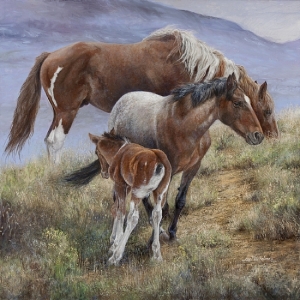
" Family Ties: The American Mustang" by Lee Mitchelson ~ Click on Image to vote and help the Wild Horses
Today is Sunday and as all of you regular readers know, we try to pull away from the bad and highlight the good.  Likewise, my lovely bride rarely asks me to highlight a topic but from halfway around the world she is politely asking me to speak up on how everyone is so very precious and important to our ultimate mission to gain equitable justice for our national icons, the “federally protected” wild horses and burros.
Terry mans the phone and responds to dozens of email inquiries as I travel about and one of the most pervasive questions that staunch animal welfare advocates, from around the world, ask is;
“How can I help?”
Folks, just being here is step one.  By reading and learning you garner a tremendous wealth of qualified and quantified opinions of, God help us, not only me but thousands of equine enthusiasts and animal welfare advocates from around the world.  On an average we log between 1,500 – 2,000 unique hits a day with a peak of over 5,000.  Not a big deal in the real world but considering the small niche that we occupy this sort of participation tremendous.  I am only the paperboy and you good people are the customer so when you comment you afford a worldwide audience a glance at how we think in our small corner of the globe.
Secondly, you don’t have to live in the western states to be pro-active in what we do, we live in Texas and there are no HMAs in our neck of the woods.  But a simple phone call, email or fax speaks volumes when we ask for your help in waking up our publicly funded legislative representatives in what we REALLY want and need in the way of change regarding the management or our wild horses and burros.  (Stay tuned as we are about to ask your help in replying to the EA that was released by the BLM on their proposed “zeroing out” of North Piceance herd which we have been legally fighting over for the past year.)
Thirdly, if you can travel to a protest, stampede, conference, please do so.  We know that money is tight but for myself I feel that if I do not do anything else with my life but help and aide in saving our wild horses and burros for future generations then I have done what I was placed on this world to do.  I am elated to report that the West Douglas herd is still running free because of the efforts of dozens of people over the years and then the recent intervention of our Wild Horse Freedom Federation and esteemed plaintiffs.  Sadly, if this is ALL I accomplish in my life then I can lay my head down on my death bed knowing that 120+ horses are running free due to our efforts, my mission would be complete.  But being a Type A personality that is not enough, we need to set the record straight across the board.  So I am asking you, and me, to witness for the horses in any physical way possible.  If you can do it, your companionship would be greatly appreciated at all publicized events.
And finally, there are a multiple of FREE ways that you can help the wild horses and please allow me to give you an example or two.
We are blessed with many artsy-craftsy sort of folks in the wild horse advocacy.  For crying out loud WHFF has two authors, two award winning photojournalists and two artists on our Board of Directors.  Likewise our Advisory board is peppered with professionals like Emmy award winning cinematographer Ginger Kathrens, producer/director James Klienart, award winning equine photographers Pam Nickoles and Carol Walker.  But besides these good folks donating their time we, also, have other artists donating their work to help the wild ones.
Right now, world renowned wild horse artist Lee Mitchelson has a stunning wild horse painting entered in an online competition.  By simply clicking (HERE) and voting for Lee’s beautiful painting you have moved one step closer to helping the wild ones, for free.  Currently she is donating funds to help the Fallon horses formerly what was once the Calico herd.  She had been in contact with Terry and has expressed an interest in supporting WHFF so let’s pile on and help her help the wild ones. The original painting is still for sale so, if you are interested in owning an original Lee Mitchelson painting, please contact her directly at: Lee Mitchelson.
Likewise, besides sending your hard earned cash to our Wild Horse Legal Fund to pay our legal staff you can, again, for FREE, help us by using GoodSearch as your main search engine, Click (HERE).  The search engine is driven by Yahoo but for every search that you conduct, if you are like me it is several dozen a day, one penny will be donated to the Wild Horse Freedom Federation’s legal fund.  That may not sound like much but pennies DO add up and if you take into consideration that we have almost 5,000 friends and fans on FaceBook, alone, it quickly becomes a true source of income.  Likewise, click (HERE) to learn about how a portion of your online shopping, at no expense to you, can be donated to the WHFF’s legal fund.  How flipping simple is that?  I just LOVE technology.
So in review; you ALL are a very important and integral cog in the wheel of saving the wild horses of the United States of America.  We all do what we can do, when we can do it and extend ourselves as far as we can physically and fiscally allow ourselves to go.  I consider each and every single advocate to be a very special and bright light glowing in a sea political of darkness…and if you simply mention our cause to  your family and friends then you are a Superstar in my book and I love you from the bottom of my heart.
May the “Force of the Horse©” be with each and every one of my very special friends and associates…I am so proud to know you.
Thursday, July 14, 2011

BLM Roundup of Alleged “Estrays” in Oregon

Straight from the Horse's Heart

Information supplied by Wild Horse Education.org

Obama’s “Transparent” BLM Up to Covert Operations, AGAIN

Wild Horse Education has discovered that an unscheduled, unannounced, secret roundup was being carried out east of Baker City,(Baker County) Oregon today, July 14, 2011.  This removal of 30 to 70 horses is in the Vale BLM District.  There is a question if these “estray” horses could actually be wild horses.
“Looking at the BLM schedule, the contractor was not scheduled to fly again until August 2,” said Laura Leigh founder of Wild Horse Education “This lead us to investigate other areas where operations could be occurring.”
Marilyn Wargo was told this roundup was taking place by Vale District BLM employee Kelly Skerjanec, who said District manager Pat Ryan and BLM WH&B Specialist, Shaney Rockefeller were at this roundup.  BLM Baker City Office employee Mark Pierce confirmed that this action was set up on the ground yesterday and was carried out today.
Wargo was told the private rancher, whose property adjoins BLM land, was not claiming these horses (there was a court case in 2004 in this matter). BLM considers them feral estray.  Pierce stated this was not a BLM Oregon helicopter and that a contractor was involved and it could be the one used at Kiger/Riddle just South of Vale District. This would be the Cattoor Livestock Company.  At this time no operations official will confirm or deny the contractor.
Pierce elaborated saying: BLM intended to remove horses found only on the BLM lands and not the private property. The horses are considered “trespassers” on public land. The ranchers name was not available at this time.
Piece also said the mares with foals would be sent to Vale District and all others to Prineville.
These offices do not have holding facilities and the destination of these horses is being investigated.
Natural Resources Specialist John Raddemacher from the BLM Baker Office is in charge of this action.
Mark Wilkening of the BLM has confirmed that this operation may be going on tomorrow as well. He has informed us that the horses have no brands. Wilkening has said that this area has never had horses before.
This is in addition to discovering the pending roundup at Sheldon National Wildlife Refuge, in Oregon and Nevada.

Ms. Leigh is the Founder of Wild Horse Education.org, Vice President of the Wild Horse Freedom Federation and writes a blog about her wild horse and burro advocacy.

Monday, July 11, 2011

Feds Launch Roundup of Famed Kiger Mustang Herd in Southeast Oregon

American Wild Horse Preservation Campaign

July 11, 2011 by admin

Preservation Group Warns Against Plan to Remove 120 Wild Horses, Calling Action Dangerous and Wasteful of Tax Dollars
Burns, Oregon (July 8, 2011). . . The Interior Department’s Bureau of Land Management (BLM) yesterday launched a controversial roundup of the prized Kiger Mustang Herd in southeastern Oregon. In response, the American Wild Horse Preservation Campaign (AWHPC), a national coalition, warned that the BLM’s plan to permanently remove 120 of the estimated 210 Kiger horses that remain in the wild will further erode the genetic viability of this historically significant herd and waste tax dollars.
Kiger Stallion Free No More. Photo by Laura Leigh
“We’re disappointed by the BLM’s plan to permanently remove 120 mustangs from this historically significant herd,” said Suzanne Roy, AWHPC Campaign Director. “The allowable population levels that the BLM has set for the Kigers are already so low that they compromise the health and genetic viability of the herd.”
UPDATE: The Kiger roundup is complete. For eyewitness account, visit Wild Horse Education blog.
The Kiger mustangs are prized for their genetic lineage that links them to the horses brought by Spanish conquistadors to North America in the 1600’s. The BLM website <http://www.blm.gov/or/resources/whb/kiger_gather.php> states that “There is no other horse in America is quite like the Kiger Mustang. . . Since the Kiger Mustangs may well be one of the best remaining examples of the Spanish Mustang, their preservation is extremely important.”

Yet the BLM allows a maximum of only 138 Kiger mustangs to live in the Kiger and Riddle’s Mountain Herd Management Areas (HMAs), which span nearly 55,000-acres. Meanwhile, the agency allocates five times more forage to privately-owned livestock than to federally-protected wild horses in these HMAs, authorizing the equivalent of 688 cattle to graze the area.
“It’s disheartening that the BLM is unwilling to manage 200 horses on the range. These roundups and removals waste tax dollars, traumatize and destroy the natural diversity and development of the wild herds,” observed Neda DeMayo, founder and CEO of Return to Freedom, who spearheaded the creation of the AWHPC Coalition.
DeMayo, whose sanctuary houses the famous Kiger stallion “Spirit,” the inspiration for the computer animations in the Dreamworks film of the same name and the offspring of Kiger Mustangs, added that the BLM has over-managed the Kiger herd to produce desirable horses for adoption/purchase, selecting for color and conformation instead of allowing natural selection to take its course.
Just-captured Kiger mares and foals in BLM holding pen. Photo by Laura Leigh
“We appreciate that there are reputable Kiger breeders and enthusiasts who actively participate in the adoption program and have created private Kiger breeding programs, however, we feel strongly that the free roaming herds on public lands should be allowed to live in viable herds allowing natural selection and diversity to develop. This is such a small herd already,  minimally intrusive management could easily replace costly and traumatic roundups.”
The AWHPC is calling on the BLM to increase the allowable population for the Kiger Mustangs to genetically sustainable levels, reduce livestock grazing in these federally-designated wild horse habitat areas, and utilize fertility control, if necessary to manage the horses on the range to minimize or avoid costly removals entirely.

The American Wild Horse Preservation Campaign is dedicated to preserving the American wild horse in viable free-roaming herds for generations to come, as part of our national heritage. Supported by a coalition of over 40 organizations, its grassroots campaign seeks:

* A suspension of roundups in all but verifiable emergency situations while the entire BLM wild horse program undergoes objective and scientific review;
* Higher Appropriate Management Levels (AML) for wild horses on those rangelands designated for them;
* Implementation of in-the-wild management, which would keep wild horses on the range and save taxpayers millions annually by avoiding the mass removal and stockpiling wild horses in government holding facilities.

Sunday, July 10, 2011

Voices needed to stop proposed BLM roundup

Examiner


Mare & foal at risk in the proposed roundup
Credits: 
American Wild Horse Preservation Campaign


As if the first roundup at Calico wasn't enough, the Bureau of Land Management (BLM) plans to go back again and remove as many horses as they can find, but at least another 2000 at least of the wild horses residing in that area and in the immediate tri-state area.  This is the worst possible news for advocates when it comes to our wild horses.    READ MORE....

Monday, June 27, 2011

GAO Study Wastes Time and Tax Dollars

Animal Welfare Institute


Monday, June 27, 2011
 

Washington, D.C. -- After almost two years and tens of thousands of tax dollars, the Government Accountability Office (GAO) has released its report, HORSE WELFARE:  Action Needed to Address Unintended Consequences from Cessation of Domestic Slaughter with two conflicting conclusions: restore horse slaughter or ban horse slaughter. Really?
The GAO was given the responsibility of assessing horse welfare from 2007 forward following the closure of the last three foreign-owned horse slaughter plants in the U.S. However, and vital to understanding horse welfare, the GAO was not asked to consider the impact slaughter had on America’s horses while plants were operating in the U.S. or what it would be like for the horses if restored. In the end, one of two contradictory recommendations was to ban slaughter in the U.S. and the export of horses for the same purposes (what the Animal Welfare Institute has said for years).
In addition to this being the best alternative for the horses, this will also virtually eliminate any regulatory burden whatsoever to the USDA. In this time of economic strife, it is ludicrous to expend taxpayer dollars to benefit a few foreign investors (whether the plants are located in the U.S. or abroad). The only way to stop the abuse inflicted on American horses by the slaughter industry is for Congress to pass the American Horse Slaughter Prevention Act, banning horse slaughter domestically and prohibiting the export of horses to Mexico and Canada.
To offer the option of restoring horse slaughter in the U.S. as the other recommendation ignores the cruelty inflicted on American horses’ right under the nose of grossly underfunded and highly inadequate USDA inspection capabilities. There is ample documentation from the USDA, private investigations and the first hand observations by AWI staff, substantiating the inhumane treatment of horses at plants when they were operating in the U.S., and there is documentation of the inhumane treatment of horses at plants that are operating outside the U.S. First and foremost, it should be acknowledged that slaughter is not a form of humane euthanasia as claimed by horse slaughter advocates. Second, though the report touched on neglect and abuse of horses, all this does is introduce a separate horse welfare issue with no substantiated relevance to slaughter. Everyone agrees that neglect and abuse of horses is horrendous, however, it is happening irrespective of the horse slaughter issue and needs to be addressed - as the separate welfare issue it is.
The Animal Welfare Institute urges Congress to swiftly pass the S. 1176, the American Horse Slaughter Prevention Act, sponsored by Senator Mary Landrieu (D-LA) and Senator Lindsey Graham (R-SC). To do otherwise will only perpetuate animal abuse.
##30##
Media Contact:
Chris Heyde, (202) 446-2142, chris@awionline.org

Sunday, June 26, 2011

Wyoming: It’s Wild Horses and the BLM

Straight from the Horse's Heart

Story by Lauryn Wachs of The Cloud Foundation

Protesting to Save Wyoming’s Wild Horses

Rock Springs, Wyoming, is not exactly what I would call ‘close’ to Colorado Springs. Nevertheless, our new intern, Erin Clifford from Michigan; and I hopped in the car and started up I-25 northbound, picking up our fellow wild horse advocate friend, Rachel Reeves, along the way.
When we finally pulled up the drive to the BLM office the first thing I noticed was my tax dollars at work: a shiny new building complete with landscaping and the works.

BLM Office in Rock Springs
Our little group of advocates joined together outside the building, which included our carload, a few other superb advocates from Northern Colorado, and two delightful women who came all the way from California! We totaled ten people, but our signs and presence were enough to frustrate the folks inside.

From left: Advocate extraordinaire Linda Hanick, Erin, and Lauryn

Part of the protest crew. Photo by Frances Miller
During the meeting itself we were surrounded by a lot of ranchers, most of who belonged to the Rock Springs Grazing Association – the largest grazing association in the country. Each of them gave a sentence or two on the plusses of helicopter roundups and how necessary they were, same ole, same ole. We had some great points brought up by each of the wild horse advocates who spoke. Trying to explain the issues we have with helicopter use during roundups in only three minutes is no small feat!
With everyone a little tense after the meeting, Rachel, who is quite familiar with the herds in the area, suggested journeying up the road to the White Mountain, one of the herds that is slated for a roundup and now is going to have only gelded stallions remaining post-roundup if the BLM has their way.

A White Mountain mare
The sun was slowly setting, but as it was the summer solstice and we were out on the range well after 9 watching the horses and enjoying  “magic hour” with them. It was Erin’s first wild horse experience, and you should have seen her face!

One band was urged on by their stallion

An older bachelor is forced onward by a bay roan stallion

Lauryn and Rachel
In the morning we woke up early to stop by the Rock Springs Corrals, the short-term holding facility in town. The only way to find it is to follow the sign that says “Wild Horse Viewing” which inspired a large eye roll from yours truly. We parked at the overlook to the corrals and were glad to see that at least the corrals were clean. It seemed they were in the middle of doing a lot of cleanup, probably in preparation for the White Mountain herd that we had seen just last night. It was a bitter reminder of the impending terrible summer that faces those horses and the ones in the Little Colorado herd just next door.

The Rock Springs Corrals
Instead of taking the normal interstate highway drive back to Colorado Springs, we diverted to visit Colorado’s largest herd in Sand Wash Basin just north of Maybell. To get there we drove through the Salt Wells herd area in Wyoming, but we saw no horses. This herd was devastated last year. Almost all the horses are now incarcerated at taxpayer expense.
We drove into the Sand Wash area as far as we could, given the short amount of time we had to spend there. We encountered some absolutely stunning bachelors and a large band that had a couple of foals. They are truly a striking herd based on what we saw.

This pinto bachelor was really beat up, but still going strong

An absolutely stunning trio of bachelors
It doesn’t matter how many wild horses you’ve seen or where you’ve seen them, they still leave you awestruck every time. It’s truly an addicting experience, and we were hard-pressed to leave Sand Wash. And it is a strong reminder of how important it is for us, the American public who these horses belong to, to stand up and give a voice to all our wild horses and burros. I know I’ll do my best to make sure the wild ones stay wild.
All the best,
Lauryn

Saturday, June 25, 2011

Please Sign Petition

Romania, Land of Castels adn Romance NOW HAS THE BLOOD OF WILD HORSES FLOWING IN THE DANUBE
Sign Petition Now

(Persian Horse's Blog)

Dedicated to the Horses who have Shed their Blood, Lost their Freedom, and Given their Lives for BLM.
The international community is outraged with the news of the bloody massacre of thousands of wild horses native of the Danube Delta in Romania. Corrupt local Tulcea officials have grossly overstepped their authority and waged a bloody war on these indigenous animals protected by international law. Tulcea has slaughtered over 1,000 of these wild horses with less than 500 of them remaining. Please join us in growing this petition which is addressed to local and international authorities with the power to take immediate measures to protect these horses. Thank you for lending your voice for justice for the wild horses of the Danube Delta!

ROMANIA'S WILD HORSES TORTURED and SENT TO SLAUGHTER

CLICK HERE NOW TO SIGN PETITION FOR JUSTICE FOR THE DANUBE DELTA WILD HORSES.


Friday, June 24, 2011

Here it is: Tea Party Darling Kristi Noem (R-SD) on Horse Slaughter:

Horseback Magazine

Wallis Issues Statement From Congressional Pal

June 24, 2011
  Noem: GAO Confirms Problems With Horse Processing Restrictions
WASHINGTON-U.S. Representative Kristi Noem (R-SD) responded to a recently released Government Accountability Office report on horse welfare and slaughter saying that it confirms the fact that there are significant problems with the current restrictions.
“This report confirms what most ranchers already know. The ending of horse slaughter and processing here in the United States has increased neglect and abandonment and depressed horse prices,” said Noem.
The last horse processing facilities in Texas and Illinois closed in 2007, thus ending all processing in the U.S. This was the result of Congress stripping the USDA of funding for food safety inspections at processing plants. The USDA continued to provide inspections on a fee-for-service basis until a federal judge ruled against the arrangement. Since then horses have been transported to Mexico and Canada for processing.
The GAO report explains that from 2006 to 2010 the number of horses exported to Mexican processing plants rose 660%. The number of horses exported to Canada for processing increased 148% during the same time period. Additionally, the report said, “closing domestic horse slaughtering facilities significantly and negatively affected lower-to-medium priced horses by 8 to 21 percent.”
The GAO also said that while comprehensive national data was unavailable, state, local government, and animal welfare organizations report a rise in investigations for horse neglect and more abandoned horses since 2007.
Noem concluded, “While opponents of horse slaughter here in the U.S. claim they are acting in the name of humane horse treatment, their policies are in fact adding to the inhumane treatment of horses. I hope this new GAO report makes slaughter opponents reassess their position.”

Thursday, June 23, 2011

If ya belong to a Tea Party, Ya might want to leave NOW.

Press release from Krisi Noem, Tea Party favorite Representative from S.D.

Here's just one link.

 WASHINGTON-U.S. Representative Kristi Noem (R-SD) responded to a recently released Government Accountability Office report on horse welfare and slaughter saying that it confirms the fact that there are significant problems with the current restrictions.
 "This report confirms what most ranchers already know.  The ending of horse slaughter and processing here in the United States has increased neglect and abandonment and depressed horse prices," said Noem.
 The last horse processing facilities in Texas and Illinois closed in 2007, thus ending all processing in the U.S.  This was the result of Congress stripping the USDA of funding for food safety inspections at processing plants. The USDA continued to provide inspections on a fee-for-service basis until a federal judge ruled against the arrangement.  Since then horses have been transported to Mexico and Canada for processing.
 The GAO report explains that from 2006 to 2010 the number of horses exported to Mexican processing plants rose 660%. The number of horses exported to Canada for processing increased 148% during the same time period.  Additionally, the report said, "closing domestic horse slaughtering facilities significantly and negatively affected lower-to-medium priced horses by 8 to 21 percent."
 The GAO also said that while comprehensive national data was unavailable, state, local government, and animal welfare organizations report a rise in investigations for horse neglect and more abandoned horses since 2007.
 Noem concluded, "While opponents of horse slaughter here in the U.S. claim they are acting in the name of humane horse treatment, their policies are in fact adding to the inhumane treatment of horses.  I hope this new GAO report makes slaughter opponents reassess their position."
 The full report can be read here.
 ###

GOTTA LOVE the Tea Party! They just LOVE to kill horses an' eat 'em! 


Rebuttal at Animal Law Coalition:

GAOThe Government Accountability Office has issued its report, GAO 11-228, on action needed to address unintended consequences of the 2007 closing of domestic slaughter facilities. A principal recommendation: "Congress may wish to consider instituting an explicit ban on the domestic slaughter of horses and export of U.S. horses intended for slaughter in foreign countries."
A bill, S.B. 1176, is already pending in the Senate that would do just that. 
The report issued today was requested by the Senate Appropriations Committee in 2010 and purports to examine "(1) the effect on the U.S. horse market, if any, since domestic slaughter for food ceased in 2007; (2) the impact, if any, of market changes on horse welfare and on states, local governments, tribes, and animal welfare organizations; and (3) challenges, if any, to USDA's oversight of the transport and welfare of U.S. horses exported for slaughter."
Americans trying to stop the slaughter of U.S. horses believe the report was requested as a stall tactic to avoid a vote on a ban of this sleazy, cruel and unnecessary practice. Indeed, the GAO report appears to have been leaked before its formal release today to horse slaughter proponents.  Industry lobbyist, former Rep. Charlie Stenholm read parts of it to members of Congress in trying to convince his former colleagues to approve funding for inspections of horses, something that could mean commercial horse slaughter for human consumption would be legal once again in the U.S. 
Fortunately, they didn't listen to him.
The GAO not only recommends as an alternative a ban on the export of horses for slaughter, the agency also reiterates criticisms made in a September, 2010 report by the Office of Inspector General of the USDA's Animal and Plant Health Inspection Service (APHIS) enforcement of the Commercial Transportation of Equines to Slaughter regulations. The OIG found that:
APHIS does not deny authorization [to ship] horses to shippers with a record of inhumanely transporting horses intended for slaughter...., even if unpaid fines are pending for previous violations. The OIG also found deficiencies in how APHIS tags horses that have been inspected and approved for shipment to foreign slaughtering facilities.
For example, the agency requires shippers to mark such horses with backtags, which are intended to allow APHIS to trace horses back to their owner and also to verify that horses have passed inspection by an accredited veterinarian. However, APHIS lacked an appropriate control to track individual horses by backtag number on approved shipping documents so that it could perform reconciliations, investigate violations, and initiate enforcement actions, as appropriate.
In addition, the OIG noted that APHIS needs to obtain the resources necessary to adequately oversee the transport program and issue in final a proposed rule that would broaden the scope of the agency's regulation of horses being shipped to foreign slaughtering facilities.
The GAO notes APHIS has to date continued to fail to issue a final rule that would ban use of double decked trailers to transport horses at every point in the slaughter pipeline. The current law still basically allows transporters to use double decked trailers to transport horses for all except the last leg of the journey to the slaughter house. For more on the suffering caused by use of these trailers... 
The GAO was also critical that "APHIS stopped entering information from owner/shipper certificates into an automated database in 2005". GAO observed that "automating the certificate data would make it easier for the agency to analyze them to, for example, identify potential problem areas for management attention and possible enforcement action, such as patterns of violations or other problems associated with particular shippers, border crossings, or slaughtering facilities. It would also allow the agency to easily identify buying trends and common shipping routes. Furthermore, automating data from the certificates on the number of horses in each shipment could potentially provide USDA a more accurate count of the number of U.S. horses exported for slaughter.... APHIS's lack of a reliable means of collecting, tracking, and analyzing owner/shipper certificates constitutes an internal control weakness and leaves the agency without key information and an important management tool for enforcement of the transport regulation."
GAO found "certificates returned by C[anadian]F[ood] I[nspection] A[gency] from 2005 through 2009... were not properly completed by either the shipper or CFIA officials. ...[A]bout 52 percent of certificates were missing key information that should have been filled in by either the shipper (e.g., loading date and time, or certification that the horses were fit for transport) or CFIA (e.g., arrival date and time, or slaughtering facility identification). In addition, ... about 29 percent of certificates returned to APHIS were missing some or all of the information to be provided by CFIA officials at the slaughtering facility".  ...[F]rom 2008 through 2009, the 2 years after the cessation, we estimate that about 60 percent of certificates were missing key information".
APHIS does not receive official cooperation from Mexican or Texas officials. "As a consequence, owner/shipper certificates may not be correctly filled out by the shippers and collected, completed, and returned to APHIS from either the border crossing or the Mexican slaughtering facility with information about shipment dates and times and horse conditions....[A]bout 48 percent of these certificates from 2005 through 2009 were missing key information to be provided by either shippers or ... officials. Moreover, about 54 percent of certificates from 2008 through 2009 were missing such information".
GAO notes that APHIS claims the restrictions on federal funds to inspect horses "makes it difficult to ensure that horses are transported humanely to slaughter and to collect information on potential violations that is needed ....to pursue enforcement actions.... APHIS officials speculated that compliance with the transport regulation has suffered because shippers are aware that the program can no longer leverage the assistance of USDA personnel in slaughtering facilities to ensure the completion of shipping paperwork or note the condition of individual horses in a shipment".
Really?  When were horses ever transported humanely? Remember the 2005 FOIA to USDA revealed that well before the defunding of inspections and closing of domestic slaughter plants, there was little or no enforcement of transport regulations and horses en route to slaughter suffered terribly.
Indeed, Animals Angels investigations have established the shocking cruelty of the slaughter pipeline and the failure of USDA to enforce the transport regulations.  It was Animals Angels and Animal Law Coalition that requested GAO examine the cruelty inherent in the slaughter pipeline and APHIS' miserable lack of enforcement of transport regulations.
According to the GAO report, there are only 2 APHIS staff members assigned to enforce the equine transport regulations. "The two program officials stated that the program's limited funding, particularly for travel, has significantly curtailed their ability to provide coverage at border crossings and to work with shippers and inspectors in foreign slaughtering facilities to ensure compliance with the transport regulation." USDA also lacks subpoena authority to help enforce the transport regulations.
So, is the answer more taxpayer dollars to fund USDA's APHIS inspectors whose enforcement of the transport regulations was abysmal long before the "cessation" of the domestic horse slaughter facilities? GAO knows that won't work. That's why banning slaughter altogether was recommended.
Slaughter and the economy 
According to the GAO report, "USDA is not aware of any domestic facility slaughtering horses for any purpose, including for zoos, as of the end of 2010. USDA identified at least three establishments-in Colorado, Nebraska, and New Jersey-that import horsemeat for repackaging and distribution to purchasers in the United States who feed the meat to animals at zoos and circuses. With the cessation of domestic slaughter, U.S. exports of horses intended for slaughter increased to Canada and Mexico, the current locations of all North American horse slaughtering facilities. As of the end of 2010, Canada had four such facilities, and Mexico three, that were the principal destinations of U.S. horses exported for slaughter.... Taken together, the 137,984 U.S. horses that were sent to slaughter in Canada or Mexico in 2010 is approximately equal to the total number of horses slaughtered in 2006."
State veterinarians and some in the horse industry told GAO that since the closing of the U.S. horse slaughter plants, there have been fewer auctions and sales because of lower prices for some horses and higher energy and other operating costs in transporting horses across the border.
The GAO claims "that the cessation of domestic horse slaughter led to an 8- to 21-percent decline-depending on sale price-in the per head price of horses sold at those auctions.  As illustrated in figure 6, we estimate that price reductions were greatest, in percentage terms, for lowest-priced horses, gradually declined as prices increased, and became insignificant for horses in the higher price categories. For example, the average per head price decreased by nearly 21 percent for horses in the lowest price category (20th percentile) and about 8 percent at the median, whereas the price change per head was not statistically significant for higher price categories...-Our estimates show that the economic downturn... was associated with a consistent decline of about 5 percent in price across all price categories".
It might have been helpful had the GAO interviewed economists rather than veterinarians or those with a vested interest in slaughter. Simple economics would indicate if the number of horses going to slaughter has remained the same since the closing of the domestic slaughter plants, then the drop in prices resulted from a decline or change in other demands for horses, like recreational buyers. In other words, it was the economy! It also underscores that the salvage market created by slaughter doesn't support horse prices or contribute much to the economy.  
Horses are not suffering because of lack of slaughter
The GAO does underscore there is no data to support claims of widespread abandonment and abuse or neglect of horses. Indeed, GAO could have mentioned the studies establishing many of these reports are simply untrue, obviously planted in the media to suggest a crisis.
Of course horses are in trouble, but the evidence is that is the result of the economy, not lack of slaughter. After all, GAO states horses are going to slaughter in the same numbers as before closure of the plants. Again, a decline in horse welfare can only be attributed to the terrible economy.
There is also the issue of overbreeding or poor breeding practices that slaughter actually enables.
GAO notes that local politicians, state veterinarians and some in the industry continue to blame "cessation of domestic slaughter" as well as the poor economy for the rise in incidents of abandonment and abuse and neglect.  GAO points out, "Other factors that they generally cited include poor weather conditions (e.g., drought in western states); the cost of horse disposal methods (e.g., veterinarian-assisted euthanasia); the increasing costs of feeding and caring for horses; and the lack of auction markets to sell horses....
"Among the factors affecting horse owners, the State Veterinarians said a horse owner's decision to abandon a horse generally related to (1) cessation of domestic slaughter, (2) poor economic conditions, and (3) low horse prices or lack of sale opportunities. They also said the factors most often related to a horse owner's neglect of a horse were (1) poor economic conditions, (2) the cost of horse care and maintenance, and (3) lower horse prices.... regarding neglect, some State Veterinarians, noting that people are more inclined to take care of that which has value, said that the drop in horse prices affected some owners' interest in caring for their animals, especially if their financial situation had declined."
GAO's report supports that while some believe closing of domestic slaughter plants contributed in some part to cases of abandonment, abuse and neglect, the evidence is that it is really the result of a host of economic factors. Indeed, it makes no sense to blame lack of domestic slaughter plants if the same numbers of horses are going to slaughter as before the closings.
What they also ignore is that numbers of horses going to slaughter is determined largely by a demand for horsemeat in other countries, not numbers of abandoned, abused or neglected horses.
The GAO report does not mention that slaughter creates a salvage market that actually encourages overbreeding. The excess horses driving down prices in a poor economy are from overbreeding. Without slaughter, there would be a reduction in breeding and numbers of excess horses.
Indeed, the GAO notes, "Other officials, including those from animal welfare organizations, questioned the relevance of the cessation of domestic slaughter to the rise in abandoned and neglected horses, which they attributed more to the economic downturn. ...[T]here has been no documented rise in abuse and neglect cases in California since the 1998 ban. ...[T]here was no documented rise in abuse and neglect cases in Illinois following the 2-year closure of the horse slaughtering facility in that state in 2002."
Read more about the economics of horse slaughter that actually results in more, not fewer, excess horses.  Read Equine Welfare Alliance's report to the GAO, detailing study after study that disputes that numbers of abandoned, abused or neglected horses have anything to do with the availability of domestic slaughter plants. In fact, it is the availability of slaughter that drives the production of too many horses. 
GAO Confirms FSIS is not capable of enforcing Humane Methods of Slaughter Act
GAO does not dispute that the Food Safety Inspection Service(FSIS) was grossly ineffective in protecting horses from cruelty during slaughter. In 2004 the GAO found the most frequent violation noted by inspectors in slaughter houses was ineffective stunning, meaning "in many cases ..a conscious animal reach[ed] slaughter" in violation of Humane Methods of Slaughter Act, 7 USCS § 1902(a); 9 C.F. R. §313.15, 9 C.F.R. §313.50(c). See GAO-04-247, GAO-08-686T. GAO also noted there had been no effort made to stop the ineffective stunning and the records kept by inspectors were so poor, it was impossible to tell even by 2008 that there had been any improvement. Also, in 2008, USDA's Office of Inspector General reported that FSIS management controls over preslaughter activities should be strengthened to minimize the possibility of egregious cruelty.
By 2010 GAO was adamant "[a]ctions are needed to strengthen enforcement" of the Humane Methods of Slaughter Act. GAO noted despite years of reports and highly publicized incidents of abuse at slaughterhouses, FSIS enforcement remains grossly inconsistent and in many places, non-existent. GAO 10-203
This is the agency that proponents of horse slaughter want us to believe will protect our horses from cruelty? More at Animal Law.

The Way Forward on Horse Welfare

Michael Markarian: Animals & Politics

Thursady, June 23,2011
The Government Accountability Office released a new report yesterday, “Horse Welfare: Action Needed to Address Unintended Consequences from Cessation of Domestic Slaughter,” and some proponents of horse slaughter are using it as a rallying cry to re-open equine abattoirs on American soil. But the GAO report is a lot more nuanced than the horse slaughter industry suggests, and the report provides some good insights into better policy solutions for horse welfare. And it confirms what we have long known: that shipping horses long distances in double-decker trailers and killing them for food exports isn’t good for the horses.
The report indicates that since Congress blocked the use of tax dollars for USDA to conduct horse slaughter inspections in 2005, and since state legislation shut down the last remaining plants in Illinois and Texas in 2007, there have been anecdotal accounts of an increase in horse neglect and abandonment, and a decline in horse prices. Given that this time period has coincided with the worst economic downturn since the Great Depression, the GAO can’t conclude whether these problems are due to a closure of U.S. horse slaughter plants or to the country’s financial crisis. However, the report clearly shows that the number of horses being sent to slaughter, more than 130,000 each year, has not changed all that much since the closure of the domestic plants (due to an increase in export of horses for slaughter to Canada and Mexico), suggesting that the same number of irresponsible owners—not more—are still sending their horses to slaughter.
Miracle_horse1 Industries that want to profit from horse slaughter, and the export of American horse meat to Europe and Asia, will claim that we need to re-open horse slaughter plants in the U.S. so that horses are not traveling long distances to Canada and Mexico, and that Congress should fund USDA oversight of horse slaughter, potentially adding millions of dollars to the federal budget and distracting agency inspectors from other food safety responsibilities. But when a handful of slaughter plants did operate in the U.S., horses still traveled long distances across the country in dangerous double-decker trucks, and the transport and slaughter processes involved were inherently inhumane. There’s no reason to believe that slaughter plants would spring up in every community to make the transport distances shorter, or that horses would evolve into a species that no longer has a flight response, which makes the stunning and slaughter process very difficult and clumsy. It’s like saying the U.S. should repeal its child labor laws because bad actors are using Mexican children to work in factories or transporting American children across the border to Mexico to work in response to U.S. law.
Instead, the GAO report offers a menu of options for lawmakers and regulators to consider, some of them very good: The report recommends that “Congress may wish to consider instituting an explicit ban on the domestic slaughter of horses and exports of U.S. horses intended for slaughter in foreign countries.” That’s the right response for Congress to stem the tide of American horses going over our borders for slaughter in Canada and Mexico and ensure that this inhumane practice doesn’t resume in this country. That’s exactly what the American Horse Slaughter Prevention Act aims to do. The Senate bill, S. 1176, was introduced this month by Sens. Mary Landrieu, D-La., and Lindsey Graham, R-S.C. The House-passed agriculture spending bill retains the current de-funding provision to block funds for horse slaughter, and we’ll be working to make sure that the right language holds up in the Senate and that key members of the Appropriations Committee don’t attempt to subvert the House position when they hammer out the final bill in conference committee. Congress needs to ban exports of horses for slaughter, not try to create a new network of U.S. slaughter plants.
Miraclehorse3 The GAO report also confirms that the use of double-decker trailers in the transport of horses represents a significant threat to animal welfare, recommending that “USDA issue a final rule to protect horses through more of the transportation chain to slaughter.” Double-decker trailers are designed for animals such as cattle and pigs—shorter-necked species than horses, who require more headroom than double-decker trailers afford. Horses often throw their heads to maintain balance, and injure themselves easily in such vehicles. In 2006, a double-decker truck hauling 41 horses in Missouri crashed, killing 16 horses. In 2007, a double-decker carrying 59 horses in Illinois struck another vehicle after blowing through a stop sign. It took five hours to rescue the horses from this mangled truck, resulting in the death of nine of them; six died later due to injuries sustained. In both instances, the design of the trailers caused horses to lose parts of their legs or break their backs. A few were crushed under the weight of other horses falling on top of them.
Such a rule to prevent injury and death was first proposed by USDA in 2007, and we call on the agency to finalize it without delay, banning the use of double-decker trailers for the transport of horses to all points en route to slaughter.
In addition to policy solutions, more education of horse owners is needed. The cost of horse ownership has gone up significantly, at a time when the average horse owner’s ability to afford that cost has fallen drastically. This situation can only be resolved by greater outreach and information about the private responsibilities and expense of horse ownership, and the options available to struggling horse owners such as adoption and rescue groups. We also need a continued reduction in breeding of new horses while the economy is creating fewer, not more, horse owners—a practice that many responsible horsemen are currently following.
The horse slaughter industry, along with their allies in the agribusiness lobby and some veterinarians aligned with industry, are the ones who have blocked legislation to stop long-distance transport of horses to foreign countries for the purpose of slaughter, and have created the major problem identified by the GAO report. These horse exports exist only because of their obstructionism, and Congress can solve this aspect of the problem by passing the American Horse Slaughter Prevention Act. It’s time for all sides to come together and act with great haste to close our national borders to the horse slaughter pipeline.