Forbes
Every small-town mayor is bedeviled by something. For Paula Bacon of Kaufman, Texas, it was Dallas Crown, which slaughtered horses next door to her friend Mary Nash’s 40-acre farm off Highway 175. Read MORE...
Showing posts with label foals. Show all posts
Showing posts with label foals. Show all posts
Wednesday, January 11, 2012


Take a Stand Against Horse Slaughter at Town Hall Meetings in Your Community
Animal Welfare Institute
It is time to put a face to the message that horse slaughter must end immediately! The most direct way for you to help educate your elected officials on the importance of banning horse slaughter is to talk with them face-to-face. The easiest way to do this is to attend local town hall meetings hosted by your U.S. Senators and Representative and urge them to cosponsor and support the American Horse Slaughter Prevention Act, if they haven't already done so. If your Senators and/or Representative are already cosponsors, a public thank you can help motivate them to action when back in Washington, D.C., as well as educate others at the town hall meeting. Your voice can make a difference!
In light of November’s passage of the FY2012 Agriculture Appropriations bill - which for the first time since 2005 did not include language blocking the use of federal funds for USDA horse meat inspections - the door has once again been opened for horse slaughter in the U.S. We must respond to this failure by redoubling our efforts to pass the American Horse Slaughter Prevention Act, which would once and for all ban horse slaughter in the U.S. and prevent the export of horses for the same purpose.
In past years, you faithfully emailed and called your legislators’ offices to let them know where you stand. This potent new threat calls for renewed action that puts a face to the message: speaking on behalf of horses at town hall meetings held by your legislators in your local communities. These town hall meetings are likely to take place in convenient settings in your community, and their formats make it easy for you to voice your opposition to horse slaughter directly to legislators and urge their support of the American Horse Slaughter Prevention Act.
Horse slaughter proponents are spreading a great deal of misinformation through the media in an attempt to cloak the grim realities of horse slaughter. It is important for legislators to get the facts and know that their constituents do NOT support horse slaughter and want a complete ban on the practice.
What You Can Do
Your legislators’ district offices can tell you when and where town hall meetings are scheduled in your community. Call their offices, or visit their websites to see if information on the meetings is posted online. You can visit AWI’s online Compassion Index to obtain contact information for the local offices of your U.S. Representative and Senators. Once you determine the time and place of such meetings, invite friends to attend with you so they can speak up for the horses as well. We have provided some talking points below for you to consider. If you discover a legislator has no town hall meetings planned, inquire why not - you should then request a meeting with your legislator (not staff) when they are next in town!
After you have attended a town hall meeting or met with your legislator please take a minute to visit AWI’s Compassion Index again and fill out the follow up survey. It will allow you to easily provide valuable feedback to AWI that will help in our efforts to educate Congressional staff in Washington, D.C. Be sure to fill this form out after each event you attend.
Please share this Dear Humanitarian eAlert with friends, family and coworkers, and encourage them to take action today!
Sincerely,
Chris Heyde
Deputy Director
Government and Legal Affairs
Public speaking is not easy for many people - but the more you do it, the easier it gets. Brief, clear, and polite comments receive the most regard from lawmakers. To help guide you, we have drafted talking points around which you can frame your presentation. You should also review our more detailed fact sheet on the subject before you go.
1. I am here today to express my opposition to the slaughter of American horses and to request you cosponsor the American Horse Slaughter Protection Act (H.R. 2966/S. 1176) which would end this gruesome practice.
Date:
Wednesday, January 11, 2012
S. 1176/H.R. 2966 - American Horse Slaughter Prevention Act of 2011
Dear Humanitarian:It is time to put a face to the message that horse slaughter must end immediately! The most direct way for you to help educate your elected officials on the importance of banning horse slaughter is to talk with them face-to-face. The easiest way to do this is to attend local town hall meetings hosted by your U.S. Senators and Representative and urge them to cosponsor and support the American Horse Slaughter Prevention Act, if they haven't already done so. If your Senators and/or Representative are already cosponsors, a public thank you can help motivate them to action when back in Washington, D.C., as well as educate others at the town hall meeting. Your voice can make a difference!
In light of November’s passage of the FY2012 Agriculture Appropriations bill - which for the first time since 2005 did not include language blocking the use of federal funds for USDA horse meat inspections - the door has once again been opened for horse slaughter in the U.S. We must respond to this failure by redoubling our efforts to pass the American Horse Slaughter Prevention Act, which would once and for all ban horse slaughter in the U.S. and prevent the export of horses for the same purpose.
In past years, you faithfully emailed and called your legislators’ offices to let them know where you stand. This potent new threat calls for renewed action that puts a face to the message: speaking on behalf of horses at town hall meetings held by your legislators in your local communities. These town hall meetings are likely to take place in convenient settings in your community, and their formats make it easy for you to voice your opposition to horse slaughter directly to legislators and urge their support of the American Horse Slaughter Prevention Act.
Horse slaughter proponents are spreading a great deal of misinformation through the media in an attempt to cloak the grim realities of horse slaughter. It is important for legislators to get the facts and know that their constituents do NOT support horse slaughter and want a complete ban on the practice.
What You Can Do
Your legislators’ district offices can tell you when and where town hall meetings are scheduled in your community. Call their offices, or visit their websites to see if information on the meetings is posted online. You can visit AWI’s online Compassion Index to obtain contact information for the local offices of your U.S. Representative and Senators. Once you determine the time and place of such meetings, invite friends to attend with you so they can speak up for the horses as well. We have provided some talking points below for you to consider. If you discover a legislator has no town hall meetings planned, inquire why not - you should then request a meeting with your legislator (not staff) when they are next in town!
After you have attended a town hall meeting or met with your legislator please take a minute to visit AWI’s Compassion Index again and fill out the follow up survey. It will allow you to easily provide valuable feedback to AWI that will help in our efforts to educate Congressional staff in Washington, D.C. Be sure to fill this form out after each event you attend.
Please share this Dear Humanitarian eAlert with friends, family and coworkers, and encourage them to take action today!
Sincerely,
Chris Heyde
Deputy Director
Government and Legal Affairs
Public speaking is not easy for many people - but the more you do it, the easier it gets. Brief, clear, and polite comments receive the most regard from lawmakers. To help guide you, we have drafted talking points around which you can frame your presentation. You should also review our more detailed fact sheet on the subject before you go.
1. I am here today to express my opposition to the slaughter of American horses and to request you cosponsor the American Horse Slaughter Protection Act (H.R. 2966/S. 1176) which would end this gruesome practice.
a. If you have a horse and/or have rescued a horse be sure to include this in your opening presentation.
b. If your Member of Congress is already a cosponsor, please thank him/her for their support and encourage their assistance in getting the bill adopted. Members are rarely thanked by their constituents, so this gesture is much appreciated.
2. American tax dollars should not be paying for horse slaughter.a. We don’t eat horse meat in the U.S.
b. Horse slaughter is not a job creator and is a burden on local communities.
c. The government shouldn’t be spending tax dollars to inspect plants that will support foreign industries.
d. Horses give their hearts to us. They helped us settle this country, carried us into battle, and continue to work hard for us every day. It is a betrayal to sell them to foreign butchers.
3. Slaughter is not humane euthanasia. It is animal cruelty.a. Horses’ instinctual flight response makes them ill-suited for stunning, so they often endure repeated blows and sometimes remain conscious during their dismemberment.
b. U.S. government documents graphically indicate cruelty was widespread at the former U.S. plants, even with USDA oversight. Instead of regulating abuse poorly, we should ban the practice entirely.
c. Part of responsible horse ownership is providing a humane end for a horse through euthanasia, not slaughter. That is what the majority of horse owners do already.
Tuesday, January 10, 2012
Feds Defend Press Limits to Wild Horse Roundup
Straight from the Horse's Heart
Story by DAVE TARTRE of the Courthouse News Service
 SAN FRANCISCO (CN) – A photographer appeared before the 9th Circuit on Monday to defend press freedoms against the federal agency that barred her from attending a roundup of wild horses in Nevada.
Laura Leigh sued in September 2010 for a temporary restraining order that would stop the Bureau of Land Management from conducting a wild horse roundup in the Silver King Herd Management Area, which is about 150 miles north of Las Vegas in Lincoln County.
Leigh wanted to get close enough to take pictures of what is also called a horse gather, which the bureau organized under the Wild and Free-Roaming Horses and Burros Act of 1971, which put the federal government in charge of the herds of wild horses that have roamed the west since they were brought centuries ago by Spanish conquistadors.
As the bureau refused to let Leigh access the roundup, citing public safety concerns, she claimed that the bar would prevent her from closely monitoring the bureau’s methods. She also sought to prevent the use of helicopters to chase down stray horses.
After the roundup occurred, U.S. District Judge Larry Hicks ruled that Leigh failed to show that she had been treated worse than other members of the media or “that the BLM has placed any specific barriers to her access to or observation of these specific gather activities.”
A three-judge panel of the 9th Circuit seemed reluctant Monday to consider Leigh’s First Amendment arguments.
“Why is this case not moot in light of the fact that the Silver King horse gathering is already complete?” Judge Milan Smith Jr. asked Leigh’s attorney, Gordon Cowan of Reno, Nev.
Cowan replied that restrictions on access to government activities, such as the roundup on public land, are capable of repetition.
“This same conduct, denying the press or public access, happened before Silver King, during Silver King, and it happened after Silver King,” Cowan said.
Leigh’s appellate brief states that the bureau had prevented Leigh from observing public resources in a public place in retaliation for stories and pictures Leigh had published on the Internet that showed the agency in a bad light.
“Because the published material is controversial and portrays the government in an unfavorable light, the government’s effective preclusion amounts to content-based censorship,” Cowan wrote.
Justice Department attorney Nicholas DiMascio defended the trial court’s finding, emphasizing that Leigh had the same access to the roundup as any member of the public. Such access was justly restricted because horses that are unaccustomed to people pose a significant dangers to onlookers, he added.
His brief also states that it might have hampered the government’s goals to grant press access to the temporary corrals, since they might spook the horses and make them bolt before the roundup.
The Wild and Free-Roaming Horses and Burros Act protects wild horses on public land, but the horses reproduce at a rate that outpaces the land’s ability to support them. Each year, the bureau uses cowboys, helicopters and portable corrals to capture some of the estimated 30,000 or more feral horses believed to range in Nevada and other western states. Then they are placed on trucks headed to ranches in Oklahoma and other points east where they are warehoused for life.
In a separate lawsuit Leigh filed in 2009, she noted that she has spent “countless time” researching the wild horses for a children’s book.
Story by DAVE TARTRE of the Courthouse News Service
BLM Argues for Covert Wild Horse Operations

Recent BLM attack upon the wild horses of the Calico Complex ~ photo by Laura Leigh
Laura Leigh sued in September 2010 for a temporary restraining order that would stop the Bureau of Land Management from conducting a wild horse roundup in the Silver King Herd Management Area, which is about 150 miles north of Las Vegas in Lincoln County.
Leigh wanted to get close enough to take pictures of what is also called a horse gather, which the bureau organized under the Wild and Free-Roaming Horses and Burros Act of 1971, which put the federal government in charge of the herds of wild horses that have roamed the west since they were brought centuries ago by Spanish conquistadors.
As the bureau refused to let Leigh access the roundup, citing public safety concerns, she claimed that the bar would prevent her from closely monitoring the bureau’s methods. She also sought to prevent the use of helicopters to chase down stray horses.
After the roundup occurred, U.S. District Judge Larry Hicks ruled that Leigh failed to show that she had been treated worse than other members of the media or “that the BLM has placed any specific barriers to her access to or observation of these specific gather activities.”
A three-judge panel of the 9th Circuit seemed reluctant Monday to consider Leigh’s First Amendment arguments.
“Why is this case not moot in light of the fact that the Silver King horse gathering is already complete?” Judge Milan Smith Jr. asked Leigh’s attorney, Gordon Cowan of Reno, Nev.
Cowan replied that restrictions on access to government activities, such as the roundup on public land, are capable of repetition.
“This same conduct, denying the press or public access, happened before Silver King, during Silver King, and it happened after Silver King,” Cowan said.
Leigh’s appellate brief states that the bureau had prevented Leigh from observing public resources in a public place in retaliation for stories and pictures Leigh had published on the Internet that showed the agency in a bad light.
“Because the published material is controversial and portrays the government in an unfavorable light, the government’s effective preclusion amounts to content-based censorship,” Cowan wrote.
Justice Department attorney Nicholas DiMascio defended the trial court’s finding, emphasizing that Leigh had the same access to the roundup as any member of the public. Such access was justly restricted because horses that are unaccustomed to people pose a significant dangers to onlookers, he added.
His brief also states that it might have hampered the government’s goals to grant press access to the temporary corrals, since they might spook the horses and make them bolt before the roundup.
The Wild and Free-Roaming Horses and Burros Act protects wild horses on public land, but the horses reproduce at a rate that outpaces the land’s ability to support them. Each year, the bureau uses cowboys, helicopters and portable corrals to capture some of the estimated 30,000 or more feral horses believed to range in Nevada and other western states. Then they are placed on trucks headed to ranches in Oklahoma and other points east where they are warehoused for life.
In a separate lawsuit Leigh filed in 2009, she noted that she has spent “countless time” researching the wild horses for a children’s book.
Friday, July 29, 2011
Wild Horses Are (Again) Losing Their Home On The Range
Straight from the Horse's Heart
article by Andrew Cohen from the pages of the Atlantic
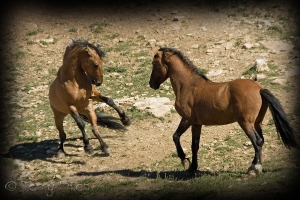 It’s been a hot, stormy summer on the Red Desert range in southern Wyoming, around Rock Springs and the state’s southern boundary with Colorado, where Interstate 80 takes long-haul truckers and tourists through one of America’s least hospitable landscapes. The desolate land even includes Sweetwater County, one of those romantic cowboyesque names that mockingly crop up from place to place in the Rocky Mountain West, more an aspiration than a reality when you consider that there isn’t much water there and what there is isn’t so sweet.
In this forlorn place are two “herd management areas” called “White Mountain” and “Little Colorado,” places were some of America’s wild horses roam free pursuant to federal rule and regulation. According to Bureau of Land Management statistics, the federal government owns or controls 849,033 acres of land in the area, Wyoming owns another 15,877 acres, and private entities own 149,647 more. BLM officials estimate that, after the 2011 foaling season, there are approximately 970 wild horses on White Mountain and Little Colorado lands.
If you do the math, based only upon the federal land figure, it comes to 875.29 acres per horse. Do a little more math and you learn that 875 acres equals approximately 1.37 square miles. Ask any horse owner you know if she could get by on that horse-to-land ratio and the answer is an immediate and emphatic “Yes!” At first glance, it seems like a perfectly harmonic arrangement; our nation’s wild horses peaceably tending to our nation’s less desirable lands out of the way of most human traffic. The symbol of our nation’s history and growth simply left alone to graze land most of us would never see if we were to live a hundred lifetimes.
But alas it’s a lot more complicated than that. Intertwined private ownership of lands within the management areas, differing land-use priorities, a lack of bureaucratic courage and creativity, and a 30-year-old deal between ranchers and a long-gone horse group, all have eliminated the possibility of simply working the acreage numbers for the benefit of the horses. The herd areas themselves are part of a “checkerboard” pattern of public and private land (the ratio is close to 50-50, say ranchers) and the horses themselves haven’t helped their own cause. During the winter, they often migrate from public land onto private land, where they are considered a nuisance to some property owners.
This natural pattern has persisted for generations and it’s been closely monitored by the feds for at least the past 30 years. With this history, geography, and horse biology in mind, the BLM announced last month that there were, again, too many wild horses on the two Wyoming ranges. Wildlife officials now plan in mid-August to begin to cull roughly 70 percent of the herds out of Little Colorado and White Mountain in a particularly controversial way. And, in response, wild horse advocacy groups and others filed a federal lawsuit Monday in Washington, D.C. seeking a restraining order that would halt the roundup.
All the time and all over the West, horse advocacy groups battle the federal government over the fate of wild horses. The story is almost always the same. The “horse lobby” cannot compete politically (i.e. financially) with the cattle or ranching industries. Invariably, it’s the wild horses which lose out to the cattle or to the sheep or to other business interests. And invariably, its the federal government, acting through regulators who are captive to the industries they are supposed to regulate, which helps ensure that this occurs. In this case, for example, we see the federal agency responsible for protecting wild horses struggling to justify a decision that undoubtedly will harm a great many of those horses and, indeed, the future of those herds.
Going forward, the two herds will be genetically limited in ways the government has not yet fully evaluated. This is perhaps the most significant part of the new BLM plan. It doesn’t just purport to addres the current “overcrowding” it sees on these ranges. It seeks to impact the ability of these herds in the future to breed the way wild horses have bred for thousands of years. It’s a sort of genetic engineering which horse advocate groups say needs a lot more scientific review before it can be implemented in the wild.
Among the many options that were considered and rejected by the BLM was the concept of revising the existing “management level” so that more than 205-300 horses would be considered an “appropriate” number to graze on the hundreds of thousands of empty acres. Those figures (205-300) arose in 1981 as part of a settlement in a federal lawsuit over the fate of the horses. The party that sought (and obtained) the drastic limitation on the number of wild horses on the lands is an organization known as the Rock Springs Grazing Association. In 2007, according to the Wyoming Business Report, the Association celebrated “100 years of unity.”
Here’s what else the business paper had to say about the group:
article by Andrew Cohen from the pages of the Atlantic
America’s wild horses are in trouble, and the federal government isn’t helping
“An excellent must read for all!” ~ R.T.Why did this animal that had prospered so in the Colorado desert leave his amiable homeland for Siberia? There is no answer. We know that when the horse negotiated the land bridge… he found on the other end an opportunity for varied development that is one of the bright aspects of animal history. He wandered into France and became the mighty Percheron, and into Arabia, where he developed into a lovely poem of a horse, and into Africa where he became the brilliant zebra, and into Scotland, where he bred selectively to form the massive Clydesdale. He would also journey into Spain, where his very name would become the designation for gentleman, a caballero, a man of the horse. There he would flourish mightily and serve the armies that would conquer much of the known world.
– James Michener
Photo by Terry Fitch
In this forlorn place are two “herd management areas” called “White Mountain” and “Little Colorado,” places were some of America’s wild horses roam free pursuant to federal rule and regulation. According to Bureau of Land Management statistics, the federal government owns or controls 849,033 acres of land in the area, Wyoming owns another 15,877 acres, and private entities own 149,647 more. BLM officials estimate that, after the 2011 foaling season, there are approximately 970 wild horses on White Mountain and Little Colorado lands.
If you do the math, based only upon the federal land figure, it comes to 875.29 acres per horse. Do a little more math and you learn that 875 acres equals approximately 1.37 square miles. Ask any horse owner you know if she could get by on that horse-to-land ratio and the answer is an immediate and emphatic “Yes!” At first glance, it seems like a perfectly harmonic arrangement; our nation’s wild horses peaceably tending to our nation’s less desirable lands out of the way of most human traffic. The symbol of our nation’s history and growth simply left alone to graze land most of us would never see if we were to live a hundred lifetimes.
But alas it’s a lot more complicated than that. Intertwined private ownership of lands within the management areas, differing land-use priorities, a lack of bureaucratic courage and creativity, and a 30-year-old deal between ranchers and a long-gone horse group, all have eliminated the possibility of simply working the acreage numbers for the benefit of the horses. The herd areas themselves are part of a “checkerboard” pattern of public and private land (the ratio is close to 50-50, say ranchers) and the horses themselves haven’t helped their own cause. During the winter, they often migrate from public land onto private land, where they are considered a nuisance to some property owners.
This natural pattern has persisted for generations and it’s been closely monitored by the feds for at least the past 30 years. With this history, geography, and horse biology in mind, the BLM announced last month that there were, again, too many wild horses on the two Wyoming ranges. Wildlife officials now plan in mid-August to begin to cull roughly 70 percent of the herds out of Little Colorado and White Mountain in a particularly controversial way. And, in response, wild horse advocacy groups and others filed a federal lawsuit Monday in Washington, D.C. seeking a restraining order that would halt the roundup.
All the time and all over the West, horse advocacy groups battle the federal government over the fate of wild horses. The story is almost always the same. The “horse lobby” cannot compete politically (i.e. financially) with the cattle or ranching industries. Invariably, it’s the wild horses which lose out to the cattle or to the sheep or to other business interests. And invariably, its the federal government, acting through regulators who are captive to the industries they are supposed to regulate, which helps ensure that this occurs. In this case, for example, we see the federal agency responsible for protecting wild horses struggling to justify a decision that undoubtedly will harm a great many of those horses and, indeed, the future of those herds.
Sell the cow, buy the sheep, but never be without the horse. — Irish Proverb
On June 14th, the BLM announced a plan to remove all of the wild horses on Little Colorado and White Mountain and to then return a small number of castrated or spayed horses to the range. Here is how the Bureau describes how the roundup occurs:Multiple capture sites (traps) would be used to capture wild horses within the White Mountain and Little Colorado HMAs… Capture techniques would include the helicopter-drive trapping method and/or helicopter-roping from horseback. Bait trapping may also be utilized on a limited basis, as needed.(These roundups can be so disturbing that they warrant their own treatment in a future article. I will try to get to it later this summer). Just one week later, however, under heavy fire from mortified advocacy groups, the Bureau partially changed its tune. It increased the number of horses that would be returned to the lands and decided not to spay the mares. Still, nearly 700 of 970 or so horses now on the Little Colorado and White Mountain range will soon be gone if the BLM gets its way. Here’s how Interior Department officials described their new plan:
This modified decision returns about 177 geldings to the two HMAs to reach appropriate management level (AML). AML is the point at which the herd’s population is consistent with the land’s capacity to support wild horses in balance with other public rangeland uses and resources. The projected wild horse population remaining on the range following the gather would be about 205 in the White Mountain HMA and about 69 in the Little Colorado HMA.There is no evidence that the horses are harming each other. And no factual detail about how their population has created an “imbalance” upon the vast range lands. Instead, Lance Porter, Field Manager at the Rock Springs office of the BLM, justified the “modified” decision” by writing that he had “concluded that gathering the excess horses is necessary to preserve and maintain a thriving ecological balance and multiple-use relationship” on the land. By bringing back only castrated stallions to the two Wyoming herds, Porter’s plan was meant to “prevent the necessity to gather more frequently due to lower population increases over time.”
Going forward, the two herds will be genetically limited in ways the government has not yet fully evaluated. This is perhaps the most significant part of the new BLM plan. It doesn’t just purport to addres the current “overcrowding” it sees on these ranges. It seeks to impact the ability of these herds in the future to breed the way wild horses have bred for thousands of years. It’s a sort of genetic engineering which horse advocate groups say needs a lot more scientific review before it can be implemented in the wild.
Among the many options that were considered and rejected by the BLM was the concept of revising the existing “management level” so that more than 205-300 horses would be considered an “appropriate” number to graze on the hundreds of thousands of empty acres. Those figures (205-300) arose in 1981 as part of a settlement in a federal lawsuit over the fate of the horses. The party that sought (and obtained) the drastic limitation on the number of wild horses on the lands is an organization known as the Rock Springs Grazing Association. In 2007, according to the Wyoming Business Report, the Association celebrated “100 years of unity.”
Here’s what else the business paper had to say about the group:
Click (HERE) to read this article in it’s Entirety
Thursday, July 28, 2011
Wild Horse Deaths Mount at Contested BLM Helicopter Stampede July 28, 2011
Straight from the Horse's Heart
Eyewitness report by Laura Leigh, VP of Wild Horse Freedom Federation
Yes, the tone of this report is terse. But being with this contractor every day but two during Antelope, and now watching this at Triple B, is like chewing on tin foil.
I am usually very patient and quiet. I do my observations and reports.This time I am trying very hard not to allow the frustration to drive me.
On another front there may be some good news soon, but that will have to wait for another day. So pray that sanity can begin to take root somewhere.
Day 4 brought with it frustration after frustration.
It began with the excuses about water and food, with no indication that anything would change. It continued with the absurd assertions about the injured foals.
At the trap the radio was again left so I could not hear anything until one time Heather Emmons left it loud enough that I could pick up a call. It was the pilot asking Alan Shepherd to glass a horse that could not keep up. I was given no further information as to the age or reason the horse could not keep up… and of course I was held to a position that did not allow me any observation.
The horses the pilot drove into the trap came in two groups.
Then 4 runners went out and the pilot. The pilot asked Shepherd the location and was told it should be “right under you.” It was apparently a bush.
I asked if I could go to the rise and look. I said that all eyes should be utilized. I was not granted permission, nor was it denied. I stayed behind the tape. It is my belief that this agency attempts to push the limits of control until we are tempted to break them… only to utilize the unreasonable restraints against us.
After almost an hour of no information, BLM personnel reading newspapers, I asked to go give my dog water and check on him. That permission was granted. I hung out in the vehicle with the dog, as it is much cooler there. I saw two runners beating it back to the trap so I went back to the observation area only to find out that the runners were coming back… not because they had found anything… but because the pilot was driving horses to the trap.
Shepherd had given the authorization for resources to abandon the search and begin operations. The other two runners also returned to the trap. I expressed my outrage in no uncertain terms. I informed personnel that I had called people from my vehicle and the public knew they had stopped looking. I informed them I was not leaving until the horse was located.
After the drive Heather was called down to speak with Alan.
Miraculously the horse that had now been missing for over an hour and a half had been found. It had “run back home” and hooked up with a stud. A trailer went down the road and in less than ten minutes came back… with a load that looked much like it did when it left.
As I am not permitted to travel the same road as the trailer it would take me about an hour longer to reach holding. I would not see this animal unload.
The animal was allegedly a 4 month old that was so deformed it couldn’t run correctly and was euthanized. The same animal that ran almost to the trap and back again… I can not confirm that there was an animal even picked up off that range.
Have you pulled out all your hair yet? Have you gritted your teeth so badly that you have broken molars? Have you bitten your lip so hard it bleeds? Have you vowed to god you will not allow this “spoiled child agency” to continue without challenge… no matter what it takes?
If you can help me with expenses please donate to http://wildhorseeducation.org
Eyewitness report by Laura Leigh, VP of Wild Horse Freedom Federation
Day Four of Bloody BLM Triple B Stampede
This is the last video that will be posted for a bit. Editing video takes an incredible amount of time. I will go back to archiving the video in case the documentation is required and posting still images. But I think this series of three days gives you an idea how frustrating this is. It will not give you a clear picture of the wear and tear on your vehicle, the damage done to your equipment or the toll it takes on your face.
Day 4 began at holding and the lame excuses about the medical treatment of these foals (that were now euthanized) set the tone. Sometimes my hands will shake from the stupidity. It is like being a teacher in Kindergarten… but the Kindergartners make the rules.Yes, the tone of this report is terse. But being with this contractor every day but two during Antelope, and now watching this at Triple B, is like chewing on tin foil.
I am usually very patient and quiet. I do my observations and reports.This time I am trying very hard not to allow the frustration to drive me.
On another front there may be some good news soon, but that will have to wait for another day. So pray that sanity can begin to take root somewhere.
Day 4 brought with it frustration after frustration.
It began with the excuses about water and food, with no indication that anything would change. It continued with the absurd assertions about the injured foals.
At the trap the radio was again left so I could not hear anything until one time Heather Emmons left it loud enough that I could pick up a call. It was the pilot asking Alan Shepherd to glass a horse that could not keep up. I was given no further information as to the age or reason the horse could not keep up… and of course I was held to a position that did not allow me any observation.
The horses the pilot drove into the trap came in two groups.
Then 4 runners went out and the pilot. The pilot asked Shepherd the location and was told it should be “right under you.” It was apparently a bush.
I asked if I could go to the rise and look. I said that all eyes should be utilized. I was not granted permission, nor was it denied. I stayed behind the tape. It is my belief that this agency attempts to push the limits of control until we are tempted to break them… only to utilize the unreasonable restraints against us.
After almost an hour of no information, BLM personnel reading newspapers, I asked to go give my dog water and check on him. That permission was granted. I hung out in the vehicle with the dog, as it is much cooler there. I saw two runners beating it back to the trap so I went back to the observation area only to find out that the runners were coming back… not because they had found anything… but because the pilot was driving horses to the trap.
Shepherd had given the authorization for resources to abandon the search and begin operations. The other two runners also returned to the trap. I expressed my outrage in no uncertain terms. I informed personnel that I had called people from my vehicle and the public knew they had stopped looking. I informed them I was not leaving until the horse was located.
After the drive Heather was called down to speak with Alan.
Miraculously the horse that had now been missing for over an hour and a half had been found. It had “run back home” and hooked up with a stud. A trailer went down the road and in less than ten minutes came back… with a load that looked much like it did when it left.
As I am not permitted to travel the same road as the trailer it would take me about an hour longer to reach holding. I would not see this animal unload.
The animal was allegedly a 4 month old that was so deformed it couldn’t run correctly and was euthanized. The same animal that ran almost to the trap and back again… I can not confirm that there was an animal even picked up off that range.
Have you pulled out all your hair yet? Have you gritted your teeth so badly that you have broken molars? Have you bitten your lip so hard it bleeds? Have you vowed to god you will not allow this “spoiled child agency” to continue without challenge… no matter what it takes?
If you can help me with expenses please donate to http://wildhorseeducation.org
Related articles
- Wild Horse Babies Killed by BLM at Triple B Roundup (rtfitch.wordpress.com)
- Fitch Outs BLM Employee Who Advocates Hunting Season on Wild Horses (rtfitch.wordpress.com)
- BLM Employee/Contractor Publicly Promotes Hunting Season on Wild Horses and Burros (rtfitch.wordpress.com)
- BLM Mismanagement Reason for Wild Horse Death, Abuse and Neglect (rtfitch.wordpress.com)
- HSUS Misses the Mark on BLM Wild Horse Stampedes (rtfitch.wordpress.com)
Tuesday, July 26, 2011
Wild Horse Babies Killed by BLM at Triple B Roundup
Straight from the Horse's Heart
Report from Laura Leigh ~ VP of Wild Horse Freedom Federation
So I added an extra two hours of driving to my day and headed to holding.
There I saw three youngsters treated for injury. I do not know how many were treated prior to my arrival. (note: it is interesting that I asked about the injuries and am only given information on the treatment I actually saw, with no other information offered. It always seems like “If they don’t see it, it didn’t happen”).
A big bay stud and his band have really hit me hard. He was in the last group (or at least the last group I knew of). One of his foals (the only one that came in with his band) was injured. They put his mare and injured foal in the pen next to him. He kept all the other horses from the fence line. He called to them non-stop while I was there. He was there at the fence line when I arrived in the morning. I was pretty upset by some comments Alan Shepherd made so I got a few quick takes and did not get one of his calls as they began to load that am.
I quickly headed to the roundup site instead as the day before they had already captured 40 horses before my arrival. Leaving holding early didn’t change anything, they still had about 40 prior to my arrival on Day 4. Keep in mind we leave our “meeting” spot at 4:30 am, that’s how much driving is involved.
The comments from Shepherd that were so distressing go like this: ”The palomino foal had weak tendons. The little chestnut has a bad mom. The other foal that was treated has a laceration to a leg, but it’s pre-existing. The animals drain the water and it needs to be refilled a couple times.”
Did that hit you like it hit me from the State Lead for Nevada’s Wild Horse and Burro program, Alan Shepherd? Did that hit you like it hit me from the man that constantly blames the animal for it’s situation? (Old Mare at Antelope) Did that hit you like it hit me from the man that took part in several “Final solution” conversations for our wild horses? (2009 Article animal Law Coalition) Did that hit you like it hit me from the man that answered in Federal Court that there were “no fences, no cows, no water” in the Owyhee HMA? (Gorey’s explanation to Horseback)
At the Antelope Complex Roundup this past winter there was the exact same situation with this contractor, Sun-J (it is a pattern). When I pointed out the deficiency Ben Noyes, the WH&B specialist in Ely, simply grabbed more tubs for water and placed them in the pens. He directed the contractor to appropriately distribute feed. He made no excuse.
Perhaps a man like Ben Noyes, that is able to admit a deficit and comprehends that the equation for the amount of horses translates into water consumption, should be the state lead and Mr. Shepherd should go muck at the Burns Corral until he comprehends what horses are?
I was told the runners went out to get the two injured foals. We already know that is also not the truth.
This IS foaling season. ALL foals have weak legs, that is why you don’t run a foal. It IS over 90 degrees during the day and horses need water. The fact that this conversation has to occur at all with an agency tasked for the last 40 YEARS with the humane treatment and management of our wild herds is OBSCENE.
note: and the more I review my tapes the more I believe that the roan is NOT that little chestnuts mom. The chestnut mare at the trap is most likely his mom. They even look alike. A bay dad and a roan mom will most likely not produce a chestnut baby. That baby was leaning against ANY family member he could because he could NOT stand. I’ll bet that’s why she was so agitated. I wonder where her baby is? I wonder so much about the ability to actually OBSERVE and not just process inventory in this agency. I need to see that chestnut foal.
Report from Laura Leigh ~ VP of Wild Horse Freedom Federation
The Injured Babies in this Report were later Killed by the BLM
At the roundup we had runners go off with no explanation. We had a baby come in that I could see was injured.So I added an extra two hours of driving to my day and headed to holding.
There I saw three youngsters treated for injury. I do not know how many were treated prior to my arrival. (note: it is interesting that I asked about the injuries and am only given information on the treatment I actually saw, with no other information offered. It always seems like “If they don’t see it, it didn’t happen”).
A big bay stud and his band have really hit me hard. He was in the last group (or at least the last group I knew of). One of his foals (the only one that came in with his band) was injured. They put his mare and injured foal in the pen next to him. He kept all the other horses from the fence line. He called to them non-stop while I was there. He was there at the fence line when I arrived in the morning. I was pretty upset by some comments Alan Shepherd made so I got a few quick takes and did not get one of his calls as they began to load that am.
I quickly headed to the roundup site instead as the day before they had already captured 40 horses before my arrival. Leaving holding early didn’t change anything, they still had about 40 prior to my arrival on Day 4. Keep in mind we leave our “meeting” spot at 4:30 am, that’s how much driving is involved.
The comments from Shepherd that were so distressing go like this: ”The palomino foal had weak tendons. The little chestnut has a bad mom. The other foal that was treated has a laceration to a leg, but it’s pre-existing. The animals drain the water and it needs to be refilled a couple times.”
Did that hit you like it hit me from the State Lead for Nevada’s Wild Horse and Burro program, Alan Shepherd? Did that hit you like it hit me from the man that constantly blames the animal for it’s situation? (Old Mare at Antelope) Did that hit you like it hit me from the man that took part in several “Final solution” conversations for our wild horses? (2009 Article animal Law Coalition) Did that hit you like it hit me from the man that answered in Federal Court that there were “no fences, no cows, no water” in the Owyhee HMA? (Gorey’s explanation to Horseback)
At the Antelope Complex Roundup this past winter there was the exact same situation with this contractor, Sun-J (it is a pattern). When I pointed out the deficiency Ben Noyes, the WH&B specialist in Ely, simply grabbed more tubs for water and placed them in the pens. He directed the contractor to appropriately distribute feed. He made no excuse.
Perhaps a man like Ben Noyes, that is able to admit a deficit and comprehends that the equation for the amount of horses translates into water consumption, should be the state lead and Mr. Shepherd should go muck at the Burns Corral until he comprehends what horses are?
I was told the runners went out to get the two injured foals. We already know that is also not the truth.
This IS foaling season. ALL foals have weak legs, that is why you don’t run a foal. It IS over 90 degrees during the day and horses need water. The fact that this conversation has to occur at all with an agency tasked for the last 40 YEARS with the humane treatment and management of our wild herds is OBSCENE.
note: and the more I review my tapes the more I believe that the roan is NOT that little chestnuts mom. The chestnut mare at the trap is most likely his mom. They even look alike. A bay dad and a roan mom will most likely not produce a chestnut baby. That baby was leaning against ANY family member he could because he could NOT stand. I’ll bet that’s why she was so agitated. I wonder where her baby is? I wonder so much about the ability to actually OBSERVE and not just process inventory in this agency. I need to see that chestnut foal.
Related articles
- Scientists Demand Obama’s BLM Cease Stampeding Wild Horse Foals and Mares (rtfitch.wordpress.com)
- Triple B: Day 2 Video (artandhorseslauraleigh.wordpress.com)
- BLM Employee/Contractor Publicly Promotes Hunting Season on Wild Horses and Burros (rtfitch.wordpress.com)
- BLM Boss Bob Abbey Plays Congress (rtfitch.wordpress.com)
- BLM Roundup of Alleged “Estrays” in Oregon (rtfitch.wordpress.com)
- HSUS Misses the Mark on BLM Wild Horse Stampedes (rtfitch.wordpress.com)
- Wild Horses: “D” is for Destroy, Devastate and Decimate – the BLM’s plan for Wyoming’s Wild Horses (rtfitch.wordpress.com)
- Another Win in Saving Colorado Wild Horse Herd from BLM Eradication (rtfitch.wordpress.com)
- BLM Wild Horse Stampede Schedule for 2011 (rtfitch.wordpress.com)
- BLM Mismanagement Reason for Wild Horse Death, Abuse and Neglect (rtfitch.wordpress.com)
Week 1: Triple B Complex Roundup
American Wild Horse Preservation Campaign

After legal efforts to block the roundup did not meet with success (information on the lawsuit available here), the Bureau of Land Management is began the Triple B roundup on July 20, 2011. The action will permanently remove 1,700 wild horses from their families and homes on public lands in Northeastern Nevada. Due to the timing of the roundup, very young foals will be stampeded in the helicopter drive. Horses will be run for miles in the middle of the hot desert summer. In addition, the horses have adapted to and are operating on low water resources, meaning they are prone to dehydration after being subjected to miles long helicopter chases.
Reports from the front lines of this mass capture operation follow. READ MORE.
The Massive Removal Begins

Photo by Laura Leigh
Reports from the front lines of this mass capture operation follow. READ MORE.
Triple B Wild Horse Roundup: Day 2
Follow WildHorseEducation on Youtube.
Sunday, July 17, 2011
How YOU Can Help the Wild Horses and Burros
Straight from the Horse's Heart
Sunday Post by R.T. Fitch ~ President/Co-Founder of Wild Horse Freedom Federation
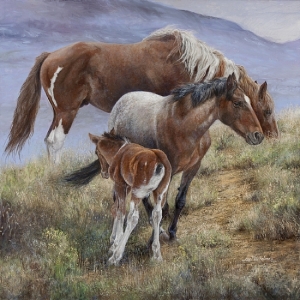 Today is Sunday and as all of you regular readers know, we try to pull away from the bad and highlight the good. Likewise, my lovely bride rarely asks me to highlight a topic but from halfway around the world she is politely asking me to speak up on how everyone is so very precious and important to our ultimate mission to gain equitable justice for our national icons, the “federally protected” wild horses and burros.
Terry mans the phone and responds to dozens of email inquiries as I travel about and one of the most pervasive questions that staunch animal welfare advocates, from around the world, ask is;
“How can I help?”
Folks, just being here is step one. By reading and learning you garner a tremendous wealth of qualified and quantified opinions of, God help us, not only me but thousands of equine enthusiasts and animal welfare advocates from around the world. On an average we log between 1,500 – 2,000 unique hits a day with a peak of over 5,000. Not a big deal in the real world but considering the small niche that we occupy this sort of participation tremendous. I am only the paperboy and you good people are the customer so when you comment you afford a worldwide audience a glance at how we think in our small corner of the globe.
Secondly, you don’t have to live in the western states to be pro-active in what we do, we live in Texas and there are no HMAs in our neck of the woods. But a simple phone call, email or fax speaks volumes when we ask for your help in waking up our publicly funded legislative representatives in what we REALLY want and need in the way of change regarding the management or our wild horses and burros. (Stay tuned as we are about to ask your help in replying to the EA that was released by the BLM on their proposed “zeroing out” of North Piceance herd which we have been legally fighting over for the past year.)
Thirdly, if you can travel to a protest, stampede, conference, please do so. We know that money is tight but for myself I feel that if I do not do anything else with my life but help and aide in saving our wild horses and burros for future generations then I have done what I was placed on this world to do. I am elated to report that the West Douglas herd is still running free because of the efforts of dozens of people over the years and then the recent intervention of our Wild Horse Freedom Federation and esteemed plaintiffs. Sadly, if this is ALL I accomplish in my life then I can lay my head down on my death bed knowing that 120+ horses are running free due to our efforts, my mission would be complete. But being a Type A personality that is not enough, we need to set the record straight across the board. So I am asking you, and me, to witness for the horses in any physical way possible. If you can do it, your companionship would be greatly appreciated at all publicized events.
And finally, there are a multiple of FREE ways that you can help the wild horses and please allow me to give you an example or two.
We are blessed with many artsy-craftsy sort of folks in the wild horse advocacy. For crying out loud WHFF has two authors, two award winning photojournalists and two artists on our Board of Directors. Likewise our Advisory board is peppered with professionals like Emmy award winning cinematographer Ginger Kathrens, producer/director James Klienart, award winning equine photographers Pam Nickoles and Carol Walker. But besides these good folks donating their time we, also, have other artists donating their work to help the wild ones.
Right now, world renowned wild horse artist Lee Mitchelson has a stunning wild horse painting entered in an online competition. By simply clicking (HERE) and voting for Lee’s beautiful painting you have moved one step closer to helping the wild ones, for free. Currently she is donating funds to help the Fallon horses formerly what was once the Calico herd. She had been in contact with Terry and has expressed an interest in supporting WHFF so let’s pile on and help her help the wild ones. The original painting is still for sale so, if you are interested in owning an original Lee Mitchelson painting, please contact her directly at: Lee Mitchelson.
Likewise, besides sending your hard earned cash to our Wild Horse Legal Fund to pay our legal staff you can, again, for FREE, help us by using GoodSearch as your main search engine, Click (HERE). The search engine is driven by Yahoo but for every search that you conduct, if you are like me it is several dozen a day, one penny will be donated to the Wild Horse Freedom Federation’s legal fund. That may not sound like much but pennies DO add up and if you take into consideration that we have almost 5,000 friends and fans on FaceBook, alone, it quickly becomes a true source of income. Likewise, click (HERE) to learn about how a portion of your online shopping, at no expense to you, can be donated to the WHFF’s legal fund. How flipping simple is that? I just LOVE technology.
So in review; you ALL are a very important and integral cog in the wheel of saving the wild horses of the United States of America. We all do what we can do, when we can do it and extend ourselves as far as we can physically and fiscally allow ourselves to go. I consider each and every single advocate to be a very special and bright light glowing in a sea political of darkness…and if you simply mention our cause to your family and friends then you are a Superstar in my book and I love you from the bottom of my heart.
May the “Force of the Horse©” be with each and every one of my very special friends and associates…I am so proud to know you.
Sunday Post by R.T. Fitch ~ President/Co-Founder of Wild Horse Freedom Federation
Every Single Advocate Plays a Vital Role
" Family Ties: The American Mustang" by Lee Mitchelson ~ Click on Image to vote and help the Wild Horses
Terry mans the phone and responds to dozens of email inquiries as I travel about and one of the most pervasive questions that staunch animal welfare advocates, from around the world, ask is;
“How can I help?”
Folks, just being here is step one. By reading and learning you garner a tremendous wealth of qualified and quantified opinions of, God help us, not only me but thousands of equine enthusiasts and animal welfare advocates from around the world. On an average we log between 1,500 – 2,000 unique hits a day with a peak of over 5,000. Not a big deal in the real world but considering the small niche that we occupy this sort of participation tremendous. I am only the paperboy and you good people are the customer so when you comment you afford a worldwide audience a glance at how we think in our small corner of the globe.
Secondly, you don’t have to live in the western states to be pro-active in what we do, we live in Texas and there are no HMAs in our neck of the woods. But a simple phone call, email or fax speaks volumes when we ask for your help in waking up our publicly funded legislative representatives in what we REALLY want and need in the way of change regarding the management or our wild horses and burros. (Stay tuned as we are about to ask your help in replying to the EA that was released by the BLM on their proposed “zeroing out” of North Piceance herd which we have been legally fighting over for the past year.)
Thirdly, if you can travel to a protest, stampede, conference, please do so. We know that money is tight but for myself I feel that if I do not do anything else with my life but help and aide in saving our wild horses and burros for future generations then I have done what I was placed on this world to do. I am elated to report that the West Douglas herd is still running free because of the efforts of dozens of people over the years and then the recent intervention of our Wild Horse Freedom Federation and esteemed plaintiffs. Sadly, if this is ALL I accomplish in my life then I can lay my head down on my death bed knowing that 120+ horses are running free due to our efforts, my mission would be complete. But being a Type A personality that is not enough, we need to set the record straight across the board. So I am asking you, and me, to witness for the horses in any physical way possible. If you can do it, your companionship would be greatly appreciated at all publicized events.
And finally, there are a multiple of FREE ways that you can help the wild horses and please allow me to give you an example or two.
We are blessed with many artsy-craftsy sort of folks in the wild horse advocacy. For crying out loud WHFF has two authors, two award winning photojournalists and two artists on our Board of Directors. Likewise our Advisory board is peppered with professionals like Emmy award winning cinematographer Ginger Kathrens, producer/director James Klienart, award winning equine photographers Pam Nickoles and Carol Walker. But besides these good folks donating their time we, also, have other artists donating their work to help the wild ones.
Right now, world renowned wild horse artist Lee Mitchelson has a stunning wild horse painting entered in an online competition. By simply clicking (HERE) and voting for Lee’s beautiful painting you have moved one step closer to helping the wild ones, for free. Currently she is donating funds to help the Fallon horses formerly what was once the Calico herd. She had been in contact with Terry and has expressed an interest in supporting WHFF so let’s pile on and help her help the wild ones. The original painting is still for sale so, if you are interested in owning an original Lee Mitchelson painting, please contact her directly at: Lee Mitchelson.
Likewise, besides sending your hard earned cash to our Wild Horse Legal Fund to pay our legal staff you can, again, for FREE, help us by using GoodSearch as your main search engine, Click (HERE). The search engine is driven by Yahoo but for every search that you conduct, if you are like me it is several dozen a day, one penny will be donated to the Wild Horse Freedom Federation’s legal fund. That may not sound like much but pennies DO add up and if you take into consideration that we have almost 5,000 friends and fans on FaceBook, alone, it quickly becomes a true source of income. Likewise, click (HERE) to learn about how a portion of your online shopping, at no expense to you, can be donated to the WHFF’s legal fund. How flipping simple is that? I just LOVE technology.
So in review; you ALL are a very important and integral cog in the wheel of saving the wild horses of the United States of America. We all do what we can do, when we can do it and extend ourselves as far as we can physically and fiscally allow ourselves to go. I consider each and every single advocate to be a very special and bright light glowing in a sea political of darkness…and if you simply mention our cause to your family and friends then you are a Superstar in my book and I love you from the bottom of my heart.
May the “Force of the Horse©” be with each and every one of my very special friends and associates…I am so proud to know you.
Friday, July 15, 2011
Breaking News: Federal Judge Rules Against Wild Horses and American Public
Straight from the Horse's Heart
 Reno, Nev. — Today U.S. District Court Judge Howard McKibben issued a decision in favor of the Bureau of Land Management (BLM) which allows the BLM to proceed with the Triple B gather to remove excess wild horses on Saturday, July 16.
“The BLM is pleased with the decision of the court that allows us to move forward with the Triple B gather, where the wild horse population is five times over the minimum appropriate management level,” said Amy Lueders, BLM Nevada Acting State Director.
The BLM will gather and remove approximately 1,726 excess wild horses from in and around the Triple B, Maverick-Medicine and Antelope Valley herd management areas (HMA) and the Cherry Springs Wild Horse Territory located approximately 30 miles northwest of Ely and 70 miles southeast of Elko, Nev. Removal of the excess wild horses is necessary to prevent degradation of rangeland resources and to ensure sufficient forage and water is available for the wild horse population.
The estimated population for the entire gather area is 2,198. The appropriate management level (AML) for the entire area is 472-889 animals. Any horses gathered above targeted removal numbers will be released back to the range so that the remaining population is within AML.
Any gathered mares released back to the range will be vaccinated with the PZP-22 (Porcine Zona Pellucida) fertility control vaccine. Additionally, sex ratios of gathered animals to be returned to the HMAs may be adjusted to achieve an approximately 60 percent male/40 percent female ratio.
The gathered animals will be transported to the National Wild Horse and Burro Center at Palomino Valley (PVC), in Reno, Nev., Gunnison Correctional Facility in Gunnison, Utah, and the Delta Wild Horse Corrals in Delta City, Utah. The animals will be prepared for the BLM adoption program or for long-term holding.
The Cloud Foundation, Craig Downer and Lorna Moffat filed a lawsuit on Wednesday, June 29, 2011, and moved to enjoin the Triple B gather. Judge McKibben held a hearing Thursday morning and denied the motion to enjoin the gather.
Unedited Press Release from BLM Propaganda Central
Judge McKibben Rules in Favor of BLM Triple B Wild Horse Stampede
The Horses Lose AGAIN!!!
“The BLM is pleased with the decision of the court that allows us to move forward with the Triple B gather, where the wild horse population is five times over the minimum appropriate management level,” said Amy Lueders, BLM Nevada Acting State Director.
The BLM will gather and remove approximately 1,726 excess wild horses from in and around the Triple B, Maverick-Medicine and Antelope Valley herd management areas (HMA) and the Cherry Springs Wild Horse Territory located approximately 30 miles northwest of Ely and 70 miles southeast of Elko, Nev. Removal of the excess wild horses is necessary to prevent degradation of rangeland resources and to ensure sufficient forage and water is available for the wild horse population.
The estimated population for the entire gather area is 2,198. The appropriate management level (AML) for the entire area is 472-889 animals. Any horses gathered above targeted removal numbers will be released back to the range so that the remaining population is within AML.
Any gathered mares released back to the range will be vaccinated with the PZP-22 (Porcine Zona Pellucida) fertility control vaccine. Additionally, sex ratios of gathered animals to be returned to the HMAs may be adjusted to achieve an approximately 60 percent male/40 percent female ratio.
The gathered animals will be transported to the National Wild Horse and Burro Center at Palomino Valley (PVC), in Reno, Nev., Gunnison Correctional Facility in Gunnison, Utah, and the Delta Wild Horse Corrals in Delta City, Utah. The animals will be prepared for the BLM adoption program or for long-term holding.
The Cloud Foundation, Craig Downer and Lorna Moffat filed a lawsuit on Wednesday, June 29, 2011, and moved to enjoin the Triple B gather. Judge McKibben held a hearing Thursday morning and denied the motion to enjoin the gather.
Related articles
- HSUS Misses the Mark on BLM Wild Horse Stampedes (rtfitch.wordpress.com)
- Another Win in Saving Colorado Wild Horse Herd from BLM Eradication (rtfitch.wordpress.com)
- Federal judge to rule on Nevada wild horse roundup (seattletimes.nwsource.com)
- Sheldon Wild Horses and Burros: We Will Not Forget You, Again (rtfitch.wordpress.com)
Thursday, July 14, 2011
BLM Roundup of Alleged “Estrays” in Oregon
Straight from the Horse's Heart
Information supplied by Wild Horse Education.org
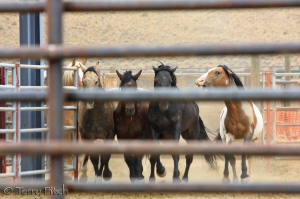 Wild Horse Education has discovered that an unscheduled, unannounced, secret roundup was being carried out east of Baker City,(Baker County) Oregon today, July 14, 2011. This removal of 30 to 70 horses is in the Vale BLM District. There is a question if these “estray” horses could actually be wild horses.
“Looking at the BLM schedule, the contractor was not scheduled to fly again until August 2,” said Laura Leigh founder of Wild Horse Education “This lead us to investigate other areas where operations could be occurring.”
Marilyn Wargo was told this roundup was taking place by Vale District BLM employee Kelly Skerjanec, who said District manager Pat Ryan and BLM WH&B Specialist, Shaney Rockefeller were at this roundup. BLM Baker City Office employee Mark Pierce confirmed that this action was set up on the ground yesterday and was carried out today.
Wargo was told the private rancher, whose property adjoins BLM land, was not claiming these horses (there was a court case in 2004 in this matter). BLM considers them feral estray. Pierce stated this was not a BLM Oregon helicopter and that a contractor was involved and it could be the one used at Kiger/Riddle just South of Vale District. This would be the Cattoor Livestock Company. At this time no operations official will confirm or deny the contractor.
Pierce elaborated saying: BLM intended to remove horses found only on the BLM lands and not the private property. The horses are considered “trespassers” on public land. The ranchers name was not available at this time.
Piece also said the mares with foals would be sent to Vale District and all others to Prineville.
These offices do not have holding facilities and the destination of these horses is being investigated.
Natural Resources Specialist John Raddemacher from the BLM Baker Office is in charge of this action.
Mark Wilkening of the BLM has confirmed that this operation may be going on tomorrow as well. He has informed us that the horses have no brands. Wilkening has said that this area has never had horses before.
This is in addition to discovering the pending roundup at Sheldon National Wildlife Refuge, in Oregon and Nevada.
Ms. Leigh is the Founder of Wild Horse Education.org, Vice President of the Wild Horse Freedom Federation and writes a blog about her wild horse and burro advocacy.
Information supplied by Wild Horse Education.org
Obama’s “Transparent” BLM Up to Covert Operations, AGAIN
Wild Horse Education has discovered that an unscheduled, unannounced, secret roundup was being carried out east of Baker City,(Baker County) Oregon today, July 14, 2011. This removal of 30 to 70 horses is in the Vale BLM District. There is a question if these “estray” horses could actually be wild horses.“Looking at the BLM schedule, the contractor was not scheduled to fly again until August 2,” said Laura Leigh founder of Wild Horse Education “This lead us to investigate other areas where operations could be occurring.”
Marilyn Wargo was told this roundup was taking place by Vale District BLM employee Kelly Skerjanec, who said District manager Pat Ryan and BLM WH&B Specialist, Shaney Rockefeller were at this roundup. BLM Baker City Office employee Mark Pierce confirmed that this action was set up on the ground yesterday and was carried out today.
Wargo was told the private rancher, whose property adjoins BLM land, was not claiming these horses (there was a court case in 2004 in this matter). BLM considers them feral estray. Pierce stated this was not a BLM Oregon helicopter and that a contractor was involved and it could be the one used at Kiger/Riddle just South of Vale District. This would be the Cattoor Livestock Company. At this time no operations official will confirm or deny the contractor.
Pierce elaborated saying: BLM intended to remove horses found only on the BLM lands and not the private property. The horses are considered “trespassers” on public land. The ranchers name was not available at this time.
Piece also said the mares with foals would be sent to Vale District and all others to Prineville.
These offices do not have holding facilities and the destination of these horses is being investigated.
Natural Resources Specialist John Raddemacher from the BLM Baker Office is in charge of this action.
Mark Wilkening of the BLM has confirmed that this operation may be going on tomorrow as well. He has informed us that the horses have no brands. Wilkening has said that this area has never had horses before.
This is in addition to discovering the pending roundup at Sheldon National Wildlife Refuge, in Oregon and Nevada.
Ms. Leigh is the Founder of Wild Horse Education.org, Vice President of the Wild Horse Freedom Federation and writes a blog about her wild horse and burro advocacy.
Update: Prison Horses Found in Waco
Horseback Magazine
Story and Photos by Steven Long
 HOUSTON, (Horseback) – At least some of the horses once belonging to the State of Texas and in custody of the Texas Department of Criminal Justice have been found after being sold at auction. The TDCJ prison horses were located at a facility owned by a former Texas prison inmate and equine kill buyer whose wife confirmed that the horses were the same ones purchased Monday night at a Huntsville, Texas livestock auction.
“We are not selling these horses for food,” said TDCJ chief spokeswoman Michelle Lyons. “They were sold at a public auction to the public.”
The horses were sold as culls from the prison system’s extensive livestock program.
“We cannot speak intelligently as to the buyers’ intent,” Lyon’s told Horseback Magazine late Thursday, “but have been informed by the auction house that there were at least 10 different buyers of TDCJ horses.”
Asked if TDCJ was aware of recent concerns raised about the chemicals used to medically treat U.S. horses, Lyons said “Without an extensive review of the horses’ veterinary records, we cannot make assurances regarding what medications they have or have not taken.”
Drugs such as phenylbutazone (Bute), wormers, and a variety of other drugs routinely administered to horses here, possibly including prison horses, are strictly prohibited for use in food animals.
One of the most genetically perfect herds of horses in North America was hit hard by the selloff of 61 animals at a public auction, their most likely destination, a Mexican slaughterhouse notorious for unspeakable cruelty. The herd is genetically and historically important because they have been part of a captive breeding program for more than a century with little outside genetic influence. On the rare occasions other horses have been introduced, they have been foundation pedigreed lines.
The horses were part of a herd of 1,600 owned by the State of Texas and managed by the Texas Department of Criminal Justice in Huntsville, according to Lyons.
The state’s captive herd is subject to the most advanced breeding techniques and is held to exacting standards that are world class. The horses are not grade horses but are beneficiaries of the very best techniques of modern agricultural science. The livestock managers are products of the renowned schools of agriculture at Texas A&M University and the nearby Sam Houston State University. The horses are primarily Quarter Horses with substantial Percheron blood.
The information that the horses had been sold at auction came to Horseback Online Monday night when a confidential source who was at the Huntsville cattle auction called and said that a large number of prison horses had been sold to slaughter and had been loaded on a truck south heading down I-45.
“People who work at the prison are really upset about this,” the man said during a phone call to the magazine’s offices.
The Texas prison system holds “Premium Auctions” of horses only rarely where the public is invited to bid after extensive advertising of the sale. No such ads were placed for the 61 horses sold Monday. They were quietly sent to auction where a large truck was already waiting, according to the source who said the horses sold for about 40 cents a pound.
Lyons confirmed the prison system auctions 90-100 “cull” horses each year from its program.
Livestock auctions are the primary sources of horses sent abroad for food.
The Texas prison system breeds big horses, big enough to hold a 300 pound guard for an eight hour shift in the fields, hence the draft horse bloodlines brought into the herd. The stout corrections officer is known in prison parlance as “The Boss.” The horses and their human counterparts guard men dressed in white garb as they work fields with a garden hoe called by the derisive name, an “aggie.” The horses are bread for Texas’ 176 prison units which boast approx. 75 mounted guards or more.
There is one boss for each 25 inmates.
The prison horses are almost as wide as their bellies are deep. They hold saddles made behind the walls. The animals and men herd the system’s 20,000 cattle that are sold on the open market by the state. None of the meat is kept by TDCJ. The cheaper cuts fed to prisoners are bought at market price for the institution’s commissaries. Officials are quick to point out that prison inmates don’t eat steak but consumers may be lucky enough to eat beef raised behind prison walls.
Besides security and agriculture duty, the horses follow dogs chasing escaped convicts.
The state’s ideal prison horse is three quarters Quarter Horse and one quarter draft horse. Throughout his life a prison horse is freeze branded so that extensive records can be maintained in the system. The markings include a tattoo on the inside of the lip, a Texas star, the birth year, and ID number on the back left, and an additional identification on the horses left cheek near the anus. Like their fellow inmates, the horses have no name, only their number to identify them. The records are so extensive that a manager can track the record of a 20 year old horse and know every significant event of its life just by looking up his record.
The auction buyers Monday didn’t get the records of the horses they bought. When a horse leaves the prison system, only its Coggins certificate and ID sheet follow.
The state has achieved its ideal confirmation of broadness, horses that have hardly any withers, and are short of back.
Story and Photos by Steven Long
HOUSTON, (Horseback) – At least some of the horses once belonging to the State of Texas and in custody of the Texas Department of Criminal Justice have been found after being sold at auction. The TDCJ prison horses were located at a facility owned by a former Texas prison inmate and equine kill buyer whose wife confirmed that the horses were the same ones purchased Monday night at a Huntsville, Texas livestock auction.“We are not selling these horses for food,” said TDCJ chief spokeswoman Michelle Lyons. “They were sold at a public auction to the public.”
The horses were sold as culls from the prison system’s extensive livestock program.
“We cannot speak intelligently as to the buyers’ intent,” Lyon’s told Horseback Magazine late Thursday, “but have been informed by the auction house that there were at least 10 different buyers of TDCJ horses.”
Asked if TDCJ was aware of recent concerns raised about the chemicals used to medically treat U.S. horses, Lyons said “Without an extensive review of the horses’ veterinary records, we cannot make assurances regarding what medications they have or have not taken.”
Drugs such as phenylbutazone (Bute), wormers, and a variety of other drugs routinely administered to horses here, possibly including prison horses, are strictly prohibited for use in food animals.
One of the most genetically perfect herds of horses in North America was hit hard by the selloff of 61 animals at a public auction, their most likely destination, a Mexican slaughterhouse notorious for unspeakable cruelty. The herd is genetically and historically important because they have been part of a captive breeding program for more than a century with little outside genetic influence. On the rare occasions other horses have been introduced, they have been foundation pedigreed lines.
The horses were part of a herd of 1,600 owned by the State of Texas and managed by the Texas Department of Criminal Justice in Huntsville, according to Lyons.
The state’s captive herd is subject to the most advanced breeding techniques and is held to exacting standards that are world class. The horses are not grade horses but are beneficiaries of the very best techniques of modern agricultural science. The livestock managers are products of the renowned schools of agriculture at Texas A&M University and the nearby Sam Houston State University. The horses are primarily Quarter Horses with substantial Percheron blood.
The information that the horses had been sold at auction came to Horseback Online Monday night when a confidential source who was at the Huntsville cattle auction called and said that a large number of prison horses had been sold to slaughter and had been loaded on a truck south heading down I-45.
“People who work at the prison are really upset about this,” the man said during a phone call to the magazine’s offices.
The Texas prison system holds “Premium Auctions” of horses only rarely where the public is invited to bid after extensive advertising of the sale. No such ads were placed for the 61 horses sold Monday. They were quietly sent to auction where a large truck was already waiting, according to the source who said the horses sold for about 40 cents a pound.
Lyons confirmed the prison system auctions 90-100 “cull” horses each year from its program.
Livestock auctions are the primary sources of horses sent abroad for food.
The Texas prison system breeds big horses, big enough to hold a 300 pound guard for an eight hour shift in the fields, hence the draft horse bloodlines brought into the herd. The stout corrections officer is known in prison parlance as “The Boss.” The horses and their human counterparts guard men dressed in white garb as they work fields with a garden hoe called by the derisive name, an “aggie.” The horses are bread for Texas’ 176 prison units which boast approx. 75 mounted guards or more.
There is one boss for each 25 inmates.
The prison horses are almost as wide as their bellies are deep. They hold saddles made behind the walls. The animals and men herd the system’s 20,000 cattle that are sold on the open market by the state. None of the meat is kept by TDCJ. The cheaper cuts fed to prisoners are bought at market price for the institution’s commissaries. Officials are quick to point out that prison inmates don’t eat steak but consumers may be lucky enough to eat beef raised behind prison walls.
Besides security and agriculture duty, the horses follow dogs chasing escaped convicts.
The state’s ideal prison horse is three quarters Quarter Horse and one quarter draft horse. Throughout his life a prison horse is freeze branded so that extensive records can be maintained in the system. The markings include a tattoo on the inside of the lip, a Texas star, the birth year, and ID number on the back left, and an additional identification on the horses left cheek near the anus. Like their fellow inmates, the horses have no name, only their number to identify them. The records are so extensive that a manager can track the record of a 20 year old horse and know every significant event of its life just by looking up his record.
The auction buyers Monday didn’t get the records of the horses they bought. When a horse leaves the prison system, only its Coggins certificate and ID sheet follow.
The state has achieved its ideal confirmation of broadness, horses that have hardly any withers, and are short of back.
Wednesday, July 13, 2011
Texas Prison Horses May be on One Way Trip to the Mexican Border
Horseback Magazine
Story and Photos by Steven Long
 HUNTSVILLE, (Horseback) – One of the most genetically perfect herds of horses in North America was hit hard by the selloff of 61 animals at a public auction, their most likely destination, a Mexican slaughterhouse notorious for unspeakable cruelty. The herd of Texas prison horses that were sold had been part of a contingent of animals so remarkable, and even historic, they were subject of a February 2004 cover story in Horseback Magazine’s predecessor publication, Texas Horse Talk.
The horses were part of a herd of 1,600 owned by the State of Texas and managed by the Texas Department of Criminal Justice in Huntsville, according to Michelle Lyons, chief TDCJ spokeswoman.
“These were what we call cull horses,” she told Horseback Magazine.
The horses that prison livestock managers call “culls” boast some of the purest blood lines in the nation dating back to the mid nineteenth century. The state’s captive herd is subject to the most advanced breeding techniques and is held to exacting standards that are world class. The livestock managers are products of the renowned schools of agriculture at Texas A&M University and the nearby Sam Houston State University. Only the finest bloodlines are introduced into the herd, and that is done rarely. The horses are primarily Quarter Horses with substantial Percheron blood.
The information that the horses had been sold at auction came to Horseback Online Monday night when a confidential source who was at the Huntsville cattle auction called and said that a large number of prison horses had been sold to slaughter and had been loaded on a truck south heading down I-45.
“People who work at the prison are really upset about this,” the man said during a phone call to the magazine’s offices.
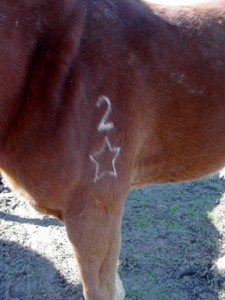 The Texas prison system holds “Premium Auctions” of horses only rarely where the public is invited to bid after extensive advertising of the sale. No such ads were placed for the 60 highly blooded horses sold Monday. The were quietly sent to auction where a large truck was already waiting, according to the source who said the horses sold for about 40 cents a pound.
Lyons confirmed the prison system auctions 90-100 “cull” horses each year from its program.
Livestock auctions are the primary sources of horses sent abroad for food. Yet Lyons categorically denies the Huntsville prisons sent their horses to auction with the knowledge they would be sold for slaughter.
“We have had calls from a woman who claims this very thing, and probably is the same person who claims to have witnessed this,” Lyons said. “She alleged that 70 horses went to one bidder. We only had 61 horses in the auction – we don’t know how many non-TDCJ horses was also part of the auction.”
“The fact is that we participate in these public auctions as a way to keep the horses (from) going to a slaughterhouse – we don’t condone the sale of our horses for slaughter,” Lyons said.
The primary source for horses going to slaughter is public auctions.
Lyons was asked to provide the name of the buyer of the large number of TDCJ horses that went to auction on Monday. She said prison livestock managers didn’t know who bought the horses. Asked by Horseback if they would call the auction house to ask the name of the buyer, she said the men declined.
Horseback Magazine called Huntsville Livestock Services, Inc. and spoke with manager Tommy Oates who declined to name the buyer of the TDCJ horses, saying “I don’t have to tell you a damned thing, ask the state,” before slamming down the phone on the reporter.
The Texas prison system breeds big horses, big enough to hold a 300 pound guard for an eight hour shift in the fields, hence the draft horse bloodlines brought into the herd. The stout corrections officer is known in prison parlance as “The Boss.” The horses and their human counterparts guard men dressed in white garb as they work fields with a garden hoe called by the derisive name, an “aggie.” The horses are bread for Texas’ 176 prison units which boast approx. 75 mounted guards or more.
There is one boss for each 25 inmates.
The prison horses are almost as wide as their bellies are deep. They hold saddles made behind the walls. The animals and men herd the system’s 20,000 cattle that are sold on the open market by the state. None of the meat is kept by TDCJ. The cheaper cuts fed to prisoners are bought at market price for the institution’s commissaries. Officials are quick to point out that prison inmates don’t eat steak but consumers may be lucky enough to eat beef raised behind prison walls.
Besides security and agriculture duty, the horses follow dogs chasing escaped convicts.
The state’s ideal prison horse is three quarters Quarter Horse and one quarter draft horse. Throughout his life a prison horse is freeze branded so that extensive records can be maintained in the system. The markings include a tattoo on the inside of the lip, a Texas star, the birth year, and ID number on the back left, and an additional identification on the horses left cheek near the anus. Like their fellow inmates, the horses have no name, only their number to identify them. The records are so extensive that a manager can track the record of a 20 year old horse and know every significant event of its life just by looking up his record.
The auction buyers Monday didn’t get the records of the horses they bought. When a horse leaves the prison system, only its Coggins certificate and ID sheet follow.
While most of the horses aren’t registered, some boast the bloodlines of pure Texas equine royalty including pedigrees from the famed Waggoner Ranch. TDCJ has also bought other Foundation Quarter Horse stallions as well. Other bloodlines go back to the days when the state first built prisons. The Walls unit in Huntsville dates to 1849 shortly after the end of the Republic of Texas. The state’s prison captive breeding program is indeed, very, very, old. The prison herd has been steadily improved for nearly 162 years, and dramatically improved in recent years.
The state has achieved its ideal confirmation of broadness, horses that have hardly any withers, and are short of back – no long backed high withered horses such as a Thoroughbred are allowed.
The horses are tough, powerful, and as potent as the 300 pound guards who ride them.
And when they go to an auction where the public is given notice, prison horses sell for considerably more than 40 cents a pound.
Story and Photos by Steven Long
HUNTSVILLE, (Horseback) – One of the most genetically perfect herds of horses in North America was hit hard by the selloff of 61 animals at a public auction, their most likely destination, a Mexican slaughterhouse notorious for unspeakable cruelty. The herd of Texas prison horses that were sold had been part of a contingent of animals so remarkable, and even historic, they were subject of a February 2004 cover story in Horseback Magazine’s predecessor publication, Texas Horse Talk.The horses were part of a herd of 1,600 owned by the State of Texas and managed by the Texas Department of Criminal Justice in Huntsville, according to Michelle Lyons, chief TDCJ spokeswoman.
“These were what we call cull horses,” she told Horseback Magazine.
The horses that prison livestock managers call “culls” boast some of the purest blood lines in the nation dating back to the mid nineteenth century. The state’s captive herd is subject to the most advanced breeding techniques and is held to exacting standards that are world class. The livestock managers are products of the renowned schools of agriculture at Texas A&M University and the nearby Sam Houston State University. Only the finest bloodlines are introduced into the herd, and that is done rarely. The horses are primarily Quarter Horses with substantial Percheron blood.
The information that the horses had been sold at auction came to Horseback Online Monday night when a confidential source who was at the Huntsville cattle auction called and said that a large number of prison horses had been sold to slaughter and had been loaded on a truck south heading down I-45.
“People who work at the prison are really upset about this,” the man said during a phone call to the magazine’s offices.
 The Texas prison system holds “Premium Auctions” of horses only rarely where the public is invited to bid after extensive advertising of the sale. No such ads were placed for the 60 highly blooded horses sold Monday. The were quietly sent to auction where a large truck was already waiting, according to the source who said the horses sold for about 40 cents a pound.
Lyons confirmed the prison system auctions 90-100 “cull” horses each year from its program.
Livestock auctions are the primary sources of horses sent abroad for food. Yet Lyons categorically denies the Huntsville prisons sent their horses to auction with the knowledge they would be sold for slaughter.
“We have had calls from a woman who claims this very thing, and probably is the same person who claims to have witnessed this,” Lyons said. “She alleged that 70 horses went to one bidder. We only had 61 horses in the auction – we don’t know how many non-TDCJ horses was also part of the auction.”
“The fact is that we participate in these public auctions as a way to keep the horses (from) going to a slaughterhouse – we don’t condone the sale of our horses for slaughter,” Lyons said.
The primary source for horses going to slaughter is public auctions.
Lyons was asked to provide the name of the buyer of the large number of TDCJ horses that went to auction on Monday. She said prison livestock managers didn’t know who bought the horses. Asked by Horseback if they would call the auction house to ask the name of the buyer, she said the men declined.
Horseback Magazine called Huntsville Livestock Services, Inc. and spoke with manager Tommy Oates who declined to name the buyer of the TDCJ horses, saying “I don’t have to tell you a damned thing, ask the state,” before slamming down the phone on the reporter.
The Texas prison system breeds big horses, big enough to hold a 300 pound guard for an eight hour shift in the fields, hence the draft horse bloodlines brought into the herd. The stout corrections officer is known in prison parlance as “The Boss.” The horses and their human counterparts guard men dressed in white garb as they work fields with a garden hoe called by the derisive name, an “aggie.” The horses are bread for Texas’ 176 prison units which boast approx. 75 mounted guards or more.
There is one boss for each 25 inmates.
The prison horses are almost as wide as their bellies are deep. They hold saddles made behind the walls. The animals and men herd the system’s 20,000 cattle that are sold on the open market by the state. None of the meat is kept by TDCJ. The cheaper cuts fed to prisoners are bought at market price for the institution’s commissaries. Officials are quick to point out that prison inmates don’t eat steak but consumers may be lucky enough to eat beef raised behind prison walls.
Besides security and agriculture duty, the horses follow dogs chasing escaped convicts.
The state’s ideal prison horse is three quarters Quarter Horse and one quarter draft horse. Throughout his life a prison horse is freeze branded so that extensive records can be maintained in the system. The markings include a tattoo on the inside of the lip, a Texas star, the birth year, and ID number on the back left, and an additional identification on the horses left cheek near the anus. Like their fellow inmates, the horses have no name, only their number to identify them. The records are so extensive that a manager can track the record of a 20 year old horse and know every significant event of its life just by looking up his record.
The auction buyers Monday didn’t get the records of the horses they bought. When a horse leaves the prison system, only its Coggins certificate and ID sheet follow.
While most of the horses aren’t registered, some boast the bloodlines of pure Texas equine royalty including pedigrees from the famed Waggoner Ranch. TDCJ has also bought other Foundation Quarter Horse stallions as well. Other bloodlines go back to the days when the state first built prisons. The Walls unit in Huntsville dates to 1849 shortly after the end of the Republic of Texas. The state’s prison captive breeding program is indeed, very, very, old. The prison herd has been steadily improved for nearly 162 years, and dramatically improved in recent years.
The state has achieved its ideal confirmation of broadness, horses that have hardly any withers, and are short of back – no long backed high withered horses such as a Thoroughbred are allowed.
The horses are tough, powerful, and as potent as the 300 pound guards who ride them.
And when they go to an auction where the public is given notice, prison horses sell for considerably more than 40 cents a pound.
Subscribe to:
Posts (Atom)