Showing posts with label horse. Show all posts

Tuesday, July 26, 2011

Week 1: Triple B Complex Roundup

American Wild Horse Preservation Campaign

The Massive Removal Begins


Photo by Laura Leigh
After legal efforts to block the roundup did not meet with success (information on the lawsuit available here), the Bureau of Land Management is began the Triple B roundup on July 20, 2011. The action will permanently remove 1,700 wild horses from their families and homes on public lands in Northeastern Nevada. Due to the timing of the roundup, very young foals will be stampeded in the helicopter drive. Horses will be run for miles in the middle of the hot desert summer. In addition, the horses have adapted to and are operating on low water resources, meaning they are prone to dehydration after being subjected to miles long helicopter chases.
Reports from the front lines of this mass capture operation follow.  READ MORE.
Triple B Wild Horse Roundup: Day 2 

Follow   on Youtube. 

Monday, May 30, 2011

URGENT ALERT: Calls Needed to Congress TUESDAY to Stop Horse Slaughter!

From Animal Welfare Institute:

May 30, 2011

URGENT eALERT:  Calls Needed TUESDAY in Support of Amendment Keeping Federal Government out of Horse Slaughter Business!

Dear Humanitarian,

Late last week the House Agriculture Appropriations Subcommittee approved the FY2012 Agriculture Appropriations bill.  The language defunding the required USDA inspections of horse slaughter facilities was not included for the first time since 2005, despite strong bipartisan support in Congress.  This first step, if successful, may allow foreign investors the opportunity to reestablish horse slaughter in the US.

At a time when Congress is dramatically cutting back federal spending and eliminating wasteful federal programs, it is disturbing that some in Congress would allow for the reestablishment of a taxpayer subsidized federal program that existed solely to support foreign owned horse slaughter facilities that inflicted tremendous suffering on American horses.

WHAT YOU CAN DO:

The full House Appropriations Committee will be voting on the FY12 Agriculture Appropriations bill this Tuesday afternoon.  An amendment will be offered to restore the prohibition on putting USDA inspectors in horse slaughter facilities.  Restoring this USDA defund language is important, and it is critical that you call and urge your legislator to support the amendment.

There is time to have your voices heard, but you must act immediately. If your Representative is on the House Appropriations Committee (see list below), they need to hear from you.  These members have supported a ban on horse slaughter so you should remind them of their previous support and urge them to vote in favor of the amendment. Please give them a call first thing Tuesday morning and urge friends, family and coworkers to do the same.

You can call the main Capitol switchboard at (202) 224-2131 and ask to be connected to your Representatives office or you can visit AWI's Compassion Index to find their direct number.

Harold D. Rogers, KY                    C.W. Bill Young, FL
Jerry Lewis, CA                             Frank Wolf, VA
Rodney Frelinghuysen, NJ            Robert B. Aderholt, AL
Ander Crenshaw, FL                     Rodney Alexander, LA
Ken Calvert, CA                            Steve LaTourette, OH
Mario Diaz-Balart, FL                   Charles Dent, PA
Norm Dicks, WA                           Marcy Kaptur, OH
Pete Visclosky, IN                         Nita Lowey, NY
Jose Serrano, NY                           Rosa DeLauro, CT
Jim Moran, VA                               John Olver, MA
Davis Price, NC                             Maurice Hinchey, NY
Lucille Roybal-Allard, CA              Sam Farr, CA
Jesse Jackson, IL                           Chaka Fattah, PA
Steve Rothman, NJ                        Barbara Lee, Ca
Adam Schiff, CA                            Betty McCollum, MN

Agriculture Appropriations:
Retain Language Defunding Federal Inspection of Horse Meat and Horses for Slaughter for Human Consumption

•    On the FY2006 Agriculture Appropriations Bill, Representatives John Sweeney (R-NY), Spratt (D-SC) and Whitfield (R-KY) offered an amendment to eliminate federal funding for the inspection of horsemeat – required by federal law – for horses being slaughtered for human consumption.  This amendment passed 269-158.  The Senate overwhelmingly approved a similar amendment in the Senate sponsored by the late Senator Robert Byrd (D-WV) and Senator John Ensign (R-NV).

•         Funding federal inspection of horse slaughter plants is fiscally irresponsible.  Only foreign corporations, which deal in horsemeat for consumption by wealthy foreign gourmands overseas, would benefit from federal inspection of horse slaughter plants.  Funding these inspections will only benefit foreign markets - at the expense of American taxpayers - and will add to the size of the federal deficit.  Precious federal dollars should be conserved and put to better use by funding worthy domestic programs, including those programs that ensure the safety of food that is consumed in our country.

•         Inspecting horse slaughter facilities is a federal responsibility.  Horse slaughter is a federally regulated industry. Opponents claim that slaughtering horses for human consumption is a states’ rights issue. The slaughtering of any animal for human consumption in the U.S. is a federally regulated process. This is the same for beef, hogs or other livestock (Federal Meat Inspection Act (21 U.S.C. 603); Federal Agriculture Improvement and Reform Act of 1996 (7 U.S.C. 1901). In addition, since horses sent to slaughter come from all 50 states, and horsemeat is not consumed in the U.S., it must be hauled across state lines and the over the U.S. border.  Prior to the closure of the horse slaughter plants in the U.S., very few of the horses slaughtered in a state actually came from that state. Further, if federally-funded inspections were to begin, none of the meat would be consumed in the state where a horse was slaughtered, as we do not consume horsemeat in this country.  Lastly, if a horse slaughter plant were to open in the U.S., the plant would slaughter horses transported across state lines, including horses from states strongly opposed to horse slaughter. A state should have the “right” to protect its own horses from slaughter.


•         Live horses benefit the U.S. economy.  The horse industry (racing, showing, eventing, etc.) bring billions of dollars to the U.S. economy each year.  While selling a 5-year-old horse to slaughter might bring $50 to a killer buyer, and more to the foreign investor, keeping that horse alive and in the local economy will bring far greater return for years to come in income and job growth.

•         Horses sent to slaughter are healthy and robust, not “unwanted.” The USDA estimates that 92.3 percent of the horses being sent to slaughter are healthy and can continue to be productive animals – they are not old or infirm.

•         American horsemeat poses a serious risk to human health. Horses in the U.S. are not raised as food animals, so while their flesh may be considered a delicacy by foreign gourmands, it poses serious risks to human health.  According to a recent Food and Chemical Toxicology report, substances routinely given to American horses cause dangerous adverse effects in humans.  If federally funded inspections were to begin, not only would taxpayer dollars be needed to inspect these facilities, but additional funding would be required to enforce transport regulations and increased food safety testing as required by new European Union mandates.

•    Horse slaughter for human consumption is a cruel process and one that should not be practiced here in the U.S.  Americans do not eat horsemeat. Over 70 percent of the country believes that this is a cruel and unnecessary practice.

•    Approximately 100,000 American horses are exported to slaughter each year. There are 9 million horses in the U.S.  Of the 900,000 horses that die annually, approximately 100,000 are sent to Mexico and Canada for slaughter for human consumption by foreign gourmands.  Despite claims made by horse slaughterhouse lobbyists, each year the same number of American horses are slaughtered that were slaughtered when U.S. based plants were in operation. Our horses are simply being hauled to a location outside of the U.S. for slaughter for human consumption. The closure of the horse slaughter plants in the U.S. have not led to an increase in “unwanted” horses, as the same number of horses are being slaughtered now that were prior to the closure of the plants in the U.S.

•    Slaughter is not humane euthanasia. The average cost to humanely euthanize a horse by a licensed veterinarian is $225, roughly the same cost that it takes to feed and shelter a horse for one month.  Properly euthanizing a horse is not cost-prohibitive and is what the vast majority of Americans choose to do with their horses at the end of their lives.

•    This language must be retained. This defund language has prevented horse slaughter plants in the U.S. from operating, and any new facilities from opening, which is why it is crucial in eliminating this cruel practice in the U.S.  This defund language has been included in every Agriculture Appropriations bill since FY06. Americans taxpayers should not be forced to foot the bill for this unnecessary practice now, or ever.

Thanks for your help.  Be sure to share this eAlert with friends, family and coworkers and encourage them to contact their legislator as well.

Sincerely,
Chris Heyde

____________________________
CHRISTOPHER J. HEYDE
Deputy Director, Government and Legal Affairs
ANIMAL WELFARE INSTITUTE
900 Pennsylvania Ave., SE
Washington, DC 20003
www.awionline.org
www.compassionindex.org

The Animal Welfare Institute has been working to alleviate the suffering inflicted on animals by humans since 1951.
Please join us in our work to protect animals – visit our website to find out more and to sign up for AWI eAlerts: www.awionline.org.

Thursday, May 19, 2011

Monday, May 16, 2011

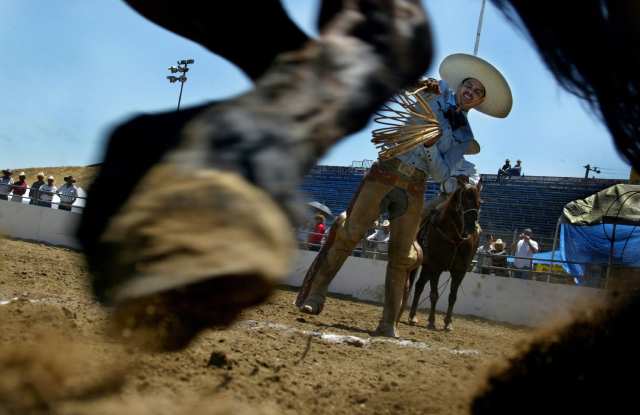
Forked Tongue Horse Haters May Face Legal Woes Over Nevada Horse Tripping Bill

Straight from the Horses Heart

(The News As We See It) by R.T. Fitch ~ Author/Director of HfH Advisory Council

Lies May Jump-start Dead Bill

photo by Karen Tapia-Andsersen
Breaking News:  The Associated Press has reported that the dead Nevada Horse Tripping Bill, SB364, may gain new life after the release of a video graphically showing horse tripping occurring in Nevada only a few weeks ago.
“Seeing that horse flailing on its back. It just got to me,” said Sen. Allison Copening, D-Las Vegas, the bill’s sponsor. “This is not a sport. It is animal cruelty.”
Sen. John Lee, D-North Las Vegas, said he voted against the bill because witnesses told the Senate committee horse tripping was not a Nevada problem. He also said he would change his mind about the ban if tripping really happened here.
“I do what I say I’m going to do,” he told the AP when approached days after the video aired. “I am committed . . . to put a stop to this.”
Nevada legislators are now acutely aware of the fact  that they were lied to by witnesses and anti-horse groups during the testimony heard on April 6th before the Nevada Senate Natural Resources Committee.  That same false testimony may be just the ticket to breathe life back into the now dead bill.
Misdemeanor charges against witnesses for providing false testimony may be pursued, Manendo said.
“You cannot lie to a legislator outside of session or in session,” he said, adding that testimony that horse tripping doesn’t happen in Nevada “changed committee members’ minds to not vote for the bill.”
Leading the internet charge against the horses of Nevada was fringe horse slaughter cult leader Wyoming Rep. Sue Wallis and alleged horse trainer and President of yet another newly formed organization, United Horsemen, Dave Duquette.  Wallis is currently under investigation in her home state for alleged improprieties with another organization that she is currently dismantling and is also being sued for alleged assault and battery upon a reporter.
We stopped the HSUS sponsored Senate Bill 613 in Oregon in its tracks. We need you to step up again and communicate with the Nevada legislature. We have learned that yet another bogus “horse tripping” bill is set to be introduced in that state today or tomorrow.” claims Wallis and Duquette on the Facebook page they created for their controversial “Summit of the Horse” that was held in the beginning of January of this year.  The “Summit” centered around the promotion of bringing the predatory business of horse slaughter back to the United States and was such a colossal flop that the two are now soliciting funds to pay off their debts.
On their website and in their emails they perpetuate the misconception that “Horse Tripping” does not exist in Nevada.  They provide a list of invalid talking points that are an insult to the public’s intelligence and a disservice to American rodeos. The group claims that the Charro Rodeo Association voluntary banned horse tripping in 1995 when in fact, they were forced to do so by a 1994 law, AB 49x – a law that was not spearheaded by the HSUS.
Furthermore Wallis and Duquette appear to promote and condone fraud by closing out their pro-horse tripping webpage with the following comment;
Another neat way to voice your opinions on any legislation in the current sessions was recently brought to my attention. Go to this website http://www.leg.state.nv.us/AppCF/Opinion/76th2011/Poll/ and follow the directions. It is super easy. (FYI: Madeline Pickens instructed her followers on her Facebook page to use her Wells, NV address when submitting comments. Then they look like Nevada constituents!!) Try it, you’ll like it. Don’t sit on your hands, take action, don’t wait for someone else to do it.  Remember people, Confucious say: “ Man who sit on hands has no leg to stand on.”(or something to that effect. lol)
Beverlee McGrath, a lobbyist who represents an array of animal welfare organizations was quoted in the AP article as saying:
“They claimed it doesn’t happen; but guess what, it does happen and it’s going to happen again and again and it’s going to continue to happen until there is a state law to prevent it.”

Sunday, May 15, 2011

In France, horse falling off restaurant menus

Many people love horses and traditionally, many French people have loved them even more with a side of salad.

Fringe Horse Eating Cult Feeds Off Food Network Frenzy

Straight from the Horse's Heart

(The News As We See It) by R.T. Fitch ~ Author/Director of HfH Advisory Council

“Slaughterhouse” and “Doink” Drop their Drawers Again!

The Duke of Doink and Slaughterhouse Sue
In a recent press release the Equine Welfare Alliance echoed the outrage of the American and Canadian people at the production of a Top Chef Canada episode airing May 16th on the Food Network where the featured “classic French dish” is created with drug tainted horse meat.  Likewise Steven Long of Horseback Magazine covered the story of how a growing swell of Facebook users were compelling the Food Network to pull the upcoming episode.
The Huffington Post has picked up on this disgusting story along with many other news agency’s but right on cue, desperate for attention with butcher cleavers in hand, renegade Wyoming Rep. “Slaughterhouse” Sue Wallis and her clueless lapdog Dave “Doink” Duquette open their bloody mouths and sic their sick minions on the sane animal lovers of North America.
Using the Facebook page from their defunct Horse Slaughter fest, held post-holiday season in January, Slaughterhouse and Doink show their mutual lack of any moral compass by posting the following tripe:
· Summit of the Horse    “The animal rights crowd are using their usual abusive tactics to hammer on the Food Network because they are going to feature horse meat in a show on traditional French cooking. They are attacking their sponsors and the show itself trying to get them to take it down before it happens. We need as many of you to contact them directly to show support. Go to http://United-Horsemen.org/to find links. Thanks!”
Most telling of all are the handful of comments coming back from their meager list of brain dead followers: (names removed to protect the mentally challenged)
“So long as the slaughter is overseen by a professional inspector, there is no real threat of abuse. Don’t take traditions and cultures away from people. That’s not right. Why arent these people trying to save all the chickens and cows slaughtered if they are so conscerned about slaughter methods?”
“I asked some of them that same question. They told me it is different cause cows don’t know what is happening to them, lol! I told them they were full of it,they can’t be against one and ok with the other, they are all livestock, horses are no better then cows,or goats ,ect.”
” I sent letters of support to all three…. of all the livestock, pigs are the most intelligent. If any one wanted to use the intelligence card @Billie they picked the wrong type of animal to argue it with. Granted I am not saying horses aren’t intelligent, but pigs win that contest by far.”
“I didn’t know that about pigs, thats pretty cool!”
” Horse Meat….It’s Whats for Dinner!”
This dialog, and initial claim, is why these idiots are their own worse enemies and a tremendous boost for sane and normal individuals; between the bunch of them they can barely come up with a sentence that either makes sense or has correct grammar and spelling.
So, for all of you self-actualized humans out there that don’t refer to the 4th grade as their “Senior Year” you still have time to visit the Food Network’s Facebook page and at the very least get them to publish a disclaimer as to the dangers of the carcinogenic drugs that are present in butchered U.S. horse flesh…they can do that at least…but then again, if there are those that are stupid enough to eat a friend, then the hell with them.
Contact Food Network Top Chef and the sponsors GE Monogram and  Presidents Choice tell them horses are not food, that horse slaughter is cruel and barbaric and should be banned. Urge them to pull this May 16 episode.

Friday, May 13, 2011

Horse Advocates Call Foul on Food Network

Straight from the Horse's Heart

Eating Tortured Animals Tops Episode’s Synopsis

Chicago (EWA) – Equine Welfare Alliance (EWA) joins its Canadian partner, Canadian Horse Defence Coalition (CHDC) in calling for the withdrawal of an episode scheduled to air Monday, May 16 on the Food Network’s program Top Chef Canada.
The program features “French Cuisine” including horse meat and foie gras, angering both horse advocates and animal welfare groups across the globe. The timing of this episode coincides with CHDC’s May Equine Awareness campaign.
In choosing these menu items, the program has completely ignored the cruelty involved in their production. Foie gras is diseased duck liver produced by force feeding ducks using a feeding tube thrust down their throats several times a day until they are too fat to even stand up. The liver becomes hugely swollen in an attempt to deal with the process.
Horse meat in Canada comes from horses that often suffer incredible abuse even before they arrive at slaughter. Beyond this, horse meat is likely to contain drugs that are illegal in food animals.
Last year, renowned chef at Pangaea Restaurant in Toronto, Martin Kouprie, removed horse meat from the menu because slaughterhouses cannot tell him where the horses come from and whether the meat is free of toxic substances. “I cannot in good conscience serve that to my customers,” said Kouprie. “Every ingredient in my kitchen has a story, and if I don’t know that story, I cannot serve it.”
The investigations into two of the major horse slaughter plants in Canada last year revealed horrific conditions and has caused outrage across the world. A recent European Union Food and Veterinary Office investigation into the horse slaughter plants in Mexico revealed numerous serious violations including drug residues in the meat.
North American horses are not raised or regulated as food animals. “Consumers need to be aware of the health dangers of eating horse meat and the cruelty the horses endure before ending up on their plates.” commented John Holland, president of EWA.
“Many Canadians consider horses to be as dear to their hearts as dogs and cats,” adds Sinikka Crosland, Executive Director of the Canadian Horse Defence Coalition. “Companion animals are not likely to be well-accepted as menu items in our country.”
The Equine Welfare Alliance believes that the choice of horse meat was not an accidental social misjudgment, but more likely the result of influence from a well funded public relations effort on the part of horse slaughter supporters aimed at gaining acceptance for the meat and desensitizing viewers to horse slaughter in general. Case in point, The Toronto Observer also ran a story on May 11 defending the consumption of horsemeat.
It is in the best interest of the Food Network and consumers to withdraw the episode promoting food that is dangerous to consumers and cruel to equines. Fortunately, the French have many excellent sauces and dishes to choose from that do not involve cruelty and carcinogens as ingredients.

Tuesday, May 10, 2011

Where are the PMU farms?

Tuesday's Horse

by JANE ALLIN
The year 2010 saw the reduction in the number of farms in the North American PMU industry dwindle to a mere 26 ranches housing approximately 40 horses each. This is a far cry from the once prolific industry that flourished in Manitoba, Saskatchewan and North Dakota where at the peak of its manufacture in 2003, 400 farms were in operation churning out gallon upon gallon of Pregnant Mares Urine to support the global HRT demand.
Premarin Foals
No one knows how many foals, byproducts of the Premarin industry, have been slaughtered over the decades, but rescuers say it must be in the hundreds of thousands. We crush em and recycle em, just like (aluminum) cans, said an industry insider at the height of the PMU Industry in North America.
Given the health risks associated with conventional HRT therapy (i.e. Premarin®, Prempro®), which uses conjugated equine estrogens (CEEs) as the hormonal component, there has been a downturn in the market since the WHI (Women’s Health Initiative) estrogen-plus-progestin trial and estrogen-alone trial were both halted early (in July 2002 and February 2004 respectively) since results indicated that health risks of the conjugated equine estrogen and progestin exceeded benefits.
As WHI data has been analyzed, risks of blood clots, heart disease, ovarian cancer, and dementia have also been identified along with the initial findings of increased breast cancer risks. Experts, to this day, do not yet know whether lower-dose, shorter-term HRT reduces or eliminates these risks.
Nonetheless, rather than create safer and more humane alternatives, Pfizer and Wyeth, now a subsidiary of the leviathan pharmaceutical company, continue to fervently pursue the HRT market as the products reap great rewards in terms of profit margins. Despite the decrease in market demand for Premarin® global sales were up 23% to $261 million in 2010, driven not by increasing prescriptions but presumably by rising prices and non-prescription Internet sales.
However successful Premarin® is or was, there is a new kid on the block which, in a market still plagued with safety concerns, has an opportunity to restore market growth for hormonal replacement therapy (HRT). Yet to receive regulatory approval in the USA or elsewhere, the Phase III combination product, Aprela® has, in limited clinical trials, been shown to reduce the severity and frequency of several menopausal symptoms, including vasomotor symptoms and increased bone mineral density (BMD) values.
Aprela®, composed of the SERM (selective estrogen receptor modulator) Bazedoxifene and CEEs, has been sitting in limbo in the US as a result of issues with the osteoporosis component Bazedoxifene also known as Viviant® and Conbriza® in the EU. SERMs are compounds that bind with estrogen receptors and exhibit estrogen action in some tissues and anti-estrogen action in other tissues.
Although Bazedoxifene has been approved in the EU (2009), Spain and more recently Japan (2010) its approval by the FDA in NA has been postponed repeatedly due to complications of stroke and venous thrombotic events. Accordingly the delay for sanctioning Viviant® has had a significant effect on the roll out date for Aprela® in NA. However, this is obviously not the case for other global jurisdictions. In fact the approval and sales of Bazedoxifene are advancing rapidly in other parts of the world. Bazedoxifene will launch in Italy in the next few months and will be the only SERM on the Italian market. [1]
A recent blog by Jeff Berk, of BOLT International lends insight into Pfizer’s strategy and its quest to infiltrate the marketplace with yet another CEE-based product. BOLT International is an organization that specializes in pharmaceutical and healthcare market research, competitive intelligence, due diligence, horizon scanning, marketing, clinical trial reporting, technology/product assessment and finance. [2]
“Who is going to get to prescribe bazedoxifene? Probably the company will market that with gynecologists. So it will be a gynecologist’s drug. So this is going to happen. That the drug will be prescribed by gynecologists and will be mostly let’s say surrogate of estrogen………
“………….Most panelists are more enthusiastic about Aprela (bazedoxifene TSEC; the combination with low dose estrogen) than they are about Viviant. This is not driven by the SERM alone, as raloxifene is viewed as a better SERM. But the combination may offer physicians a safer way to prescribe estrogen for menopausal symptoms. One panelist said that Pfizer is filing the combination now, so we estimate that by ASBMR 2012 Aprela should launch in the US.”
Beck goes on to say:
“So the question there then becomes is this really the same thing as estrogen without progesterone? And the answer may be yes. And if it is estrogen without progesterone because the bazedoxifene is essentially doing what the progesterone would have done you may very well get moderate antifracture efficacy as well as some real benefits in terms of the miseries of menopausal symptoms. So while I don’t see it as the world’s greatest bone drug, it could if it turns out to be adequately safe and we won’t know that for a long time, it could turn out to be sort of estrogen without the problem….
“…… Estrogen still scares people and it may well be that even though it is estrogen together with bazedoxifene that the average patient is going to be scared to death. The patient who is terrified of taking estrogen who took it, who loved it, but is terrified of ever taking it again because everybody she knows has breast cancer may be equally terrified to touch something that has the word estrogen in it…….
“….Pfizer Wyeth was reluctant to introduce bazedoxifene in a marketplace that we thought by 2012 would have Raloxifene Teva, Teva’s SERM, but there is a bigger window. What I am hearing between the lines is the preferences for the US because SERMs haven’t had great penetration because they increase vasomotor symptoms to introduce tissue selective estrogen receptor complex; Premarin and bazedoxifene in the US. They are actually submitting an NDA right now, the FDA with the data.
“Yeah that has been a while coming also. I think the US will not see bazedoxifene alone but it will see TSEC (tissue selective estrogen complex).
So let’s assume that they get filed by ASBMR and put eight months onto it so some time in 2012 we should have bazedoxifene plus estrogen available. Right, yes.”
If 2012 is the actual launch date for Aprela® in the US then it can’t be far away for the rest of the world. Moreover, it seems Pfizer is now trying to circumvent the uncertainty regarding the safety issues of Bazedoxifene identified by clinical trials and backed up by the FDA with it’s NDA submission of the combination drug rather than Viviant® alone.
How is this possible and why would the addition of CEEs – acknowledged carcinogens – make this product a safe alternative?
If Aprela® is approved across the globe, Datamonitor predicts that should Pfizer invest in physician education and dispelling concerns over HRT among the general population, Aprela® will reach sales of US$207 million in the seven major markets (US, Japan, France, Germany, Italy, Spain, UK) in 2019.[3] And this does not include Premarin® sales.
So this brings us back to the question of the PMU farms.
If sales are predicted to increase within the next few years or so, where will the PMU come from? Is it possible for a smattering of mares in NA to provide the quantities necessary to manufacture sufficient product to satisfy global markets? The amount of CCEs in Aprela® will be the same as that already sold in Pfizer’s Premarin® product. Pfizer’s argument for the decrease in North American PMU ranches is that they have made ground-breaking inroads into more efficiently extracting and concentrating the equine estrogens in PMU. But have they or is this simply more deception on Big Pharma’s part? After all, it would be par for the course.
International Fund for Horses has already reported on rumors of PMU farms emerging in places consistent with general acceptance of horse slaughter such as China, Kazakistan and Poland, and Pfizer’s attention to increasing sales in emerging markets outside of the US. There is little doubt that this is a well-defined strategy on their part to move away from the ever watchful eye of horse advocates in North America. In countries where cultural, political and legal values contrast our own so radically there will be no recriminations for them to answer to. How decidedly convenient for them.
“The trouble with lying and deceiving is that their efficiency depends entirely upon a clear notion of the truth that the liar and deceiver wish to hide. In this sense, truth, even if it does not prevail in public, possesses an ineradicable primacy over all falsehoods.” ~ Hannah Arendt
Out of sight; out of mind; deception in its finest form.
___________________
[1] http://www.boltinternational.com/tag/bazedoxifene/
[2] http://www.boltinternational.com/
[3] http://www.pharmaasia.com/article-8797-canpfizerrescuehormonalreplacementtherapy-Asia.html
Related Reading
Premarin Horses Fact Sheet >>

Tuesday, May 3, 2011

European Commission Food & Veterinary Office Releases Mexican Horse Slaughter Report

Straight from the Horse's Heart

Report Courtesy of Animals Angels

Effective Traceability of Drug Residues Questionable

The Food and Veterinary Office carried out a mission in Mexico from November 22nd to December 3rd, 2010. The objective was to follow up on previous visits and to check if import requirements for horse meat into the European Union are being followed. The inspectors visited four slaughter plants, three collecting center and one US export pen.
Animals’ Angels received the inspection report today and we are currently reviewing the details. While the FVO concluded that the overall conditions had improved, multiple areas of concern remain – especially in regards to the current traceability of horses imported from the US.
Findings of the Mission Team included:
EU approved slaughter plants:  Two out of five establishments visited did not comply with EU requirements due to deficiencies in slaughter hygiene and water quality as well as the presence of untraceable carcasses. Non-traceable carcasses were in contact with EU eligible meat. No export certificates will be issued until issues are resolved
Reliability & authenticity of sworn statements made by former horse owners on veterinary medical treatments are not verified, even with the presence of positive results.  19 samples in 2008, 9 samples in 2009 and 6 samples in 2010 tested positive for residues of substances, the use of which is prohibited in the EU. All of these horses were covered by a declaration stating that no treatment was administered to the animal. USDA does not take any responsibility with regards to the origin of the animals and to the authenticity of the sworn statement.
Data presented to the Mission team showed that between January and October 2010, 5336 US horses in 631 consignments were rejected at the border due to advanced pregnancy, health problems or injuries. 62 560 horses were shipped to slaughter in Mexico during that time period. When the mission team visited one of the US export pens, 12 of the 30 animals present were rejected.

Saturday, March 26, 2011

WHEN HORSE SLAUGHTER COMES TO TOWN

Int'l Fund for Horses

Part 1: Environmental Impact

HISTORICALLY, the negative environmental impact of horse slaughter plants has been well documented.
In 2007, all three of the foreign owned horse slaughter plants in the United States were shut down under Texas and Illinois state laws. The two Texas based plants, Beltex in Dallas and Dallas Crown in Kaufman, were closed in February when the 5th District court ruled that a 1949 law against selling horse meat was valid and in force. The remaining plant, Cavel International in DeKalb, Illinois, closed in mid-September of the same year under a new state law making horse slaughter illegal.1
It was community administrators and local residents who actively petitioned to have horse slaughter plants shut, citing the extreme disregard for the welfare of the people and locales where they existed as well as the merciless suffering of the horses sent to them.
Numerous Violations Plague Communities
All three horse slaughter plants amassed numerous environmental violations and overwhelmed the waste water infrastructures due to dumping of blood, entrails, urine, feces, heads and hooves.
The Dallas Crown horse slaughter facility had been in operation in Kaufman since the late 70's and from the beginning had caused problems both economically and environmentally. "The slaughterhouse constantly flooded the town’s drinking water with blood and tissue – literally coming out of the taps – and had never complied with city water standards, or paid fines."2
Furthermore, in May 2002, the City noted that another public health hazard "was the vector attraction due to bones and horseflesh falling off your bone trailer" and that "dogs were carrying the bones into the community."3
In fact, in an open letter to state legislators considering pro-horse slaughter resolutions, the town’s mayor at the time, Paula Bacon, referenced Public Works reports regarding effluent and waste water violations "decaying meat [which] provides a foul odor and is an attraction for vermin and carrion," containers conveyed "uncovered and leaking liquids," there are "significant foul odors during the daily monitoring of the area," and "Dallas Crown continually neglects to perform within the standards required of them."4
Beltex was a Texas Corporation with European shareholders that had been slaughtering horses for human consumption for 27 years.
As with Dallas Crown, Beltex had a non-unionized workforce. OSHA records revealed that since the plants' inception in 1977 until its last inspection in 1997, Beltex had committed 29 violations of which 28 were deemed serious. OSHA records show that an ammonia leak occurred in 1996, but no one (fortunately) died or was permanently disabled. In 2000 the facility "accidentally pumped blood into the creek" and "in 2001, they were notified that waste water was flowing into adjacent properties and into the creek."5
Of particular note, the Sanitation Group of DeKalb, Illinois, where Cavel International was located, identified the incomparable hazard associated with the discharge from horse slaughter facilities.
"This hazard is uniquely acute for horse slaughter because of the wide range of drugs given to horses that are clearly labeled NOT FOR USE IN HORSES INTENDED FOR HUMAN CONSUMPTION."6
These noxious drugs are not only present in the meat intended for human consumption overseas but also in the waste water and sludge produced during processing. This runoff has the potential to contaminate down-stream water intakes, including groundwater used for human consumption, and can enter the food chain via sludge distribution on crops.
Unlike the aforementioned, decades old horse slaughter plants in Texas, Cavel International in Illinois was a sparkling new, purpose built facility that re-opened in June, 2004 with a state-of-the-art pre-treatment system.
Additionally, Cavel International had special Industrial Waste Permits that allowed much higher (8 times higher) contamination levels for waste water leaving the slaughter house. But Cavel was still out of compliance. And not just a few times. This facility was in significant non-compliance hundreds of times. In one report, a Cavel employee acknowledges "chunks" from slaughtered horses were oozing out of tanks. This does not include the numerous safety violations documented by the FSIS.7
As a final point, these practices and findings are not limited to the U.S. In Canada, Natural Valley Farms in Neudorf, Saskatchewan, was shut down by the Canadian Food Inspection Agency in 2009 for food safety concerns. NVF went into receivership on September 22, 2008, yet horses continued to be slaughtered at the facility by Velda Group, an international Belgian-based company. Velda was infamous in Illinois for numerous environmental charges and convictions at their Cavel International horse slaughter plant that closed business in September 2007.8
"Blood disposal appears to have been equally problematic for NVF as with other horse slaughter plants. Not only do horses have twice the quantity of blood as cows, but the blood is notoriously difficult to treat. The bacterial agents used in standard cattle digesters fail to provide acceptable discharge levels because of antibiotics often found in horse blood. As a result, pollution follows the horse slaughter industry where ever it goes."9
Former mayor of Kaufman, Paula Bacon, comments "In Canada they have apparently become even more blatant, dumping huge untreated piles of entrails onto open ground and even using a tanker truck to discharge blood and refuse into a local river."10
In any case, the negative environmental impacts and the chronic inability of the facilities to comply with local laws pertaining to waste management and air and water quality far outweigh any benefits.
This quote by Henry Skjerven, an investor and former director of NVF, sums it up: "Natural Valley Farms died the day the decision makers chose to kill horses . . . ."11
Environmental issues continue to plague the horse slaughter industry. On December 3, 2010, the Bouvry Exports horse slaughter plant in Fort MacLeod, Alberta closed operations to complete renovations related to sanitation.12
______________________________
1 Holland, John; Horse Slaughter Trends 2006-2010; Equine Welfare Alliance; http://tiny.cc/jscti ; February 2010.
2 Testimony of Congressman John E. Sweeney; H.R. 503 – American Horse Slaughter Protection Act; http://republicans.energycommerce.house.gov/108/hearings/07252006Hearing1992/Sweeney.pdf ; Jul. 25, 2006.
3 Sorg, Lisa; Violations Dog Beltex, Dallas Crown; http://tiny.cc/ag62l ; Jun. 19, 2003.
4 Bacon, Paula; Open letter to state legislatures considering pro-horse slaughter resolutions; Animal Law Coalition; http://tiny.cc/2wrx6 ; Feb. 13, 2009.
5 Sorg, Lisa (http://tiny.cc/ag62l).
6 DeKalb Sanitary District; DeKalb Sanitary District Board meeting Minutes; http://tiny.cc/31y3m ; Jan. 18, 2006.
7 Allen, Laura; Animal Law Coalition; “Sacia introduces new bill to support horse slaughter,” ; http://tiny.cc/ufjo4 ; Jan. 14, 2010.
8 Holland, John; Canadian Horse Defense Coalition, Summary of Cavel International Violations – Non Compliance and Response; http://tiny.cc/sjwwj ; undated.
9 Holland, John; Horse Slaughter Dream a Financial Nightmare; Harnesslink Newsroom; http://tiny.cc/tq5o6 ; May 14, 2009.
10 Holland, John (http://tiny.cc/sjwwj).
11 Holland, John (http://tiny.cc/tq5o6).
12 Press Release; Canadian Horse Defence Coalition; http://tiny.cc/n6nx7 ; Dec. 10, 2010.


THE horse slaughter industry is an insidious, brutal and predatory business that exists for one reason and one reason only. Horse slaughter exists to supply the demand for horse meat and to profit from it. Horse slaughter is not a humane end to a horse's life. Horse slaughter is not euthanasia.
When horse slaughter comes to town, environmental hazards, economic woes, and the stigma associated with the cruelties inherent to killing horses for their meat, are only a part of the price they will pay.
Putting those considerations aside, relevant as they are, what about the horses?
Horse slaughter is a cruel betrayal of an animal who has made it possible for America to develop the richness it enjoys.
As Laura Hillenbrand, author of "Seabiscuit" says,
"Here are these exquisite, immensely powerful creatures, who willingly give us their labor in return for our stewardship. They have attended us throughout history, bearing us across frontiers and into battle, pulling our plows, thrilling us in sport, warming us with their beauty. We owe them more than we can ever repay. To send these trusting creatures to slaughter is beneath their dignity and ours."1
_______________________
1 Save the Horses; Quotes against horse slaughter; http://tiny.cc/6dldb ; 2009.

Wednesday, March 23, 2011

Who will save the horses?

Bill Finley ESPN.com

1986 Kentucky Derby winner Ferdinand met his apparent end in a slaughterhouse in Japan.
(In the spirit of full disclosure: at various points in my career I have been compensated by the New York Times, working there as a freelance writer, and by the Thoroughbred Retirement Foundation. I no longer work for the TRF and, so far as the Times goes, well, they seem to have lost my number. My wife is a former vice president of the TRF. She is no longer affiliated with the organization).
When it comes to the Thoroughbred Retirement Foundation, the New York Times, reporter Joe Drape and the thorny problem of old race horses going off to be butchered in a slaughterhouse, there has been a lot of finger pointing of late. I'm not sure any of it has been constructive. Today, four days after Drape wrote a story in the New York Times that leveled serious charges against the Thoroughbred Retirement Foundation and the TRF responded with accusations that Drape is a lousy reporter who badly misrepresented the facts, the industry is no closer to solving a problem that has existed for as long as the sport has.   Read MORE....

Wednesday, March 16, 2011

Sugarcreek Horse Auction in Ohio

Animals Angels reports. Animals' Angels undercover investigation at Sugarcreek Horse Auction in Ohio.
Warning: Graphic Content!

Tuesday, March 15, 2011

Take action for Sugarcreek Auction horses with Animals Angels

Tuesday's Horse

Posted on Mar 15, 2011 by Vivian Grant
Dying Horses at Sugarcreek Auction in Ohio

Join Animals' Angels to put a stop to atrocities against horses and other animals auction at Sugarcreek in Ohio.

You have read reports here on Tuesday’s Horse about Sugarcreek Auction and the atrocious acts of cruelty committed against horses. Horses, of course, are not the only ones who suffer at the hands of Sugarcreek Auction, owned and operated by Leroy Baker.

Animals’ Angels state:

      After four years of solid work at the Sugarcreek Auction, Animals’ Angels current investigations show that the conditions remain unacceptable:

      Typically upon arrival, investigators find emaciated, injured, lame, sick, infected, blind, heavily pregnant and dead horses; horses subjected to extremely rough handling, hitting horses with full force across the face; extreme overcrowding, and horses being trampled to death – due to ignorant and cruel handling. Virtually without exception auction veterinarians refuse care.

Animals’ Angels ask you to help bring Baker to justice and put an end to his shameful enterprise.

      Animals’ Angels is currently filing new complaints at state and federal levels. To be as effective as possible, Animals’ Angels is asking you to help push these efforts to the next level. We have damning evidence against Baker and you can make Baker’s cruel history roar and resonate more in the ears of authorities.

      Will you help us raise our voices to say no human being can continue to accept this cruelty and ignorance?

      Thank you for making a difference and for being there for these animals!

      Please contact:

      Sugarcreek Mayor
      Jeremiah Johnson
      Phone: 330-852-2271
      Jeremiah.Johnson@VillageofSugarcreek.com

      Tuscarawas County Visitors Bureau
      124 East high Avenue
      New Philadelphia, OH 44663
      Phone: 330-602-2420
      Fax: 330-602-2433
      info@ohiotimelessadventures.com

      County Commissions of Tuscarawas
      Chris Abbuhl, Kerry Metzger, Jim Sheldenright
      125 East High Avenue
      New Philadelphia, OH 44663
      Phone: 330-365-3240
      Fax: 330-602-7483
      commissioners@co.tuscarawas.oh.us

      Sugarcreek Police
      Chief Kazzar
      202 Fairview Rd
      Sugarcreek, OH 44681
      KKSugarpd@neohio.twcbc.com

      Tuscarawas County Humane Society
      6895 Dover-Zoar Rd
      Dover, OH 44622
      330-343-6060
      contact@tuschumanesociety.org

      Tuscarawas Chamber of Commerce
      1323 4th Street NW
      New Philadelphia, OH 44663
      Don Hoffman (Iterim President/CEO)
      donh@tuschamber.com

      Ohio Livestock Care Standards Board
      8995 East Main Street
      Reynoldsburg, OH 43068
      livestockstandardsboard@agri.ohio.gov
      James Zehringer (Chairman of the Board)
      administration@agri.ohio.gov

      Ohio Department of Agriculture
      Dr. Tony Forshey (State Veterinarian)
      Phone: 614-728-6220
      tforshey@agri.ohio.gov

      State Representatives

      Ohio Senate
      State Senator Joe Schiavoni, D. (33rd District)
      Senate Building, 1 Capitol Square, Ground Floor
      Columbus,OH 43215
      Phone: 614-466-8285
      SD33@maild.sen.state.oh.us

      State Senator Jason Wilson, D. (30th District)
      Senate Building, 1 Capitol Square, Ground Floor
      Columbus,OH 43215
      Phone: 614-466-6508
      SD30@maild.sen.state.oh.us

      Ohio House
      State Rep. Al Landis, R. (96th District)
      77 S High Street, 11th Floor
      Columbus, OH 43215
      Phone: 614-719-6996
      district96@ohr.state.oh.us

Contact the above individually OR compose a message suitable for all of these individuals and send it out in a single email.

Copy and paste the following into a new email message:

To: Jeremiah.Johnson@VillageofSugarcreek.com
cc: info@ohiotimelessadventures.com, info@ohiotimelessadventures.com, commissioners@co.tuscarawas.oh.us, KKSugarpd@neohio.twcbc.com, contact@tuschumanesociety.org, donh@tuschamber.com, administration@agri.ohio.gov, tforshey@agri.ohio.gov, SD33@maild.sen.state.oh.us, district96@ohr.state.oh.us

Baker owes back fines of $162,800.00 to the USDA for abuse violations, and those are the fines we know about.

EVIDENCE

– Animals’ Angels Video
http://www.animalsangels.org/media-center/video.html
Warning! Graphic!

– Animals’ Angels Leroy Baker and Sugarcreek Auction Violation Compilation Reports Obtained through FOIA
http://www.animalsangels.org/the-issues/horse-slaughter/foia-requests.html

Sunday, October 31, 2010

EWA President Rebuts Newsweek “Slaughterhouse” Sue Wallis Promo Story


Straight from the Horse's Heart


Newsweek Steps Into Pile of Wild Horse Pooh


John Holland ~ President of the Equine Welfare Alliance
Only days before Wyoming Representative “Slaughterhouse” Sue Wallis makes a bid for a third term in her contested state seat Newsweek ran a two paragraph article that appears to have been penned by the renegade Recluse resident herself. Classic evidence of Wallis’ authorship includes misrepresentation of facts, poor grammar, lack of a grasp for mathematics and self-serving quotations.
Enraged equestrians, from around the world, broadcast their disbelief and outrage on social networks while John Holland, President of the Equine Welfare Alliance, put the global response into perspective.
Inserted, below, is said Newsweek article with Holland’s response immediately following. SFTHH recommends that you click HERE to publicly respond to Newsweek’s poor journalistic standards and protest the bloody and predatory business of horse slaughter that the rogue representative from Wyoming endorses.
Newsweek:
“The wild horse is a symbol of the frontier way of life. But in recent years it’s been recast in a less noble role—as a public nuisance. The Bureau of Land Management has tried culling herds through roundups, auctions, and federal corrals. But the feral ranks have nearly tripled, to 69,000 since 1971, and more than half of those horses are roaming free in 10 Western states. Factor in the thousands of horses turned loose during the recession, and the result, the government contends, is a population that’s overwhelmed its habitat.
Wyoming thinks it has a solution. In 2007 Congress blocked the inspection of horse meat, which effectively ended interstate sales and closed the last U.S. abattoir. But selling horse meat intrastate remains legal, and state Rep. Sue Wallis wants to use that fact to license Wyoming’s first slaughterhouse to help owners who can’t afford to care for their animals. While horse advocates call slaughter inhumane, Wallis anticipates enough local demand—from, among others, pet-food makers—to sustain a factory as soon as next year. Besides, she says, for a horse on overgrazed land, slaughter beats starvation.”
John Holland:
You have been duped by Slaughter House Sue Wallis. She is a shameless opportunist who plays the horse slaughter issue to get donations.
Sue has been claiming to be starting a slaughter house under the corporate name Unified Equine LLC since last Winter. But when she announced it and opened a web page talking about what a great investment it would be back last spring, we found there was no such corporation. In fact, it still did not exist when we rechecked months later.
Hyping an investment outside of an offering memorandum is a serious securities violation in most states to say nothing of hyping investment in a non-existent corporation.
The plant you describe is impossible. Do the math!
And the idea that such a slaughter house could be a going concern based on selling horse meat inside Wyoming is absurd. First, Americans don’t eat horse meat, and secondly the entire population of Wyoming is 544,270. That is 3% the size of New York City!
The smallest of the now defunct US slaughter plants (Dallas Crown) killed about 20,000 horses a year. An average horse produces about 500 pounds of meat. That means the plant would produce about 10 million pounds of meat a year to be viable. Sue would have to sell 18 pounds of horse meat to every man woman and child in Wyoming every year to keep a plant profitable. That is of course absolutely impossible in a country where the meat is shunned.
So what investor would put money into that sort of a proposition? Next time, do a little tiny bit of research before you repeat propaganda and soil the News Week brand by being duped.
Nobody could make a living killing horses to sell their meat within Wyoming! There is absolutely no market for horse meat in the US.”

Sunday, September 12, 2010

BLM Sent Wild Horses to Slaughter, Again?

http://rtfitch.wordpress.com/2010/09/12/blm-sent-wild-horses-to-slaughter-again/


BLM Up To Same Dirty Old Tricks

Wild horse advocates are asking the federal government to investigate allegations that the Bureau of Land Management sent 172 Nevada mustangs to an auction attended by “slaughter buyers” in July.

More...


Bookmark and Share

Monday, August 2, 2010

Congress Must Act Now to Prevent Reckless Government Agency from Imperiling Survival of America’s Wild Horses and Burros

http://rtfitch.wordpress.com/2010/08/02/congress-must-act-now-to-prevent-reckless-government-agency-from-imperiling-survival-of-americas-wild-horses-and-burros/

Press Release from The Animal Welfare Institute
Washington, D.C. - The Animal Welfare Institute (AWI), along with leading Members of Congress, numerous wild horse advocacy organizations and the majority of Americans, is exceedingly frustrated with the Bureau of Land Management’s (BLM) gross mismanagement of America’s wild horses and burros. In a recent ad in the Washington, D.C., newspaper, The Hill, AWI called on Congress to take swift and decisive action to prevent the BLM from “managing” our nation’s wild horses into extinction.
“AWI has long been critical of the BLM’s inability to responsibly manage wild horses on the range, and the agency’s recent actions have amplified concern for the future of America’s wild horses,” said Chris Heyde, deputy director of government and legal affairs for AWI. “BLM’s more aggressive campaign of rounding up and warehousing wild horses began under the Obama administration and Secretary of the Interior Ken Salazar. Recent reports of horses dying during roundups due to broken necks and legs, sloughed hooves, and most recently water intoxication (allowing the horses to drink a toxic amount of water following a strenuous run), are unconscionable.”
Thankfully, several members of Congress are stepping up to defend these national treasures. House Natural Resources Committee Chairman Nick Rahall (D-WV) and Subcommittee on National Parks, Forests and Public Lands Chairman Raul Grijalva (D-AZ) have led the way in holding the BLM accountable for its actions. They sponsored the Restore our American Mustangs Act (ROAM Act), which passed the House of Representatives by an overwhelming margin last year and have just sent a bipartisan letter signed by 52 of their colleagues to Secretary Salazar. The letter raises serious questions about the recent tragic deaths of several wild horses and addresses the dire need for an independent analysis of the wild horse and burro program by the National Academy of Sciences. As stated in the bipartisan letter, “We are concerned by the inability of your agency to acknowledge these disturbing outcomes, change what seems to be deeply flawed policy, and better manage the gathers so as to prevent the unnecessary suffering and death of these federally protected animals.” AWI shares these concerns.
Yet despite all of this public and Congressional attention, the BLM continues to recklessly round up and remove thousands of wild horses from their legally mandated rangeland. In fact, Secretary Salazar has proposed spending millions of taxpayer dollars to build additional long term holding facilities in the Midwest and East to facilitate even more wild horse removals, which will add to the staggering 38,000 animals already in confinement.
Ever defiant, just last week, BLM Director Bob Abby sent a letter to all Members of Congress decrying increased public scrutiny of the wild horse and burro program. In this letter Director Abby wrote, “Some wild horse activists are waging a campaign in the court of public opinion, aimed at stopping the Bureau of Land Management (BLM) from gathering wild horses and burros from overpopulated herds on Western public rangelands.”
“The Obama administration came into office promising greater transparency and accountability, which is entirely contrary to the BLM’s preference to keep its abuse of wild horses and burros behind closed doors,” contends D.J. Schubert, AWI’s wildlife biologist. “If the BLM is convinced that its wild horse management program is essential for the good of the horses and the land, it should provide the public with reasonable opportunities to observe its roundups – the good, bad, and ugly – instead of complaining when advocates expose the program’s inherent cruelties and deficiencies,” adds Schubert.
AWI asserts that, like its sister Department of Interior agency, the former Minerals Management Service (MMS), the integrity of the BLM’s wild horse and burro program has been compromised by its relationships with special interests that occupy or use wild horse and burro range. A few thousand wild horses are being blamed for every natural and unnatural problem facing the Western ranges, while ranchers, oil and gas companies, and other commercial entities abuse the public’s lands with inadequate oversight. The BLM’s obvious favoritism toward these more politically connected and financially lucrative industries continues to jeopardize the survival of America’s last wild horses and burros.
“Based upon its record, it is no wonder the BLM balks whenever the demand for genuine accountability is discussed,” states Heyde. “While the BLM has repeatedly ignored the public’s demands, we hope that the requests of Members of Congress will not be so easily dismissed.”

Wednesday, July 28, 2010

Two Actions Needed this Week to Help Wild Horses & Burros

American Wild Horse Preservation Campaign


With the deadly Tuscarora roundup underway, and BLM plans to capture and remove 6,000 wild horses and burros between now and October, America’s iconic mustangs need your help now more than ever. Please take these two quick actions today.
1. CALL YOUR CONGRESSPERSON: Ask him/her to sign on to a letter calling for a halt to the roundups. Take Action by Friday.
Wild horse and burro champions Rep. Raul Grijalva (D-AZ) and Rep. Nick Rahall (D-WV) are currently circulating a letter that will be sent to Secretary Salazar with a cc to Bureau of Land Management (BLM) Director Bob Abbey. The letter expresses concern about the BLM’s deadly Tuscarora, Nevada roundup, which has cost the lives of 25 wild horses to date, and asks the BLM to halt the capture and removal of wild horses while the entire program is reviewed.
Please take time today to ask your Congressperson to sign on to this letter and show their support for protecting wild horses and burros on our public lands. Simply call your and say, “Hello, I’m _____ from _____ and I am a constituent of Representative _____. I’m calling to request that he/she contact Representatives Grijalva and Rahall to sign on to their letter to Interior Secretary Ken Salazar expressing concern about wild horse roundups.”
Find your Congress person’s contact information here. View text of sign on letter here.
2. LET YOUR VOICE BE HEARD. Submit comments on BLM Strategy Development Document by Monday, August 3, 2010.
The BLM is soliciting public comments on its draft strategy document for reform of its cruel and costly wild horse and burro program. You can submit comments only in one of two ways:
** Print out the sample letter and mail it to:
Wild Horse & Burro Strategy Document
BLM Washington Office
1849 C Street NW, Rm. 5665
Washington DC 20240
OR:
** Submit online: The BLM is only accepting online comments via a form on its website. It will take a few steps to submit your comments, but it is essential that your voice be heard. Follow these steps:
1. Personalize and copy the sample letter.
2. Go to the planning document.
3. Click on this text (in blue) near the top center of the page: “Click Here to Submit Comments.”
4. A new page will open.
o Paste your personalized letter into the text box (you can ignore the Selected Content and Comment Title sections).
o When you’re finished, click “Add Comment”
4. The page will appear again.
o The text box will be blank, but the “Comments” section at the bottom will show the number “1″ under “Comment id.”
o Click the “Next” button on the bottom right.
5. Fill in your personal information and click “Next.”6. Review your submission, and click “Submit” at the bottom right. A “Submission Successful” page will appear.
We know the public strongly supports the protection and preservation of America’s wild horses and burros in their rightful place on the Western range. Thank you for sticking with the difficult process that BLM has created to allow citizens to have a voice for our wild horses and burros. Remember to take action by August 3.
On behalf of the horses, thank you for your support,
The AWHPC Team

Tuesday, July 27, 2010

New Letter Calling on Salazar to Stop the Roundups

http://rtfitch.wordpress.com/2010/07/27/new-letter-calling-on-salazar-to-stop-the-roundups/

Thanks to The Cloud Foundation for this release
Wild horse and burro champions, Congressman Raul Grijalva (D-AZ) and Congressman Nick Rahall (D-WV), are currently circulating a letter that will be sent to Secretary Salazar with a cc to BLM Director, Bob Abbey.
Please take time today to ask your Congress person to sign on to this letter and show their support for protecting wild horses and burros on our public lands. Take this opportunity to contact your Congress person- the public’s voices must be heard and Secretary Salazar needs to place an immediate moratorium on roundups and removals of our wild horses! However, please do not contact Congressman Grijalva or Rahall or the House Natural Resources Committee (except to send letters or emails of support).
Find your Congress person’s contact information at votesmart.org. Currently this letter is only being circulated in the House but ask your Senators to start a letter on the Senate side as well.
The following email is being circulated:
Dear Colleague,
We invite you to join us in sending the attached letter to Secretary of the Interior Salazar on the recent tragic deaths of wild horses that occurred during Bureau of Land Management (BLM) Tuscarora Complex roundup in Nevada early this month.  The roundup occurred in extreme temperatures, using deeply flawed methods, and was conducted without allowing any public observation. This comes just months after another round up in the Calico Mountains in Nevada resulted in the deaths of over 100 wild horses.
Given this troubling pattern, the letter asks the Secretary to halt the Tuscarora round up, along with any pending gathers, until the BLM can demonstrates that it has addressed the failings of the Wild Horse and Burro Program and can ensure the health and safety of these federally protected animals.  It further asks the Secretary to take temperature extremes and the age and general health of the horses into consideration when scheduling roundups, as well as allow for public observation.  Additionally, we ask the Secretary to request an independent study from the National Academy of Sciences on the Wild Horse and Burro program – to determine scientifically sound, non-lethal, and effective management practices.
To sign on to the letter please contact Laurel Angell in Chairman Rahall’s office or Marcos Huerta with Chairman Grijalva.
Nick J. Rahall, II
Chairman
Committee on Natural Resources
Raúl M. Grijalva
Chairman
Subcommittee on National Parks, Forests, and Public Lands
DOWNLOAD THE LETTER CIRCULATING NOW- This strong letter speaks for the majority of the American Public- thank you to Congressman Grijalva and Rahall!