Showing posts with label horses.. Show all posts

Monday, July 11, 2011


PLEASE sign petition on change.org


OVERVIEW


SAN BERNABE IS THE LARGEST ILLEGAL UNREGULATED LIVESTOCK MARKET IN MEXICO. It makes a mockery of humanity and is one of the most shameful examples of animal brutality and ill health in Mexico. The San Bernabe market has existed for over 60 years. Origin of horses at the San Bernabe market – Estado de Mexico, Chihuahua, Michoacan and the United States.
It is located at the 22.5 km northeast of the city of Toluca, on the Toluca-Atlacomulco road which belongs to the Municipality of Almoloya de Juárez, and in turn the Mayorazgo community of Leon, Estado de Mexico.
The institutions and authorities, federal and local governments, have full powers of inspection and surveillance, and therefore have the capacity to solve the problem, but remain passive and sluggish. The market is a place for animal trafficking, extreme dirt and dismal sanitary conditions, and tremendous cruelty to the animals being sold. The San Bernabe footage and photos have appeared on many news reports and national TV, so the authorities cannot feign ignorance.
Seen for sale on site are donkeys, horses, mules, dogs and wildlife, whose origins are uncertain and many are visibly sick, arrive and depart transported in sadistic and deplorable conditions with exposed fractures, bleeding open wounds and ulcers. Others are hung with ropes, when they no longer have the strength to stand upright. These suffering “animal waste” are kept alive just because a kilo of live meat costs twice that of a dead one. If an animal finally ends its agony and dies it is cut open right there and its vescera is extracted and thrown on the ground in the middle of the market.
There is no animal health control. Animals are sold directly for two purposes either privately as live animals (for work or food) or to a slaughterhouse (called the “rastro”). Obviously, the sale of live animals is done in less cruel way than that of animals that are sold to the rastro, since the horses going to the slaughterhouse are considered waste and therefore are treated in a very brutal manner, they are kicked, poked with electric barbs that are prohibited for horses. Bats and pipes are used to hit animals, they are tied with ropes. Animals suffer fractures or they fall dead, others arrive with broken limbs because the owners want to get some extra money by selling them and the animals are forced to walk down to the transport truck in these conditions. In the best case, the animals are transported sick, infected with tumors or open wounds, and later sold to the highest bidder. At worst, their corpses are left on the ground without being buried, with animal viscera strewn about in violation of standard NOM-024-ZOO-1995.
Water troughs often don’t contain water, the pens are underutilized – some are overcrowded, others are empty. There is a shed that was scheduled to install a sacrifice room for broken or injured animals that cannot continue the trip. It is important to mention that it is a living sacrifice room and not a slaughterhouse, and has created problems of assessment with the authorities i.e. the Ministry of Agriculture, Livestock, Rural Development, Fisheries and Food (SAGARPA) because they do not accept the installation of a slaughterhouse, in the absence of the necessary infrastructure to do so.
Another problem is the presence of federal local police who sometimes, instead of asking for documentation and health guidance, ask for a financial share to allow access to trucks. Recently, it has become known that there is a dispute between groups to control the market of San Bernabe. Meanwhile, there is total anarchy in violation of animal protection laws, the state and official rules for the transportation of animals, and livestock markets.
Over the years, people of recognized knowledge, experts and advocacy groups for animal rights have talked with local, state and federal agencies, seeking to bring order to the problems of the San Bernabe market. However, the sanitary conditions and the treatment of the animals have not improved. Often laws and rules are not enforced, either because the authorities are unaware of their existence, or they simply ignore them. The Health Ministry has taken up the matter even though there are no laws in place of hygiene and public health. There are dead animals and scattered viscera in the trucks, along with live horses, since they are gutted and the carcasses are transported together with the live animals to the slaughterhouse. No water is available. There is no animal inspection by the SAGARPA, or monitoring of transport by the Federal Highway Police or the Ministry of Communications and Transport.
For several years the market has been controlled by a municipal councilor. The market is located on both sides of the road and while it also sells cars and clothes, most activity is in the trade in live animals. We know that this market has generated a lot of profit that is not quantified, including fees for land use, collection of bills for sale of animals in addition to other fees paid by those who provide service for the sellers of food, fruits, vegetables, shoes, clothing, etc.
The San Bernabe market is in violation of two federal and four state sanitary laws concerning animal health, ecological balance and environmental protection, which state the importance of dignified and respectful treatment of animals.
At San Bernabe, in many cases the cattle are slaughtered without any restriction. They are beaten with sticks, pipes, rods, or touches on the genitals causing them high levels of stress in breach of standard NOM-033-ZOO-1995. In addition, the market does not have appropriate landing ramps, so that the legs of the animals break constantly. Some animals are mixed in the pens, where cattle have injuries, trauma, fractures, wounds or worms. The most obvious abuse is called “scrap yards” where the animals are in poor condition and are sold to be taken directly to slaughterhouses.
A brief description of a horse slaughterhouse in Mexico:
“… The horse shakes its head frantically when the door killing box is closed and trapped within it. A worker buried in his back, around his neck, a small, sharp knife, seven, eight, nine times. She, with her eyes wide, frantically lowers and raises her head while the worker stabs her again and again. On the tenth stroke of the knife, she falls to the ground, bloodied and paralyzed, but still alive. She lays there for two minutes before being hoisted by her leg and lifted into the air, hung upside down to be bled slaughtered in the midst of terrible pain, fully conscious and terrified … “
What happens in San Bernabe is not a new topic, since the flea market has been operating for 60 years every Monday in the same place, and it is estimated that the site has sold over 10, 000 different animals of various species.
Since September 2007 Animal Protection Association of Mexico (APASDEM), has worked hard on a campaign to protect the animals sold at the San Bernabe Market.

En Almoloya de Juárez, Estado de México, se encuentra el  Mercado llamado San Bernabé, donde se comercia principalmente, con caballos mulas y burros, en condiciones de crueldad y falta de higiene  extremas, violando consistente y permanentemente, las leyes de  protección animal y de sanidad.  Las autoridades, teniendo plena facultad y pruebas para clausurar el sitio (a través de imágenes mostradas en múltiples medios), han hecho caso omiso a este reclamo.

Los animales en venta, en su mayoría, están visiblemente enfermos; son  transportados en condiciones deplorables, y  arrastrados sádicamente, sin importar que tengan fracturas expuestas, estén sangrando o tengan llagas. Cuando ya no pueden sostenerse en pie, son colgados con mecates para simular que aún tienen fuerza. Carecen de atención médica, agua y alimento y si mueren antes de llegar al rastro, son abiertos en el mismo sitio en que se encuentran, tirando sus vísceras al piso.
Les llaman "animales de desecho", y se les mantiene con vida hasta el último momento, en una lenta y gran agonía, porque el kilo de carne viva cuesta casi el doble que el de la muerta.  Read Petition Letter

CLICK HERE to Sign Petition!

Animal Welfare organizations unite to close the cruel San Bernabe Slaughter Auction in Mexico

Animals' Angels

Animal Welfare organizations unite to close the cruel San Bernabe Slaughter Auction in Mexico

b_250_198_0_1___images_stories_san_bernabe_market.jpg Equine Welfare organizations around the world are responding to an appeal by their Mexican counterparts requesting support in forcing an end to the blatant cruelty and abuse at the San Bernabe Slaughter Auction in the Municipality of Almoloya de Juárez.
A video appeal was released on July 3, revealing the common place abuse of equines heading to slaughter. In an incident that is said to be typical of the mistreatment, a pregnant mare with a broken foot was pushed off a ramp that resulted in her breaking both of her knees. In obvious agony, she was dragged off to slaughter.

A first petition with over 5,000 signatures was delivered to the Mexican embassy in Washington on June 27. The continuing appeal and a petition being circulated are calling for the Mexican government to shut down the facility. San Bernabe, the largest such unregulated facility in Mexico, has been in operation for 70 years and is well known for the extremely abusive treatment of animals in violation of many federal regulations.
American horse owners should be very concerned because U.S. horses are sent to this facility. It should be noted that US Horses were being sent to Mexican slaughter facilities long before the U.S. plants closed. Between the years 1989-2006, 775,474 U.S. horses were exported for slaughter to Canada, Mexico and Japan.
As long as horse slaughter exists, U.S. horses are in jeopardy of being sent to this and other facilities.

Animals’ Angels along with the Equine Welfare Alliance, Animal Protection Association of Mexico, Animal Law Coalition, APASDEM, Animal Recovery Mission, Commission for San Bernabe Market and Anti-Fur Society call for global support to join us in an appeal to Enrique Peña Nieto to shutter the doors of San Bernabe forever.

We are appealing to all members of the U.S. Congress to prevent American horses from enduring the fate awaiting them at San Bernabe by swiftly passing federal legislation (S. 1176) to prohibit horse slaughter in the U.S. and export over our borders.
Link to Examiner newspaper article:
Link to Horseback magazine article:
Link to sign the petition
Please also send the following pre-written letter, which has been provided for your convenience in Spanish, to Governor Enrique Peña Nieto. PLEASE SEND EMAILS TO BOTH EMAIL ADDRESSES PROVIDED FOR GOVERNOR ENRIQUE PENA NIETO’S REVIEW.

Disclaimer: The picture used in this article was not taken by Animals' Angels

Monday, May 30, 2011

URGENT ALERT: Calls Needed to Congress TUESDAY to Stop Horse Slaughter!

From Animal Welfare Institute:

May 30, 2011

URGENT eALERT:  Calls Needed TUESDAY in Support of Amendment Keeping Federal Government out of Horse Slaughter Business!

Dear Humanitarian,

Late last week the House Agriculture Appropriations Subcommittee approved the FY2012 Agriculture Appropriations bill.  The language defunding the required USDA inspections of horse slaughter facilities was not included for the first time since 2005, despite strong bipartisan support in Congress.  This first step, if successful, may allow foreign investors the opportunity to reestablish horse slaughter in the US.

At a time when Congress is dramatically cutting back federal spending and eliminating wasteful federal programs, it is disturbing that some in Congress would allow for the reestablishment of a taxpayer subsidized federal program that existed solely to support foreign owned horse slaughter facilities that inflicted tremendous suffering on American horses.

WHAT YOU CAN DO:

The full House Appropriations Committee will be voting on the FY12 Agriculture Appropriations bill this Tuesday afternoon.  An amendment will be offered to restore the prohibition on putting USDA inspectors in horse slaughter facilities.  Restoring this USDA defund language is important, and it is critical that you call and urge your legislator to support the amendment.

There is time to have your voices heard, but you must act immediately. If your Representative is on the House Appropriations Committee (see list below), they need to hear from you.  These members have supported a ban on horse slaughter so you should remind them of their previous support and urge them to vote in favor of the amendment. Please give them a call first thing Tuesday morning and urge friends, family and coworkers to do the same.

You can call the main Capitol switchboard at (202) 224-2131 and ask to be connected to your Representatives office or you can visit AWI's Compassion Index to find their direct number.

Harold D. Rogers, KY                    C.W. Bill Young, FL
Jerry Lewis, CA                             Frank Wolf, VA
Rodney Frelinghuysen, NJ            Robert B. Aderholt, AL
Ander Crenshaw, FL                     Rodney Alexander, LA
Ken Calvert, CA                            Steve LaTourette, OH
Mario Diaz-Balart, FL                   Charles Dent, PA
Norm Dicks, WA                           Marcy Kaptur, OH
Pete Visclosky, IN                         Nita Lowey, NY
Jose Serrano, NY                           Rosa DeLauro, CT
Jim Moran, VA                               John Olver, MA
Davis Price, NC                             Maurice Hinchey, NY
Lucille Roybal-Allard, CA              Sam Farr, CA
Jesse Jackson, IL                           Chaka Fattah, PA
Steve Rothman, NJ                        Barbara Lee, Ca
Adam Schiff, CA                            Betty McCollum, MN

Agriculture Appropriations:
Retain Language Defunding Federal Inspection of Horse Meat and Horses for Slaughter for Human Consumption

•    On the FY2006 Agriculture Appropriations Bill, Representatives John Sweeney (R-NY), Spratt (D-SC) and Whitfield (R-KY) offered an amendment to eliminate federal funding for the inspection of horsemeat – required by federal law – for horses being slaughtered for human consumption.  This amendment passed 269-158.  The Senate overwhelmingly approved a similar amendment in the Senate sponsored by the late Senator Robert Byrd (D-WV) and Senator John Ensign (R-NV).

•         Funding federal inspection of horse slaughter plants is fiscally irresponsible.  Only foreign corporations, which deal in horsemeat for consumption by wealthy foreign gourmands overseas, would benefit from federal inspection of horse slaughter plants.  Funding these inspections will only benefit foreign markets - at the expense of American taxpayers - and will add to the size of the federal deficit.  Precious federal dollars should be conserved and put to better use by funding worthy domestic programs, including those programs that ensure the safety of food that is consumed in our country.

•         Inspecting horse slaughter facilities is a federal responsibility.  Horse slaughter is a federally regulated industry. Opponents claim that slaughtering horses for human consumption is a states’ rights issue. The slaughtering of any animal for human consumption in the U.S. is a federally regulated process. This is the same for beef, hogs or other livestock (Federal Meat Inspection Act (21 U.S.C. 603); Federal Agriculture Improvement and Reform Act of 1996 (7 U.S.C. 1901). In addition, since horses sent to slaughter come from all 50 states, and horsemeat is not consumed in the U.S., it must be hauled across state lines and the over the U.S. border.  Prior to the closure of the horse slaughter plants in the U.S., very few of the horses slaughtered in a state actually came from that state. Further, if federally-funded inspections were to begin, none of the meat would be consumed in the state where a horse was slaughtered, as we do not consume horsemeat in this country.  Lastly, if a horse slaughter plant were to open in the U.S., the plant would slaughter horses transported across state lines, including horses from states strongly opposed to horse slaughter. A state should have the “right” to protect its own horses from slaughter.


•         Live horses benefit the U.S. economy.  The horse industry (racing, showing, eventing, etc.) bring billions of dollars to the U.S. economy each year.  While selling a 5-year-old horse to slaughter might bring $50 to a killer buyer, and more to the foreign investor, keeping that horse alive and in the local economy will bring far greater return for years to come in income and job growth.

•         Horses sent to slaughter are healthy and robust, not “unwanted.” The USDA estimates that 92.3 percent of the horses being sent to slaughter are healthy and can continue to be productive animals – they are not old or infirm.

•         American horsemeat poses a serious risk to human health. Horses in the U.S. are not raised as food animals, so while their flesh may be considered a delicacy by foreign gourmands, it poses serious risks to human health.  According to a recent Food and Chemical Toxicology report, substances routinely given to American horses cause dangerous adverse effects in humans.  If federally funded inspections were to begin, not only would taxpayer dollars be needed to inspect these facilities, but additional funding would be required to enforce transport regulations and increased food safety testing as required by new European Union mandates.

•    Horse slaughter for human consumption is a cruel process and one that should not be practiced here in the U.S.  Americans do not eat horsemeat. Over 70 percent of the country believes that this is a cruel and unnecessary practice.

•    Approximately 100,000 American horses are exported to slaughter each year. There are 9 million horses in the U.S.  Of the 900,000 horses that die annually, approximately 100,000 are sent to Mexico and Canada for slaughter for human consumption by foreign gourmands.  Despite claims made by horse slaughterhouse lobbyists, each year the same number of American horses are slaughtered that were slaughtered when U.S. based plants were in operation. Our horses are simply being hauled to a location outside of the U.S. for slaughter for human consumption. The closure of the horse slaughter plants in the U.S. have not led to an increase in “unwanted” horses, as the same number of horses are being slaughtered now that were prior to the closure of the plants in the U.S.

•    Slaughter is not humane euthanasia. The average cost to humanely euthanize a horse by a licensed veterinarian is $225, roughly the same cost that it takes to feed and shelter a horse for one month.  Properly euthanizing a horse is not cost-prohibitive and is what the vast majority of Americans choose to do with their horses at the end of their lives.

•    This language must be retained. This defund language has prevented horse slaughter plants in the U.S. from operating, and any new facilities from opening, which is why it is crucial in eliminating this cruel practice in the U.S.  This defund language has been included in every Agriculture Appropriations bill since FY06. Americans taxpayers should not be forced to foot the bill for this unnecessary practice now, or ever.

Thanks for your help.  Be sure to share this eAlert with friends, family and coworkers and encourage them to contact their legislator as well.

Sincerely,
Chris Heyde

____________________________
CHRISTOPHER J. HEYDE
Deputy Director, Government and Legal Affairs
ANIMAL WELFARE INSTITUTE
900 Pennsylvania Ave., SE
Washington, DC 20003
www.awionline.org
www.compassionindex.org

The Animal Welfare Institute has been working to alleviate the suffering inflicted on animals by humans since 1951.
Please join us in our work to protect animals – visit our website to find out more and to sign up for AWI eAlerts: www.awionline.org.

Thursday, May 26, 2011

Wild Horse Advocates Ask BLM to Keep Domestic Horses Clear of Native Mustangs

Straight from the Horse's Heart

Story by Scott Sonner , contributing input by Josh Loftin appearing in multiple sources
Equine Herpes Could Wipe Out the Last Herds Not Yet Destroyed by BLM
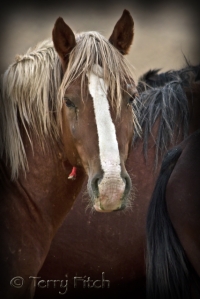
Photo courtesy of Terry Fitch
Concerned about the threat of a catastrophic outbreak of a herpes virus among wild horse herds in the West, national animal advocates on Thursday called on the federal government to keep potentially infected domestic horses away from mustangs and burros on public lands.
The Humane Society of the United States urged the Bureau of Land Management to “discourage and, if possible and appropriate, prohibit” owners of private horses from bringing animals at risk of Equine Herpes Virus-1 onto federal lands where they could have contact with wild horses.
“The potential for a catastrophic outbreak of EHV-1 among wild horse herds needs to be addressed by the BLM on an emergency basis,” Holly Hazard, the society’s chief innovations officer, wrote in a letter to BLM Director Bob Abbey.
The federal agency should launch a public education campaign immediately about the highly contagious disease, which has infected dozens of horses and killed at least nine, as officials plan horse-related activities for the upcoming holiday weekend, she said.
EHV-1 poses no risk to humans, but can be fatal to horses. It can be airborne and transmitted by touch or by sharing feed, brushes, bits and other equipment.
The virus “is a highly transmittable disease, and the symptoms don’t show up immediately,” Hazard told The Associated Press.
“You can have a horse that may have been exposed and you are not even aware they are carrying the virus. The most vigilant thing for everybody to do is enjoy their horses on their own property until the health officials have it sorted all out,” she said.
Traced back to a cutting horse competition earlier this month in Ogden, Utah, the virus has been exposed to more than 1,000 animals through direct or indirect contact with infected horses. Symptoms include fever, decreased coordination, nasal discharge, loss of tail tone, hind limb weakness and inability to rise.
So far, no animals managed by the BLM are known to have been infected, BLM spokesman Tom Gorey said Thursday. He said the agency is considering limiting horse movement on a case-by-case basis and may cancel some scheduled adoption events.
The federal agency “has been working with state and federal animal health officials to help protect the health and well-being of wild horses and burros on the range, along with those in BLM holding facilities,” Gorey said.
Horse owners should contact local BLM offices to see if there are any restrictions before bringing domestic horses onto federally managed public lands.
Tom Collins, a Clark County commissioner who owns horses and runs a cattle ranch outside of Las Vegas, said he felt the federal agency generally was taking the proper precautions but that prohibiting domestic horses on public lands in some areas was going too far.
“To tell people not to ride in areas that are public lands because of this horse virus, in my opinion, is a probably a little over cautious,” Collins told AP. “It’s probably more of a reaction to a request by the horse lovers than common sense. But at the same time, I can see their point, because it is airborne.”
Since the virus was discovered, organizers of horse sales, rodeos and other competitions involving the animals have canceled or postponed events in Colorado, Kansas, Oklahoma, Oregon, Montana, Nevada, Utah and Washington. But some other major events are continuing as scheduled, including the College National Finals Rodeo June 11-18 in Casper, Wyo., and the Reno Rodeo June 16-25, billed as the fourth-richest rodeo on the Professional Rodeo Cowboys Association.
Animal health officials in Utah and Nevada are among those who are optimistic the worst of the outbreak already has run its course.
“There’s not really anything earth-shaking that’s happened to change what we’re thinking,” Dr. Bruce King, Utah’s state veterinarian, said. “If we can get through the end of the month … we will feel comfortable about holding equine events again.”
But groups including the American Wild Horse Preservation Campaign have joined the call for “an abundance of caution … because of the potential catastrophic consequences that could occur if the virus spreads to the wild horse herds.”
“Given the serious nature of the virus and the already diminished population of mustangs in the west, the BLM needs to act quickly to ensure that the virus does not spread,” campaign spokeswoman Deniz Bolbol said.
Hazard said there are a number of ways a wild horse could contract the disease even if it didn’t have direct contact with an infected animal. For example, domestic horse owners are permitted to have hay on the ground for their horses at campgrounds on BLM lands, national forests and other U.S. lands, she said.
If an infected domestic horse ate that hay, mustangs that frequent campgrounds and other equine recreational areas may move in to eat the contaminated hay leftovers and be exposed to the disease, Hazard said.
“Since EHV-1 infections can be fatal,” she said, “should such a scenario occur, the impacts on wild horse populations could be disastrous.”

Monday, May 9, 2011

Owner Leroy Baker finally has to pay the $177,559.51 fine – US District Court for the Northern District of Ohio ordered garnishments

Sugarcreek update: Campaigning does work, this is good news -
Thank you all for writing, calling and inundating the USDA in Ohio and supporting AA's mission !
 

2010_7_30_USA_Sugarcreek_Auction_SMAnimals’ Angels was just informed that on April 4th, 2011, when Executive Director Sonja Meadows met with officials in Ohio to discuss the further course of action in regards to Sugarcreek Auction, the District Court for the Northern District of Ohio notified Baker that a garnishment is being taken by the United States of America. Copies of the Writ of the continuing Garnishment have been sent to Baker’s financial institutions.
According to court documents obtained by Animals’ Angels, the financial institutions already responded and disclosed the amount of money available for garnishment.
Baker was originally ordered to pay $162,800.00 by the USDA on October 1st, 2008. However, Baker refused to pay and called the decision and the charges against him “bogus”. On October 27, 2010, the Ohio District Court confirmed the earlier decision and ordered Baker to pay $172,621.66. In March 2011, Animals’ Angels issued a release questioning government officials why this debt has not been collected and calling supporters to action. Ohio officials received thousands of letters, email and phone calls.

Landmark Bill to Stop Drug Use in Horse Racing

Straight from the Horse's Heart

by Laura Allen of Animal Law Coalition
Racing Industry has Failed to Protect the Horses
Rep. Ed Whitfield (R-KY) and Sen. Tom Udall (D-NM) have introduced H.R. 1733/S.B. 886, the Interstate Horse Racing Improvement Act  of 2011 which amends the Interstate Horse Racing Act of 1978,15 U.S.C. 3001 et seq.) .
Under the 1978 Act, simulcast or offtrack betting was allowed, a very lucrative benefit for the horse racing industry.
There is no question the industry’s effort at self-regulation even with some new state laws, has simply failed to protect horses from abuse from the widespread use of performance enhancing drugs.
Now, Congress proposes to qualify the benefit bestowed under the 1978 Act by  regulating racing to the extent necessary to rid the “sport” of these drugs.
“This weekend, the very best of horseracing will be on display at the Kentucky Derby. Yet, for too long, the safety of jockeys and equine athletes has been neglected for the pursuit of racing profits,” Rep. Whitfield said.
“The doping of injured horses and forcing them to compete is deplorable and must be stopped. Despite repeated promises from the racing industry to end this practice, meaningful action and oversight has yet to come forth. This legislation will bring much-needed reforms to an industry that supports thousands of jobs and is enjoyed by spectators nationwide.”
“Chemical warfare is rampant on American racetracks, and unlike other countries, our law does not reject this unscrupulous practice. A racehorse has no choice when it comes to using performance-enhancing drugs, but this legislation takes away that option from those who would subject these magnificent animals to such abuse for gambling profit. Those involved in horseracing will have to play by the rules or face getting kicked out of the sport,” Sen. Udall said.
What the bill does
The bill would prohibit anyone from (1) entering a horse in a race that is subject to an interstate off-track wager if the person knows the horse is under the influence of a performance-enhancing drug; or (2)  knowingly providing a horse with a performance-enhancing drug if the horse , while under the influence of the drug, will participate in a race that is subject to an interstate off-track wager.
A host racing association could not conduct a horserace “that is the subject of an interstate off-track wager” unless the host racing association has a policy in place that (1) bans racing of horses that have been given  performance enhancing drugs, (2) also bans persons who provide horses that have been given these drugs, and (3) requires third party testing of the first place horse and another horse chosen at random. Test results would be reported to the Federal Trade Commission or a host racing commission with which the FTC has entered into an agreement to handle enforcement. The host must also have minimum penalties for those caught in violation.
Three Strikes – You’re Out
A first violation would mean a $5,000 civil fine and a  minimum 6 months suspension from racing where there is interstate offtrack betting; a second violation would mean a $20,000 civil fine and a suspension of at least 1 year; and a 3rd violation would mean a $50,000 civil fine and a permanent ban from horseracing where there is interstate offtrack betting.
The suspension or permanent ban would mean the violator could not participate in any activities including as a spectator at a race where there is interstate offtrack betting.
It would not matter that the violations were at different tracks or in different states. Each violation regardless of where it occurred would count towards the permanent ban. 
Horses given performance enhancing drugs would also be ineligible to race for at least 6 months on a first offense, a minimum of 1 year for a second violation and at least 2 years for each subsequent violation.
A violation would also be considered an unfair or deceptive trade practice, and the FTC would have enforcement authority unless there was an agreement for a state or host racing commission to handle that. Even then, the FTC could still step in and enforce these provisions if the host racing commission does not adequately do so. The FTC would also monitor and handle enforcement with respect to violations occurring in multiple states and in connection with non-profits.
The bill further creates a private right of action. Organizations or individuals with standing could bring an action for injunction or other relief to enforce these provisions and even obtain damages or restitution and attorney’s fees. 
Performance Enhancing Drugs
H.R. 1733/S.B. 886 defines performance enhancing drug to mean (1) any substance capable of affecting the performance of a horse at any time by acting on the nervous system, cardiovascular system, respiratory system, digestive system, urinary system, reproductive system, musculoskeletal system, blood system, immune system (other than licensed vaccines against infectious agents), or endocrine system of the horse ; and
(2) includes the substances listed in the Alphabetized Listing of Drugs in the January 2010 revision of the Association of Racing Commissioners International, Inc., publication entitled `Uniform Classification Guidelines for Foreign Substances’.”  For more on the ARCI publication….
Unlike other countries, racing jurisdictions in the United States allow horses to be medicated on race day. And there are numerous examples of trainers who have violated medication rules multiple times, seemingly with impunity. A recent Racing Commissioners International letter notes that one trainer has been sanctioned at least 64 times in nine different states for various rule violations, including numerous violations of drug rules.  According to the New York Times, only two of the top 20 trainers in the United States (by purses won) have never been cited for a medication violation.
The Interstate Horseracing Improvement Act is the first Congressional attempt to ban doping in horseracing since similar legislation was considered in the 1980s.

Saturday, March 26, 2011

WHEN HORSE SLAUGHTER COMES TO TOWN

Int'l Fund for Horses

Part 1: Environmental Impact

HISTORICALLY, the negative environmental impact of horse slaughter plants has been well documented.
In 2007, all three of the foreign owned horse slaughter plants in the United States were shut down under Texas and Illinois state laws. The two Texas based plants, Beltex in Dallas and Dallas Crown in Kaufman, were closed in February when the 5th District court ruled that a 1949 law against selling horse meat was valid and in force. The remaining plant, Cavel International in DeKalb, Illinois, closed in mid-September of the same year under a new state law making horse slaughter illegal.1
It was community administrators and local residents who actively petitioned to have horse slaughter plants shut, citing the extreme disregard for the welfare of the people and locales where they existed as well as the merciless suffering of the horses sent to them.
Numerous Violations Plague Communities
All three horse slaughter plants amassed numerous environmental violations and overwhelmed the waste water infrastructures due to dumping of blood, entrails, urine, feces, heads and hooves.
The Dallas Crown horse slaughter facility had been in operation in Kaufman since the late 70's and from the beginning had caused problems both economically and environmentally. "The slaughterhouse constantly flooded the town’s drinking water with blood and tissue – literally coming out of the taps – and had never complied with city water standards, or paid fines."2
Furthermore, in May 2002, the City noted that another public health hazard "was the vector attraction due to bones and horseflesh falling off your bone trailer" and that "dogs were carrying the bones into the community."3
In fact, in an open letter to state legislators considering pro-horse slaughter resolutions, the town’s mayor at the time, Paula Bacon, referenced Public Works reports regarding effluent and waste water violations "decaying meat [which] provides a foul odor and is an attraction for vermin and carrion," containers conveyed "uncovered and leaking liquids," there are "significant foul odors during the daily monitoring of the area," and "Dallas Crown continually neglects to perform within the standards required of them."4
Beltex was a Texas Corporation with European shareholders that had been slaughtering horses for human consumption for 27 years.
As with Dallas Crown, Beltex had a non-unionized workforce. OSHA records revealed that since the plants' inception in 1977 until its last inspection in 1997, Beltex had committed 29 violations of which 28 were deemed serious. OSHA records show that an ammonia leak occurred in 1996, but no one (fortunately) died or was permanently disabled. In 2000 the facility "accidentally pumped blood into the creek" and "in 2001, they were notified that waste water was flowing into adjacent properties and into the creek."5
Of particular note, the Sanitation Group of DeKalb, Illinois, where Cavel International was located, identified the incomparable hazard associated with the discharge from horse slaughter facilities.
"This hazard is uniquely acute for horse slaughter because of the wide range of drugs given to horses that are clearly labeled NOT FOR USE IN HORSES INTENDED FOR HUMAN CONSUMPTION."6
These noxious drugs are not only present in the meat intended for human consumption overseas but also in the waste water and sludge produced during processing. This runoff has the potential to contaminate down-stream water intakes, including groundwater used for human consumption, and can enter the food chain via sludge distribution on crops.
Unlike the aforementioned, decades old horse slaughter plants in Texas, Cavel International in Illinois was a sparkling new, purpose built facility that re-opened in June, 2004 with a state-of-the-art pre-treatment system.
Additionally, Cavel International had special Industrial Waste Permits that allowed much higher (8 times higher) contamination levels for waste water leaving the slaughter house. But Cavel was still out of compliance. And not just a few times. This facility was in significant non-compliance hundreds of times. In one report, a Cavel employee acknowledges "chunks" from slaughtered horses were oozing out of tanks. This does not include the numerous safety violations documented by the FSIS.7
As a final point, these practices and findings are not limited to the U.S. In Canada, Natural Valley Farms in Neudorf, Saskatchewan, was shut down by the Canadian Food Inspection Agency in 2009 for food safety concerns. NVF went into receivership on September 22, 2008, yet horses continued to be slaughtered at the facility by Velda Group, an international Belgian-based company. Velda was infamous in Illinois for numerous environmental charges and convictions at their Cavel International horse slaughter plant that closed business in September 2007.8
"Blood disposal appears to have been equally problematic for NVF as with other horse slaughter plants. Not only do horses have twice the quantity of blood as cows, but the blood is notoriously difficult to treat. The bacterial agents used in standard cattle digesters fail to provide acceptable discharge levels because of antibiotics often found in horse blood. As a result, pollution follows the horse slaughter industry where ever it goes."9
Former mayor of Kaufman, Paula Bacon, comments "In Canada they have apparently become even more blatant, dumping huge untreated piles of entrails onto open ground and even using a tanker truck to discharge blood and refuse into a local river."10
In any case, the negative environmental impacts and the chronic inability of the facilities to comply with local laws pertaining to waste management and air and water quality far outweigh any benefits.
This quote by Henry Skjerven, an investor and former director of NVF, sums it up: "Natural Valley Farms died the day the decision makers chose to kill horses . . . ."11
Environmental issues continue to plague the horse slaughter industry. On December 3, 2010, the Bouvry Exports horse slaughter plant in Fort MacLeod, Alberta closed operations to complete renovations related to sanitation.12
______________________________
1 Holland, John; Horse Slaughter Trends 2006-2010; Equine Welfare Alliance; http://tiny.cc/jscti ; February 2010.
2 Testimony of Congressman John E. Sweeney; H.R. 503 – American Horse Slaughter Protection Act; http://republicans.energycommerce.house.gov/108/hearings/07252006Hearing1992/Sweeney.pdf ; Jul. 25, 2006.
3 Sorg, Lisa; Violations Dog Beltex, Dallas Crown; http://tiny.cc/ag62l ; Jun. 19, 2003.
4 Bacon, Paula; Open letter to state legislatures considering pro-horse slaughter resolutions; Animal Law Coalition; http://tiny.cc/2wrx6 ; Feb. 13, 2009.
5 Sorg, Lisa (http://tiny.cc/ag62l).
6 DeKalb Sanitary District; DeKalb Sanitary District Board meeting Minutes; http://tiny.cc/31y3m ; Jan. 18, 2006.
7 Allen, Laura; Animal Law Coalition; “Sacia introduces new bill to support horse slaughter,” ; http://tiny.cc/ufjo4 ; Jan. 14, 2010.
8 Holland, John; Canadian Horse Defense Coalition, Summary of Cavel International Violations – Non Compliance and Response; http://tiny.cc/sjwwj ; undated.
9 Holland, John; Horse Slaughter Dream a Financial Nightmare; Harnesslink Newsroom; http://tiny.cc/tq5o6 ; May 14, 2009.
10 Holland, John (http://tiny.cc/sjwwj).
11 Holland, John (http://tiny.cc/tq5o6).
12 Press Release; Canadian Horse Defence Coalition; http://tiny.cc/n6nx7 ; Dec. 10, 2010.


THE horse slaughter industry is an insidious, brutal and predatory business that exists for one reason and one reason only. Horse slaughter exists to supply the demand for horse meat and to profit from it. Horse slaughter is not a humane end to a horse's life. Horse slaughter is not euthanasia.
When horse slaughter comes to town, environmental hazards, economic woes, and the stigma associated with the cruelties inherent to killing horses for their meat, are only a part of the price they will pay.
Putting those considerations aside, relevant as they are, what about the horses?
Horse slaughter is a cruel betrayal of an animal who has made it possible for America to develop the richness it enjoys.
As Laura Hillenbrand, author of "Seabiscuit" says,
"Here are these exquisite, immensely powerful creatures, who willingly give us their labor in return for our stewardship. They have attended us throughout history, bearing us across frontiers and into battle, pulling our plows, thrilling us in sport, warming us with their beauty. We owe them more than we can ever repay. To send these trusting creatures to slaughter is beneath their dignity and ours."1
_______________________
1 Save the Horses; Quotes against horse slaughter; http://tiny.cc/6dldb ; 2009.

Wednesday, March 16, 2011

STOP-THE-ROUNDUPS PRESS CONFERENCE IN PHOENIX; SAVE OUR WILD BURROS AND HORSES DEMONSTRATIONS AT NATIONAL ADVISORY BOARD MEETING OF OUR WILD HORSES

Humane Observer: Elyse Gardner

 With numerous supporters of our American wild horses, I traveled to Phoenix to attend the first 2011 meeting of the national Wild Horse and Burro Advisory Board, as well as the press conference we held to Stop the Roundups.
Here are a few clips for you from the press conference officiated by Ginger Kathrens, Emmy winning filmmaker of the Nature series on Cloud, the inimitable wild Palomino stallion of the Rockies.  I will be posting more as I get the clips ready for you.
Michael Blake's statement at the March 10, 2011, Stop-the-Roundups press conference.
Read MORE...(More videos)

Saturday, March 5, 2011

Indian Lakes Holding Facility: One Year Later

Humane Observer: Elyse Gardner

A REMINDER OF WHAT'S HAPPENING BEHIND BROKEN ARROW'S CLOSED DOORS
©1/26/10 Elyse Gardner

A GRIM DEMONSTRATION OF THE VIOLENCE INHERENT IN A ROUNDUPHas anyone seen any statistics on the foaling rate and spontaneous abortions now taking place in the Antelope complex mares?   Do the Indian Lakes Updates reflect these figures?  Is any facility reporting these things?   Below is a screenshot of the last Indian Lakes update.    Read MORE....

Saturday, September 18, 2010

Wild Horse Eco-Sanctuary: Relief for the Imprisoned but No Help to the Free

Straight from the Horse's Heart


Wild Horses should be Wild


Anyone who knows anything about Wild Horses and Burros has heard the recent news that Madeleine Pickens has reported to garner agreement from the Bureau of Land Management (BLM) to move 1,000 captive wild horses from long term holding to an “Eco-Sanctuary” environment with the remaining 38,000+ to follow.  Ms. Pickens should be applauded for her efforts but while she moves 1,000 altered Wild Horses to private land the BLM will strip from public land several thousand more and put them behind bars.  Doesn’t speak highly of the BLM’s level of commitment to a solution, does it?

Although we want to see all of the horses out of their BLM prisons a declared moratorium on the process of using bad numbers, junk science and political motives as excuses to steal America’s mustangs from their rightful land should be a component to these negotiations and an eventual solution.  Without a moratorium on the roundups, to give time for a full accounting of actual Wild Horse and Burro numbers, we are just pumping more horses into a cruel situation while gutting the taxpayer’s pocketbooks.
In reality, we are giving a spoon full of medicine to treat a symptom while the cancer continues to ravage the body; outside of giving a little comfort it does not change the inevitable outcome of the sickness’s progression and the “Eco-Sanctuary” will not stop the BLM’s decimation of the wild horses from their native homes.
Personally, I do not trust the management of the BLM as for decades they have been attempting to destroy the wild horses and burros of this great nation.  It was just two short years ago when this same agency wanted to kill all of the horses that they had in long term holding; a leopard does not change his spots that quickly.
This is not an act of benevolence on the part of the BLM but an excuse and a device to distract the public outrage as the BLM “Wild Horse Harvesting Machine” continues its consumption of all of the wild horses from their rightful homes.  12,000 horses this year added to the existing 38,000 and 11,000 more stampeded into oblivion next year.  Do the math and being that we do not have an accurate accounting of what is really out there, the end of the American Wild Horse draws nearer with each passing day.
Madeleine’s news will be good news to the horses that are in BLM concentration camps but it will do nothing to stop the BLM from continuing its assault upon our national icon.   The only way to slow this down and stop the deadly stampedes is to chant the mantra of “Moratorium”; repeat it loud and often, the madness has to stop so that true science, compassion and ethical management can be applied to the saving of our last few, true, wild horses.
What we need, today, is a moratorium; that would be something to truly celebrate about.


Bookmark and Share

Wednesday, August 4, 2010

Catch 22, BLM Hiding Identity of Landowners

Horseback Magazine

Catch 22, BLM Hiding Identity of Landowners

August 5, 2010

By Steven Long, Photo by Terry Fitch
HOUSTON, (Horseback) – The federal Bureau of Land Management is hiding the identity of landowners who are providing wild horse trap sites.
Journalist, author, and artist Laura Leigh won a major First Amendment victory in federal court when Reno’s Judge Larry Hicks ruled it unconstitutional for the BLM to bar observers and the press from observing wild horse “gathers.”
But she was barred by local deputies and threatened with if she pursued her recently won right to observe wild horse “gathers.” Why? Because the trap site used by the federal agency was located on privately owned land. Leigh was told the landowner would not allow press and public on his property.
BLM officials told her to get permission from the landowner if she wanted to see the horses.
“In the BLM response to my desire to observe Tuscarora (Owyhee specific) they claim that I should have independently contacted the landowner. How can I do that if they do not provide the trap site locations that are actually in use and the landowner’s information? Are we supposed to trespass and then ask the person listed on the summons?” she wrote to Horseback Magazine.
In a letter to BLM dated July 27th, the magazine asked for the names and contact information for the landowners. The agency response – a stone wall reminiscent of the classic Joseph Heller anti bureaucracy satire, Catch 22.
The bureau responded through Washington spokeswoman Melodie Lloyd saying “Because of FOIA rules, we are unable to supply the name and contact information of landowners for the Calico and Tuscarora gathers.”
FOIA is government shorthand for the federal Freedom of Information Act whose goal is government openness. BLM is using the law to shield its cozy relationship with local landowners and to prevent observation of its activities.
Leigh had run into a bureaucratic obstacle as stout as the Berlin Wall of bygone days. To outsiders, that wall appears to have been erected for the same purpose as the original – to shield a government agency habitually accused of ham handed treatment of those outside its tight knit circle of ranchers, oil companies, and hunting interests.
Leigh was caught in a classic example of Orwellian doublespeak.
If the government won’t reveal who to ask regarding obtaining permission to step on private property, it’s impossible to step on the property without risking arrest, even though the government told Leigh to ask permission – Catch 22.
Lloyd also responded to another question posed by Horseback Magazine. How much is the government paying to lease the private property it uses? The answer was surprising, and again demonstrated the cozy relationship wild horse activists charge is enjoyed by Nevada ranchers and the federal agency with whom they lease grazing land at the fire sale price of $1.35 per month per cow.
“The BLM, in all the years it has been conducting wild horse and burro gathers in Western states, has never leased private property for use as a trap site or for holding pens. Taxpayer dollars have not been used in the past, and are not used today,” Lloyd responded extolling the Nevada landowner’s generosity.
Despite Judge Hicks’ ruling, the BLM is continuing to make it difficult to observe its activities. It appears determined to continue to take a hard line preventing unfettered press and public access to its secretive roundups according to today’s response from its Washington spokeswoman even though a federal judge has ruled that doing so is unconstitutional.
“When the gather site is located on private property, it is the landowner’s decision whether to allow anyone, including the BLM or contract gather personnel, access to his/her property. The BLM lacks jurisdiction over privately-owned lands and does not have the authority to grant access to the public to enter private lands. When the roundup site is located on public lands, the BLM will make arrangements to provide access to the public, keeping the safety and well-being of the horses and those performing the work as the top priority.”
Leigh has continued to file motions in her case against the government, a case in which government lawyers mislead the judge regarding the availability of easy access to water.
The site is chosen by the helicopter chase contractor, she said.
“When beginning preparations for a roundup, the BLM enters into an agreement with a gather contractor who consults with the Wild Horse and Burro Specialist to look at maps of the HMA and review the locations of previously used roundup sites. The gather contractor then scouts the herd management area by helicopter. Important factors taken into consideration when selecting a site are proximity to where the herds are located at the present time as well as where they normally travel within the HMA, the availability of water, the accessibility of roads and the topography of the land,” she said.
“Oftentimes private land roads, over which heavy vehicles must travel during a roundup, are superior to the BLM roads which can be more primitive. Ultimately, the selected site must be conducive to protecting the health and welfare of the animals being gathered and the safety of those conducting the gather. When the gather contractor identifies a suitable site, he must obtain concurrence from the BLM and then coordinate with the private landowner to secure authorization before beginning any preparations. For the recent Calico and Tuscarora gathers in Nevada, the gather sites used were “historical” sites that the BLM has used for the past 10 – 20 years.”
Finally, Horseback questioned recent reports from local landowners of horses leaving BLM pens in the dead of night. We asked if the agency would request the Justice Department to investigate whether animals were being stolen by department employees.
The BLM animal counts are historically inaccurate and activists have repeatedly called for independent investigations.
Again, BLM threw up its impenetrable stone wall.
“Since the BLM has provided information in answer to the allegations raised, we do not plan to involve the Department of Justice,”
When 54 members of Congress are petitioning for BLM roundups to stop, perhaps agency officials won’t have to ask the FBI to look into matters.

Tuesday, August 3, 2010

Breaking News:Plenty of Water at Nevada Roundup – And Dead Horses Too!

http://rtfitch.wordpress.com/2010/08/03/breaking-newsplenty-of-water-at-nevada-roundup-%e2%80%93-and-dead-horses-too/

By Steven Long, Photos by Katie Fite and Cattor Livestock Roundups

Exclusive from Horseback Magazine

HOUSTON, (Horseback) – A federal helicopter chase contractor has acknowledged there was plenty of water in an Elko County, Nevada wild horse area, contradicting what government lawyers told a U.S. District Judge last month.
More to this Story ~ Photo by Katie Fite
She said that many of the horses in a large herd management area just didn’t know it was there and were kept in pastures far away.
In an exclusive interview with Horseback Magazine, Sue Cattoor of Cattoor Livestock Roundups, Inc. said the Owyhee River, the border of their most recent wild horse stampede dubbed the “Tuscarora Gather,” has enough water for vacationers to camp and fish, plus multiple trails leading down to water’s edge giving access to thirsty animals including horses.
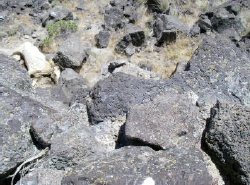
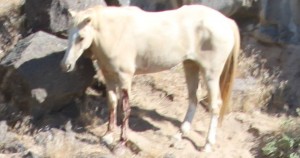
A disturbing photo of a dead Palomino Wild Horse surfaced on the Internet and in news reports last week. The picture, taken by Western Watershed Project Biodiversity Director Katie Fite shows the horse laying in rocks below a cliff. Wild horse activists say the photo demonstrates the cruelty of a government program wasting millions of dollars that is out of control. Many of them believe that a Cattoor helicopter drove the horse over a cliff.
That is not true.
But a firestorm of outrage has swept across the desert sands of Nevada and the nation at what many believe is a government agency that has turned rogue. U.S. Senator Mary Landrieu, (D) La has proposed that her colleagues consider removing the Wild Horse and Burro Program from federal Bureau of Land Management control.
And fifty-four members of Congress have petitioned Interior Secretary Ken Salazar to end the capture of wild horses on land controlled by the BLM. They have asked the National Academy of Science to investigate the agency’s Wild Horse and Burro Program. More than 150 horses and foals died in the wake of a mid-winter roundup in Nevada’s Calico Mountains. The congressmen say that 21 horses have died at BLM’s hand thus far during and after the Tuscarora stampedes.
Reno federal Judge Larry Hicks imposed a temporary injunction that had stopped the agency from capturing horses after one day in which 12 horses died after being run eight miles in more than 100 degree July Nevada desert heat. He lifted the temporary restraining order after being told by government lawyers an emergency existed because horses needed to be captured since they faced the prospect of dying of thirst because there was no water in the desert.
In fact, the BLM trucked water into the area rather than driving them, as they are clearly capable of doing,  to a freely flowing river with abundant water.  But she says the bulk of the horses involved in the roundup were in three pastures away from the river.
Cattoor acknowledged that the Owyhee River has running water, and during the roundup an Idaho group was camping on its banks – and even fishing.
“They were just a little ways up from where the horses trail down to the river. It‘s almost like a miniature Grand Canyon. This particular spot of where the trail goes down in the canyon is where the horses go to water,” Cattoor said.
Cattoor also said that there are other trails leading to the river that would have been available to the horses, but “the horses aren’t using those trails. They are only using this one. A lot of those horses didn’t know that trail was there because a lot of the horses we captured in this HMA were young horses.”
Typically, foals follow their mothers to water, so in all likelihood, the young horses whose habitat is near the river had been exposed to the abundant water in the waterway and the riparian area on either side, despite Cattoors comments to the contrary.
But some horses came to the river fir the first time, she acknowledges. How did these lost horses get there? Were they driven there by a Cattoor helicopter, activist are certain to ask.
“After they were down in there, they did not know how to come out,” Cattoor said.
A wide trail leads down a gently sloping river bank to the river shown in a photograph on the Cattoor website http://www.wildhorseroundups.com . Sue Cattoor says the photo is deceptive and the trail is very steep.
Cattoor says that there has been ample water in recent years to sustain horses in the area.
“I find it odd that with all the months of planning by the BLM that occurs before a round-up there was no mention of lack of water for the horses in any of their documentation and then after the lawsuit was filed, it suddenly became an emergency,” said Vicki Tobin, co-founder of the Chicago based Equine Welfare Alliance.
“The BLM has authority to round-up horses in an emergency situation so if the horses were in such dire straits, they should have dealt with the situation long before the lawsuit was filed.”
Like many in the West steeped in a ranching tradition, Sue Cattoor believes the wild horse are livestock, not wild animals. That tradition views livestock as a commodity, nothing more. Something to be bought and sold. Ranchers have a very pronounced vision of how animals should be viewed, and Cattoor is no different.
“If they are wildlife, then why don’t they issue a license for them to be hunted?” she asks.
Cattoor said campers along the river mentioned that the wild horses were in the area when they first got there, however, there were no campers around during recent visits by others to confirm what the federal contractor says.
Visitors say they found evidence that there were traps set up along the river bottom. Cattoors counters that what they believe were the remnants of BLM pens were actually the abandoned campsites of the Idaho campers who had traveled to fish the river.
There are no witnesses to refute the allegation that horses could have been driven by a roaring helicopter into the area whose rugged features include jagged rocks and towering river banks. The horses also could have injured themselves on the sharp outcrops trying to escape something they feared and had never seen before.
“They climbed up on that ledge looking for a way out and didn‘t know how to get back out of it,” Cattoor said.
In a lengthy note on the company website Sue Cattoor explains her firm’s position in minute detail. The note is also accompanied by a photo of a broad well traveled trail leading to a flowing river filled with plenty of water. Another photo of the river shows steep cliffs. Cattoor denied Horseback Magazine permission to use the photos.
Sue Cattoor acknowledges the horses were injured trying to negotiate the rough terrain.
“They were moving around in those rocks, trying to go up and down to survive and would have gotten the injury in the rocks. Those horses were trying to find a way down”
She said the pocket of possible stragglers from the helicopter chase were discovered after the helicopter pilot and her husband flew over to speak with the campers they had seen along the river.
“When they flew over to talk to these campers, they discovered these horses on the opposite side of the river from where the trail was. They herded those horses that were up there back down to the river because those horses had ledged up there and they did not know how to get back down.”
But after the herd was driven down river, the two severely injured horses remained, Cattoor said. One was the Palomino horse later photographed dead by Fite.
Wild Horse on ledge before shot by David Cattoor from Chopper
The photo of the still living but injured Palomino horse was taken from the Cattoor helicopter and the wound appears to be to the bone. The photo was supplied to Horseback Magazine by Sue Cattoor.
Cattoor says the horse had vision problems and was old.
“There were two horses. One, the horses that she (Fite) took the picture of, and a foal that was caught in the crevasse of the rocks with broken legs that they had to go back and euthanize,” Cattoor said.
Former Horseback Magazine veterinary columnist Dr. Angela Chenault viewed the blown up photo and said the injury was possibly survivable, but “its not likely to have a good outcome on a feral horse. Aftercare is critical and even stalling this horse will be a problem mentally.”
The horse found by Fite was not driven over the cliff to its death by Dave Cattoor, it was shot by him from the helicopter with a high powered rifle.
Injury was NOT fresh but Cattoor still shot and killed Wild Horse from Chopper
“It happens on occasion because when we are out gathering horses, if we see something that has a pre-existing injury or if something is extremely old and needs to be put down, they will euthanize it in the field,” Cattoor said.
Dr. Chenault said the injury was not fresh.
“It’s difficult to say how old by the picture but I would say it is over 24 hours by the way the muscles look,” she said.
Activists will likely continue to believe the worst of the Cattoors and their company. And Sue Cattoor will continue to attempt to spin the image of a company that is compassionately capturing horses, even if some die in the process.
The helicopter contractor said that despite the judge’s ruling that observers be allowed to view the roundups, her company will not allow observers on horseback despite a long standing Horseback Magazine request to the BLM to do so.
“If they are on horseback they are going to interfere with the operation,” she said. “We never allow our wranglers to be on horseback when the helicopter is driving horses to the trap. We can’t have somebody there that might turn the horses back and cause problems.”
Cattoor said she would have no objection to observers who hiked in to the roundup area if they were accompanied by a BLM public relations person. In past “gathers” armed guards have prevented observers and the press from freely walking into the roundup area.
Despite encouragement from Cattoor for Horseback to observe a roundup, BLM has barred press and public in the trap area because recent ones have been located on private property. The agency claims landowners object to media and other observers on their land. However, when the BLM leases property for a site, it falls under federal control much like a post office building does when it is leased by the federal General Services Administration for public use. The landowner relinquishes control of his property to the control of the federal government.
Cattoor Livestock Roundups will not allow the media to fly as passengers in their helicopter citing prohibitions from their insurance company.
“I have no problem with the press coming out and watching if they want to, as long as they are absolutely not interfering with the gather and causing stress for the horses,” she said.
Cattoor also was critical during the interview of media reports of the numbers of horses which died “because of helicopter gathers.”
On the Calico roundup seven horses died in the field out of a total of more than 150 horses and unborn foals who met their deaths in captivity, including two foals who shed their hooves after being stampeded over rocky terrain in the dead of winter by a roaring helicopter.
“In this roundup we didn’t lose any on the actual HMA (herd management area). Others died for lack of water or too much water, or were destroyed for humane reasons,” Cattoor said.
“They are trying to stop roundups saying the helicopter gathers are cruel and inhumane and that’s not a fact,” she said. “The losses from Calico was because those horses were in very bad shape when they were captured because there wasn’t enough food out there.”
Photographs of the captured Calico horses by naturalist Craig Downer and wild horse litigant Laura Leigh show fat healthy horses even in the BLM hospital area.
And 54 members of Congress clearly want to knock Sue Cattoor and her company out of a job, temporarily at least.
And litigation continues in the courts to stop what the BLM benignly calls “gathers.”
_______________________________


_______________________________

Take THAT Debbie Collins -wildhorse@blm.gov ~ R.T.

Thursday, July 8, 2010

BP Connected to Wild Horse Round-ups?

Weren't You Waiting for Part 2 of George Knapp's Report?

Please visit the site for the full article and video.

Las Vegas Now


I-Team: BP Connected to Wild Horse Roundups?

LAS VEGAS -- The disaster in the Gulf of Mexico has put a laser focus on BP and their operations all over the planet. Turns out, the oil giant has left a trail of toxic waste in Nevada. But is there also a BP link to wild horse roundups?

Federal agencies, including the Bureau of Land Management, the Minerals Management Service, and Fish and Wildlife have been accused of looking the other way as BP skirted environmental rules and safety standards in the gulf and elsewhere.

For a long time, critics of the Department of the Interior have alleged that oil and gas companies, and other industries, are allowed to run roughshod over public lands, plundering what should be public resources. So, would it be a surprise if it happened here?

The BLM's Calico Hills roundup last winter proved to be the bloodiest mustang operation in memory. The government captured.....

Be sure to check out the below segment that aired last night, as well.

Las Vegas Now:  I-Team: Black Gold in the Silver State?

Drills in Elko County are usually searching for gold. The one in the hills above Diamond Valley is a sign that the search for black gold in the Silver State is finally getting serious. Fasken Oil, a small Texas company, will probably make a $5 million roll of the dice on this operation. It costs about $20,000 a day just for the leased drilling rig.

The company has good reason to believe the gamble is worth it. Just down the road in neighboring Eureka County, two older, oil stained wells are still producing in a field just off the highway. The same rig is bound for Lincoln County, where Cabot Oil will plunge into what it hopes will be a massive gusher.

After that, the rig will go to the White River Valley, where a wildcatter with 50 years in the oil business thinks...

Monday, July 5, 2010

The MUSTANG CONSPIRACY: Sex, Drugs, Corruption, and BP

Above Top Secret

What, you may ask, could "Sex, Drugs, Mustangs, Corruption and BP" have in common? That's not only a fair question, it has an astounding and disgusting answer that exposes one of the most bizarre, unethical, horridly sad and disturbing conspiracies we've come across yet (and that's saying something after 13 years!).
Please note, we said Conspiracy, not Conspiracy Theory. That's very important.
___________________________


More...

Wednesday, June 23, 2010

Would you be willing to eat horse meat?

Eatocracy

PLEASE GO VOTE!

On June 17th, Congress convened to vote on H.R. 1018, the Restore Our Mustangs Act, which expands the Wild Free-Roaming Horses and Burros Act of 1971 and prohibits the processing of wild horses or burros for slaughter.
The bill passed, but advocates against it claim that this wild horsemeat could be a viable source of sustenance for hungry people across the nation.

Would you be willing to eat horsemeat?